
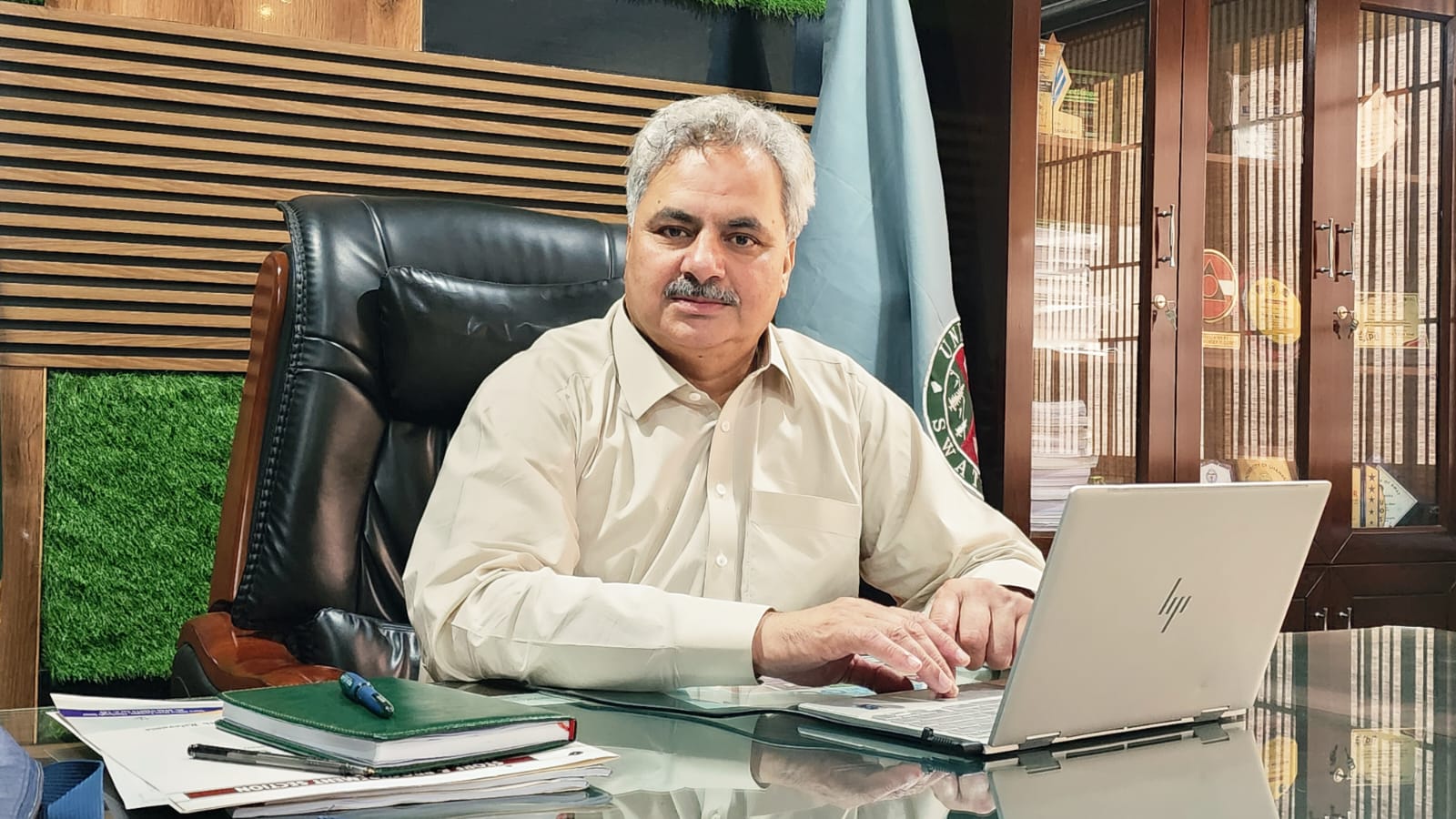
SWAT: The University of Swat has officially discontinued online classes and restored regular on-campus teaching, a move the administration says is intended to improve academic continuity and support students facing connectivity challenges.
The decision was announced by Vice Chancellor Professor Dr. Mohammad Qasim, who said many students had been struggling to participate effectively in online classes due to limited internet access. With examinations approaching, the university decided to resume physical classes to ensure uninterrupted learning and better academic preparation.
According to the vice chancellor, the shift back to classroom-based instruction is aimed at protecting students’ academic interests and improving educational outcomes across the university.
Connectivity issues affected students
Dr. Qasim said a significant number of students were unable to fully benefit from online learning because of unreliable internet services in various areas. He noted that these challenges had adversely affected academic activities and student engagement.
The university administration believes that restoring regular classes will help provide a more effective learning environment as students prepare for upcoming examinations.
Focus on academic and research excellence
The vice chancellor reiterated his commitment to strengthening the institution’s academic and research profile. He said his vision is to position the University of Swat among the leading higher education institutions in Pakistan.
Dr. Qasim acknowledged that the university is currently facing financial and administrative challenges but assured students and faculty that measures are being taken to address these issues.
Commitment to institutional development
He said future reforms and development initiatives would be implemented through teamwork and collaboration, with a focus on meeting the educational needs of students and the broader community.
University officials expressed confidence that the return to on-campus teaching will help enhance academic performance and support the institution’s long-term development goals.
Also Read