
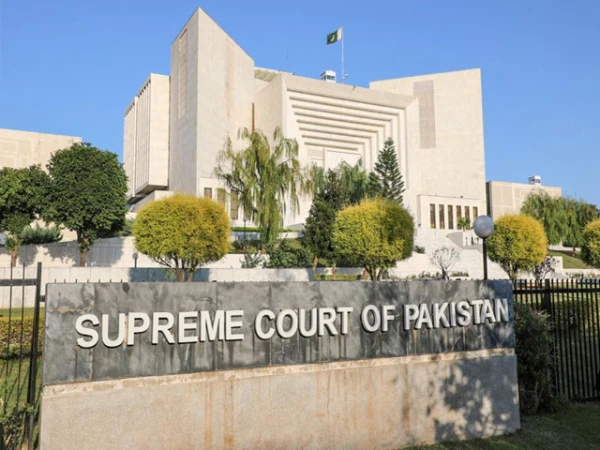
ISLAMABAD: The Supreme Court has ruled that competing businesses cannot collectively determine the prices of ghee and cooking oil, holding that such an arrangement violates competition law even when the agreed prices are lower and potentially beneficial to consumers.
A two-member bench comprising Justice Jamal Khan Mandokhail and Justice Salahuddin Panhwar upheld the Competition Commission of Pakistan’s (CCP) findings against the Pakistan Vanaspati Manufacturers Association (PVMA) and directed the association to pay a fine of Rs30 million.
Court Upholds CCP Price-Fixing Finding
The case concerned the collective determination of prices in the ghee and cooking oil industry. The Supreme Court endorsed the position of the CCP and the Competition Appellate Tribunal that coordinated price-setting violated Section 4 of the Competition Act.
The court observed that competing businesses must independently determine their prices according to their own commercial requirements. It held that collective price-setting through a trade association can restrict competition and cannot replace independent market-based pricing.
The judgment also clarified that the legality of an arrangement does not change simply because the resulting price is lower. While lower prices may benefit consumers, competitors are still not permitted to jointly determine prices.
Public Interest Does Not Justify Price Fixing
The Supreme Court further held that considerations of public interest cannot by themselves make collective price fixing lawful under competition law.
According to the judgment, the PVMA should have approached the CCP regarding the pricing issue rather than pursuing consultations on prices while bypassing the competition regulator.
The court therefore upheld the fundamental findings of the CCP and the Competition Appellate Tribunal, reinforcing the requirement for businesses to make pricing decisions independently.
Also Read:Saudi Business Delegation Visits SIFC to Explore Pakistan Investment Opportunities