
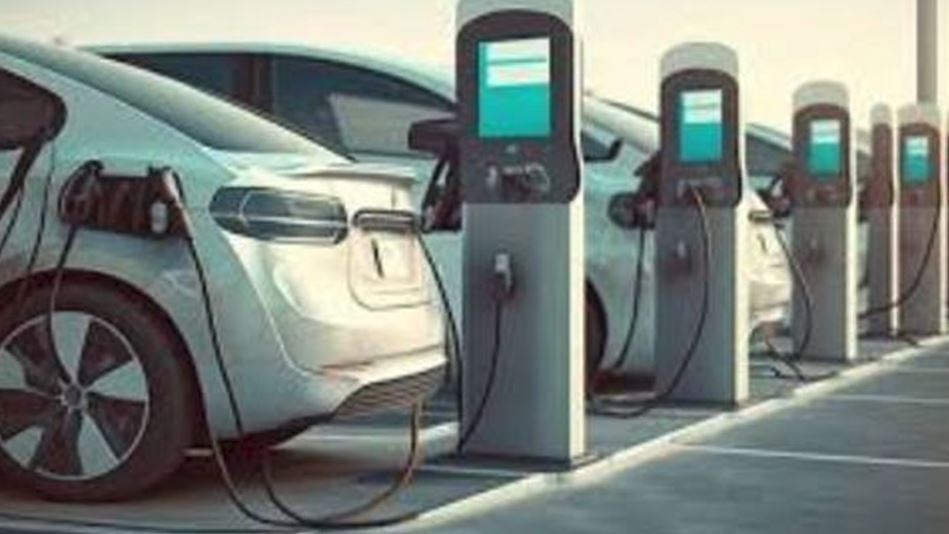
ISLAMABAD: Pakistan’s transition to electric freight transport will depend heavily on the pace at which charging networks, reliable power supply, servicing facilities and technical support are developed alongside electric trucks and logistics fleets, government and industry experts say.
The challenge is particularly important for freight operators, whose vehicles run on fixed schedules and long routes where charging availability, downtime and maintenance can directly affect commercial viability. Pakistan has already brought trucks and other commercial vehicles into its broader electric-mobility framework, but the supporting ecosystem remains at an early stage.
Under the New Energy Vehicle Policy 2025-2030, the government aims for new energy vehicles to account for 30% of new sales across motorcycles, rickshaws, passenger cars, light commercial vehicles, buses and trucks by 2030.
The policy also targets 3,000 charging stations by 2030. It envisages roadside charging points at average intervals of about 50 kilometres along major highways and requires oil marketing companies to equip 10% of their fuel stations in each province with Level 3 chargers.
While the policy provides a foundation for the shift, experts say charging infrastructure for electric freight transport in Pakistan will need to expand in parallel with vehicle adoption.
Freight electrification expected to be gradual
A senior government official familiar with the matter told Wealth Pakistan that the NEV Policy was designed to develop different parts of the electric-mobility ecosystem together rather than focusing only on vehicle sales.
The government is following a phased approach, beginning with two- and three-wheelers, passenger cars and other segments that can be electrified more easily before moving more deeply into logistics and heavy freight transport.
Heavy-duty truck electrification is expected to become more relevant as the market, charging network and supporting infrastructure mature, the official said.
“Electric vehicles and charging infrastructure have to develop side by side because the two are complementary,” he said, adding that EV adoption would need to be matched by a parallel expansion of charging facilities.
The official said the government’s role was largely to provide policy, regulation and institutional facilitation while allowing room for private-sector investment in chargers, batteries and other elements of the EV ecosystem.
Efforts are also under way to streamline the No Objection Certificate process for charging facilities, with dedicated EV cells and focal persons helping improve coordination with electricity distribution companies.
Industry calls for a wider support ecosystem
Sundas Saifullah, Chief Operating Officer at Atom Power, said Pakistan had moved in a positive policy direction but its electric-vehicle ecosystem was still developing on a relatively small scale.
She said large-scale freight electrification would require more than the availability of electric trucks.
Fleet operators would also need a sufficiently broad charging network, dependable electricity supply, licensing arrangements, service workshops, battery-swapping facilities, product availability and trained technical staff.
“Making just an EV policy is not enough. It must be a complete package of all the necessities complementary to it,” she said.
Saifullah said charging infrastructure could be expanded gradually through partnerships with existing fuel stations, allowing Pakistan to use an established nationwide network as electric mobility grows.
For commercial fleets, infrastructure is especially important because trucks operate under tighter time and route constraints than private passenger vehicles. Charging speed, station availability, vehicle downtime and access to repairs can all influence whether fleet operators consider electric trucks commercially workable.
China offers a reference point
China’s experience shows how freight electrification can accelerate once charging infrastructure and market demand reach sufficient scale.
According to China’s Ministry of Transport, sales of new-energy heavy-duty trucks reached around 140,000 units in the first half of 2026, up 78.6% from a year earlier. The country’s fleet is expected to exceed 1.6 million units by 2030.
Chinese authorities also plan more than 3,000 charging and battery-swapping stations for electric heavy-duty trucks along freight corridors and at ports, mines, factories and logistics parks.
The development illustrates the close relationship between electric truck deployment and dedicated freight infrastructure.
Saifullah said Pakistan should not attempt to replicate large-scale freight electrification immediately.
Instead, she said, the country should first strengthen infrastructure and documentation, expand awareness and gradually create the conditions in which electric freight can become commercially practical.
Also Read: ICCI, NYLP host National Youth Leadership Summit 2026