
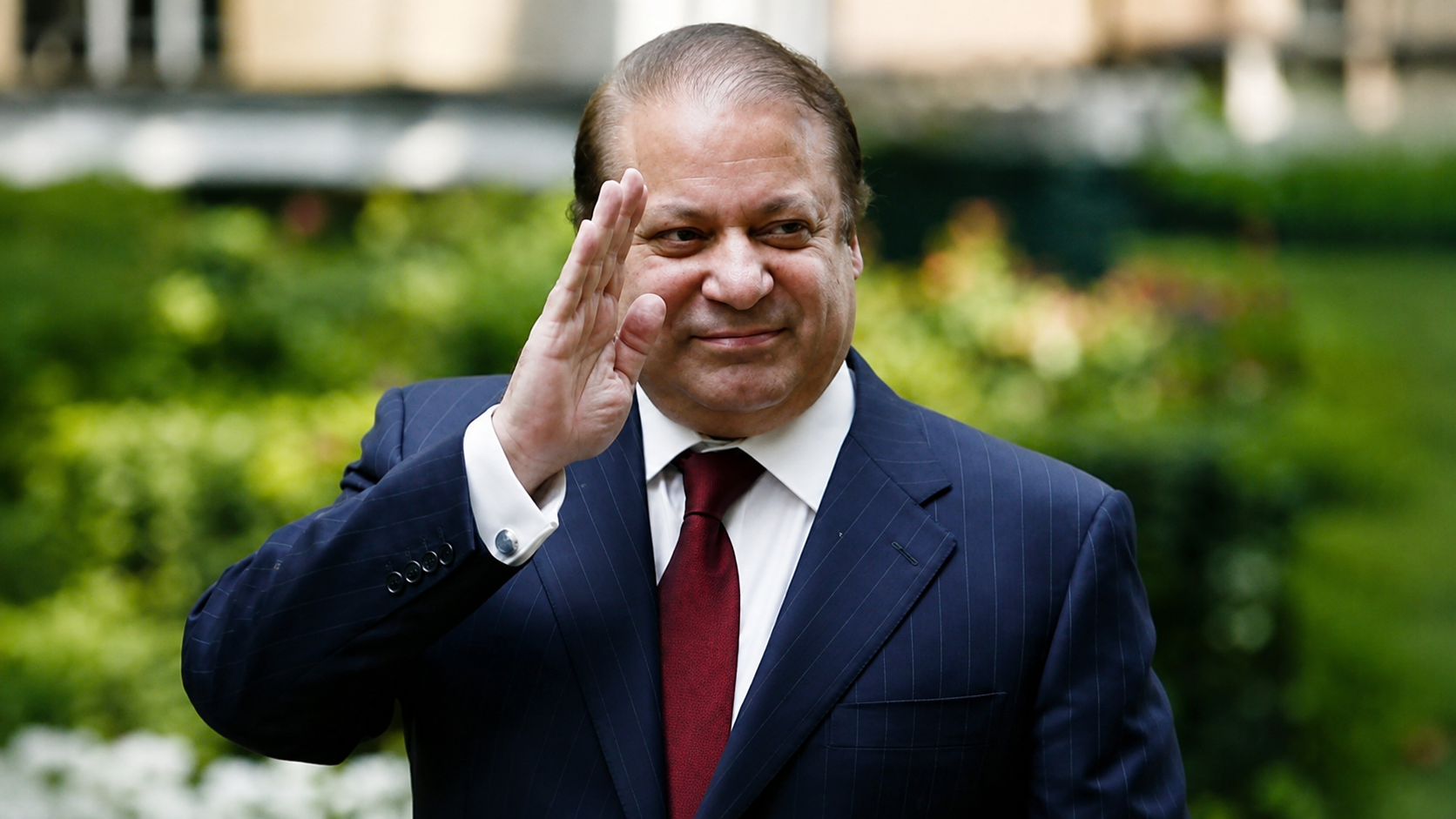
A profile of the three-time former prime minister’s rise, removals, comeback and continuing influence in Pakistan politics.
Nawaz Sharif remains one of Pakistan’s most consequential political figures, with a career that has shaped the country’s elections, economy, institutional conflicts and party politics for more than four decades.
A three-time former prime minister, president of the Pakistan Muslim League-Nawaz and member of the National Assembly from NA-130 Lahore-XIV, Sharif continues to hold a central position in Pakistan’s political landscape. His influence today is not based on executive office, but on party control, family-led political authority and his long association with Punjab’s electoral politics.
Sharif’s political journey has moved through unusual extremes: rise under military rule, repeated electoral victories, dismissal from office, a military coup, exile, corruption cases, disqualification, legal relief and return to national politics. His story is also the story of Pakistan’s unresolved political questions: civilian authority, accountability, dynastic leadership and the role of Punjab in national power.
Current Political Position
Nawaz Sharif is currently president of the Pakistan Muslim League-Nawaz and member of the National Assembly from NA-130 Lahore-XIV. He took oath as MNA on February 29, 2024, after contesting the 2024 general election.
He does not hold an executive government office. The federal government is led by Prime Minister Shehbaz Sharif, while Punjab is headed by Chief Minister Maryam Nawaz. This arrangement places Nawaz Sharif at the centre of party strategy rather than day-to-day administration.
His current role is best understood through three positions: party president, senior parliamentary figure and political head of the Sharif family. Within PML-N, he remains the leader whose name defines the party’s identity, vote bank and political direction.
Early Life And Business Background
Mian Muhammad Nawaz Sharif was born on December 25, 1949, in Lahore. He comes from a Kashmiri-origin business family that built its prominence through the Ittefaq industrial group.
This business background distinguished him from many traditional Pakistani politicians whose influence came from feudal landholding or tribal networks. Sharif’s early public image was linked to industry, commerce and urban Punjab. That identity later became visible in his politics, which focused heavily on infrastructure, investment, roads, transport and economic growth.
His family’s business interests also became a recurring issue in political debate. Supporters argue that his background gave him a practical understanding of the economy. Critics say the overlap between family wealth and political power raised questions about transparency, privilege and accountability.
Entry Into Politics
Nawaz Sharif entered politics in the 1980s during the rule of General Zia-ul-Haq. His rise began in Punjab, where he first served as provincial finance minister and later became chief minister.
His early political career developed at a time when conservative and anti-PPP forces were being organised in Punjab. By the late 1980s and early 1990s, Sharif had emerged as Benazir Bhutto’s principal rival at the national level.
The rivalry between Nawaz Sharif and Benazir Bhutto defined much of Pakistan’s politics in the 1990s. Governments were repeatedly formed and removed, alliances shifted quickly, and elected leaders often operated under pressure from presidents, courts and the establishment.
First Term As Prime Minister
Nawaz Sharif became prime minister for the first time in November 1990. His first government promoted privatisation, economic liberalisation and infrastructure development.
The term ended in 1993 after a power struggle with President Ghulam Ishaq Khan. Sharif’s government was dismissed in April 1993. Although the Supreme Court restored him, the confrontation continued, and both Sharif and the president eventually resigned in July 1993.
That first term established two themes that would follow Sharif throughout his career: a focus on economic development and repeated confrontation with powerful institutions.
Second Term: Heavy Mandate, Nuclear Tests And Coup
Sharif returned to power after the 1997 general election with a strong parliamentary mandate. His second term became one of the most defining phases of his political career.
In May 1998, his government authorised Pakistan’s nuclear tests after India conducted its own tests earlier that month. Supporters regard the decision as one of Sharif’s most important national security actions. Critics point out that the tests also brought sanctions and economic pressure at a difficult time.
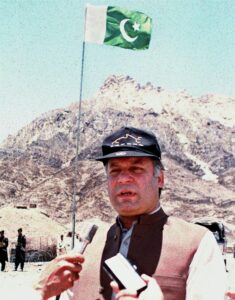
His second government also sought to consolidate civilian authority. But tensions with the military leadership deepened, especially after the Kargil conflict and differences with army chief General Pervez Musharraf.
On October 12, 1999, Sharif’s government was removed in a military coup led by Musharraf. He was arrested, later convicted, and eventually sent into exile in Saudi Arabia. The coup became one of the most important turning points in his political life, reshaping him from an establishment-backed conservative leader into a politician increasingly associated with the civilian supremacy narrative.
Exile, Return And Rebuilding PML-N
Sharif’s exile weakened PML-N but did not end its support base in Punjab. The party retained influence through local networks, family leadership and its reputation among voters who associated it with development and business-friendly governance.
After the decline of Musharraf’s rule, Sharif returned to Pakistan’s political scene. PML-N performed strongly in Punjab in the 2008 election and positioned itself as a major opposition force at the federal level.
By 2013, Sharif had rebuilt enough political strength to return to power for a third time.
Third Term And The 2013 Mandate
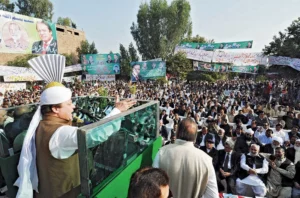
The 2013 general election brought Nawaz Sharif back as prime minister. PML-N won 157 of 342 National Assembly seats, making it the largest party in the lower house.
His third government inherited a country facing electricity shortages, terrorism, economic pressure and weak investor confidence. The PML-N government focused on energy projects, road infrastructure, urban transport and the China-Pakistan Economic Corridor.
Sharif’s supporters say this period strengthened his image as a development-focused leader. They cite reduced power outages, motorway expansion, transport schemes and CPEC-related projects as evidence of delivery.
Critics argue that his government did not do enough to reform taxation, education, health, policing, local government and public institutions. They say the PML-N model relied too heavily on visible infrastructure instead of deeper governance reform.
Panama Papers And Disqualification
The most serious crisis of Sharif’s third term began after the Panama Papers leak in 2016. The documents raised questions about offshore companies and London properties linked to members of his family.
The issue became a major political campaign led by opposition parties, particularly Pakistan Tehreek-e-Insaf. The matter reached the Supreme Court and, on July 28, 2017, Sharif was disqualified from holding public office.
Sharif stepped down as prime minister after the verdict. He and his family denied wrongdoing and described the cases as politically motivated. His opponents argued that the case raised legitimate questions about undeclared wealth, transparency and accountability.
The Panama case changed Pakistan’s political direction. It removed a sitting prime minister, intensified the PML-N-PTI rivalry and deepened debate over the judiciary’s role in political accountability.
Convictions, Appeals And Political Return
After his disqualification, Sharif faced corruption cases linked to the Panama Papers controversy. He was convicted in the Avenfield apartments case in 2018, while his family also faced legal proceedings.
Over time, his legal position changed. His convictions were later overturned on appeal, and legal developments before the 2024 election allowed him to return to electoral politics.
Sharif returned to Pakistan from London in October 2023 after several years abroad. His return was presented by PML-N as a political comeback, but the political environment had changed. PTI had built a strong support base among young voters, urban groups, overseas Pakistanis and digitally active political audiences.
The 2024 Election And Changed Role
In the 2024 general election, Nawaz Sharif contested from NA-130 Lahore-XIV and returned to the National Assembly. Before the election, many PML-N supporters expected him to seek a fourth term as prime minister.
That did not happen. After the election and coalition negotiations, Shehbaz Sharif became prime minister. Nawaz Sharif remained in parliament and later returned to the presidency of PML-N in May 2024.
The development showed both the strength and limits of his comeback. He had regained formal political space, but his role had shifted from direct executive authority to party leadership and strategic influence.
Political Base In Punjab
Nawaz Sharif’s strongest political base has historically been Punjab, particularly Lahore and central Punjab. His support has come from traders, industrialists, local electables, conservative voters, sections of the urban middle class and citizens who associate PML-N with development projects.
For decades, PML-N built its Punjab identity around roads, motorways, transport systems, energy projects and administrative control. Nawaz Sharif’s name became closely linked with this development model.
That base, however, has faced pressure. PTI’s rise changed Punjab’s electoral politics by mobilising younger voters, urban professionals, overseas Pakistanis and anti-status-quo sentiment. PML-N remains deeply rooted, but it no longer operates in the one-sided Punjab landscape it once dominated.
Leadership Style
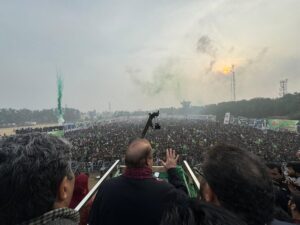
Nawaz Sharif’s leadership style is controlled, personal and family-centred. He is not primarily known as a daily media performer or street agitator. His politics has relied more on party organisation, selective public messaging, personal loyalty and development-based claims.
Inside PML-N, his authority remains decisive. The party’s leadership structure is closely tied to the Sharif family, with Shehbaz Sharif, Maryam Nawaz and other family members holding major political roles.
This structure has helped PML-N maintain continuity through crisis, but it has also invited criticism that the party lacks internal democracy and remains dominated by dynastic politics.
Civil-Military Relations
Few parts of Sharif’s career are as significant as his changing relationship with Pakistan’s military establishment.
His early political rise took place during the Zia period, and critics have long argued that he benefited from establishment-backed politics in his early years. His later career, however, was marked by confrontation with military leadership and powerful institutions.
The 1999 coup, his exile, his later criticism of political interference and his post-2017 narrative all contributed to his image as a leader who challenged unelected power.
Supporters describe this as an evolution toward civilian supremacy. Critics call it selective, arguing that Sharif became a strong advocate of civilian authority only after institutional power turned against him.
Achievements
Nawaz Sharif’s supporters identify four major areas of achievement.
First, infrastructure. The motorway network became the symbol of his development politics and remains one of the most visible markers of his governments.
Second, national security. The 1998 nuclear tests are remembered by his supporters as a decisive response to India and a major moment in Pakistan’s defence history.
Third, energy and economic projects. His 2013 government worked to reduce electricity shortages and expand infrastructure investment.
Fourth, party survival. Despite dismissal, exile, disqualification and imprisonment, Sharif kept PML-N among Pakistan’s major political forces.
Criticism And Controversies
Sharif’s critics focus on corruption allegations, dynastic politics, institutional conflict and governance priorities.
The Panama Papers case and related corruption proceedings remain central to criticism of his record, even after later legal relief. Opponents argue that the cases raised serious questions about wealth and accountability.
Dynastic politics is another major criticism. With Shehbaz Sharif as prime minister and Maryam Nawaz as chief minister of Punjab, critics say PML-N remains controlled by one family rather than an internally democratic party structure.
There is also criticism of governance priorities. Opponents argue that Sharif’s governments focused heavily on roads and mega projects while failing to reform taxation, education, healthcare, policing and local government.
Legacy
Nawaz Sharif’s legacy is contested because it combines electoral success with repeated institutional defeat.
He is one of Pakistan’s few leaders to become prime minister three times, but he never completed a full term. His governments ended in 1993, 1999 and 2017 under different political and institutional circumstances.
His supporters remember him for infrastructure, nuclear tests, economic projects and his later stand for civilian authority. His critics remember corruption allegations, dynastic control, elite politics and missed opportunities for reform.
His political career also explains the rise of Punjab-centred development politics. For decades, PML-N’s appeal was built around the promise that visible infrastructure and administrative control could deliver stability and growth.
Current Political Significance
Nawaz Sharif remains significant because PML-N continues to depend on the political identity he built. His name is still central to the party’s appeal in Punjab, its development narrative and its organisational structure.
His influence is also visible in the present distribution of power. Shehbaz Sharif leads the federal government, Maryam Nawaz leads Punjab, and Nawaz Sharif heads the party. This arrangement keeps him central to PML-N’s internal balance, even though he does not hold executive office.
The main test for Sharif is whether he can help PML-N adapt to a changed political environment. The party faces pressure from economic discontent, PTI’s voter mobilisation, public distrust of traditional politics and the challenge of attracting younger voters.
His continuing importance also lies in what his career represents. Nawaz Sharif’s political journey reflects Pakistan’s long-running struggle over elected authority, accountability, dynastic leadership and institutional power.
Conclusion
Nawaz Sharif’s career cannot be reduced to either achievement or controversy. It contains both.
He is a three-time former prime minister who shaped Pakistan’s infrastructure politics, led the country during the 1998 nuclear tests and kept PML-N alive through repeated crises. He is also a leader whose record remains marked by corruption allegations, family dominance, institutional confrontation and unresolved questions about governance reform.
More than four decades after entering politics, Nawaz Sharif remains central to Pakistan’s political story. His future influence will depend on whether PML-N can defend its Punjab base, manage generational transition and respond to a political landscape that is more polarised, younger and less forgiving than the one in which he first rose to power.