
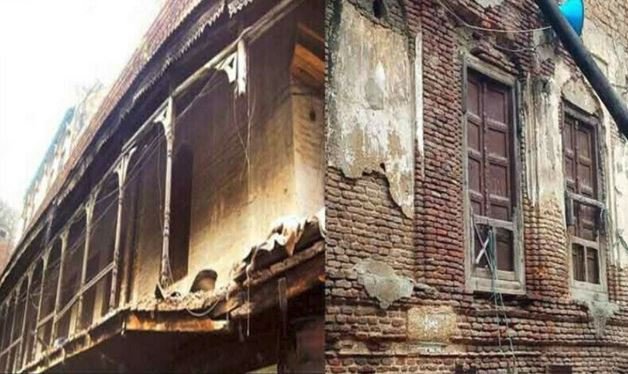
ISLAMABAD: Pakistan can make its ageing urban neighbourhoods more liveable, climate-resilient and economically productive by adapting China’s people-centred urban renewal model, experts say.
The approach focuses on upgrading existing communities, improving municipal services and preserving local identity instead of relying mainly on demolition and outward urban expansion.
China has applied the model in projects ranging from ageing residential areas in Shanghai’s Huangpu District to former industrial zones along the Yangpu Riverside and in Shijiazhuang, where old factories and docklands have been transformed into parks, libraries, cultural spaces, cafés and public areas.
Experts believe the model offers useful lessons for Pakistan, where rapid urbanisation, ageing infrastructure and recurring monsoon flooding continue to put pressure on major cities.
According to the 2023 Population Census, Pakistan’s urban population stood at nearly 94 million, or 38.8% of the total population.
Pakistan’s Cities Need Renewal, Not Just Expansion
Speaking to Wealth Pakistan, Urban Planning Consultant at the Urban Unit Izhar ul Haq said Pakistan’s urban development model has traditionally focused on expanding cities rather than improving existing neighbourhoods.
He said older areas in cities such as Lahore, Karachi, Quetta and Khuzdar are often neglected while new housing societies and road networks continue to expand on the urban periphery.
Haq argued that rehabilitating existing housing by improving plumbing, structural safety, access and municipal services can be more economical and less disruptive than demolishing communities and relocating residents far from jobs and basic facilities.
He said China’s Huangpu model showed how ageing neighbourhoods can be upgraded without uprooting communities.
Weak Municipal Systems Remain a Major Challenge
Haq said one of Pakistan’s biggest obstacles is the weakness of local government institutions.
He noted that development authorities, municipal corporations, water utilities and cantonment boards often have overlapping responsibilities, leading to fragmented urban management.
According to him, recurring urban flooding during the monsoon season reflects not only poor infrastructure but also weak coordination between agencies.
He called for drainage, solid waste management and building control to be placed under stronger municipal authorities, while existing building regulations and master plans should be enforced more effectively.
He also warned against encroachments on natural drainage channels and floodplains, which can worsen flooding risks.
Climate-Resilient Urban Renewal Gains Importance
Town Planner at Shehersaaz Abida Parveen said Pakistan should focus on preserving, rehabilitating and upgrading ageing neighbourhoods instead of allowing valuable urban assets to deteriorate.
She highlighted the use of biophilic design, including green roofs and green corridors, to reduce heat and improve urban resilience.
Parveen cited the Aga Khan Trust for Culture’s heritage-led regeneration of Lahore’s Walled City as a local example of how older urban areas can be renewed without losing their historical character.
She also pointed to the ongoing redevelopment of Rawalpindi’s Raja Bazaar as evidence that people-centred urban renewal can be applied in Pakistan.
Better Drainage, Green Spaces and Public Transport Needed
Parveen said future urban planning must place greater emphasis on climate resilience, particularly as Pakistani cities face growing risks from flooding and extreme heat.
She called for stronger drainage systems, improved sewerage, better stormwater outlets, removal of encroachments from natural waterways and more effective solid waste management.
She also stressed the importance of expanding green infrastructure to reduce the urban heat island effect.
Public transport, she added, should be strengthened to reduce congestion, emissions and pressure on city infrastructure.
Experts Urge Shift Away From Demolition-Led Planning
On housing and informal settlements, Parveen said authorities should prioritise upgrading existing communities wherever possible instead of relying heavily on demolition drives.
She argued that urban renewal should be treated as a long-term governance function rather than a one-off construction project.
Experts believe China’s experience offers Pakistan a practical framework built around upgrading existing neighbourhoods, strengthening municipal institutions, enforcing land-use rules and investing in drainage, mobility and green infrastructure.
Such an approach, they say, could help Pakistani cities become more resilient, inclusive and productive while preserving the communities and identities already rooted within them.
Also Read: Jinnah’s vision, Pakistan’s strength take centre stage at landmark London exhibition