
ISLAMABAD, July 17: Women were recorded as heads of fewer than 1% of Pakistan’s farms in the Agricultural Census 2024, highlighting a wide gender gap in the country’s formal agricultural structure.
The Pakistan Bureau of Statistics recorded 80,278 farms under female-headed households out of a national total of 11.104 million farms. Male-headed households accounted for 11.023 million farms, according to the census report available with Wealth Pakistan.
The figures are significant because agriculture remains a major source of employment and income in Pakistan, while women’s contribution to farming is often not fully reflected in land ownership, farm registration and household records.
Female-headed farms accounted for 283,676 acres out of Pakistan’s total farm area of 59.301 million acres. Their cultivated area stood at 255,597 acres, compared with the national cultivated area of 52.788 million acres.
Punjab Records Highest Number of Female-Headed Farms
Punjab had the highest number of farms recorded under female-headed households, with 34,292. Sindh followed with 30,979, while Khyber Pakhtunkhwa recorded 12,374.
Balochistan had 2,524 female-headed farms, while Islamabad Capital Territory recorded 109.
In terms of total farm area, female-headed households accounted for 119,481 acres in Punjab, 82,478 acres in Sindh and 54,261 acres in Balochistan.
Khyber Pakhtunkhwa recorded 27,232 acres under female-headed farms, while Islamabad Capital Territory accounted for 223 acres.
The cultivated area under female-headed households stood at 111,987 acres in Punjab, 74,191 acres in Sindh, 49,296 acres in Balochistan, 19,900 acres in Khyber Pakhtunkhwa and 223 acres in Islamabad.
Census Data Does Not Capture Women’s Full Agricultural Role
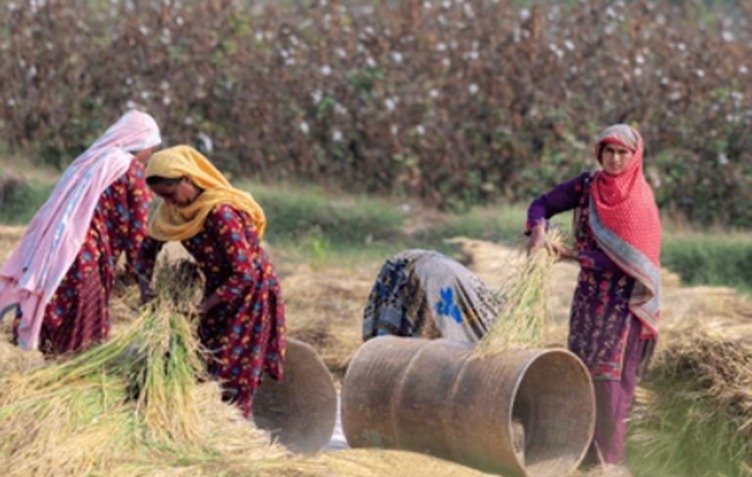
The figures do not indicate that women are largely absent from agriculture. Women remain involved in sowing, harvesting, livestock care, dairy production, fodder collection and post-harvest work across rural Pakistan.
Instead, the data shows that only a small share of farms is formally recorded under women as household heads.
The finding raises questions about women’s access to agricultural credit, land records, machinery, extension services, livestock support and climate-resilient farming programmes.
Where government support schemes are linked mainly to registered farm operators or household heads, women may remain underrepresented despite their contribution to agricultural production.
The census therefore points to the need for agricultural policies and support programmes that recognise women’s actual role in the rural economy, including those who are not formally listed as farm heads.
Also Read: Pakistan Mango Exports Reach 42,343 Tonnes as Iran Leads Key Markets