
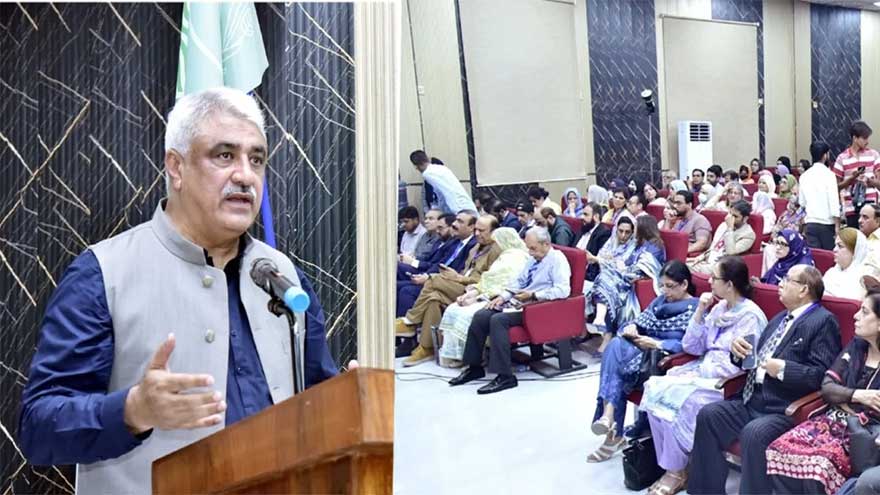
LAHORE: Punjab Health Minister Khawaja Salman Rafique on Sunday said a strong healthcare system depends on digital records, disease surveillance and research-based policymaking, as the provincial government expands public health and specialised medical services across Punjab.
Speaking at the 7th International Health Research Conference at the Institute of Public Health (IPH) in Lahore, the minister said modern public health systems required integrated data networks, laboratory coordination and evidence-driven decision-making to improve healthcare delivery and outbreak preparedness.
The conference, held under the theme “One Nation, One Record, One Registry Network,” focused on strengthening Pakistan’s healthcare data infrastructure and research systems.
Khawaja Salman Rafique said the Punjab government, under Chief Minister Maryam Nawaz, was continuing investment in advanced healthcare programmes and public medical facilities.
Expansion of specialised healthcare services
The minister highlighted several initiatives launched in Punjab, including children’s heart surgery, kidney and liver transplants, bone marrow treatment, cochlear implants, cancer care and stroke management programmes.
He said neurology services for adults and children were being introduced in phases across districts, while free dialysis treatment arrangements had been expanded in government and private hospitals throughout the province.
New children’s hospitals are also being established at divisional headquarters, he added. According to the minister, the Nawaz Sharif Institute of Cardiology in Sargodha and the Jinnah Institute of Cardiology in Lahore are expected to begin operations in July.
Focus on disease surveillance and water safety
Khawaja Salman Rafique said the Punjab government had allocated Rs116 million for a Water Testing Laboratory aimed at strengthening environmental health monitoring and improving water quality assessment.
He added that improvements in the Public Health Laboratory had enhanced diagnostic capacity, disease surveillance and emergency preparedness during outbreaks.
The minister also said the Institute of Public Health had supported dengue surveillance efforts through vector monitoring, alert systems and technical guidance based on integrated vector management principles recommended by the World Health Organization.