
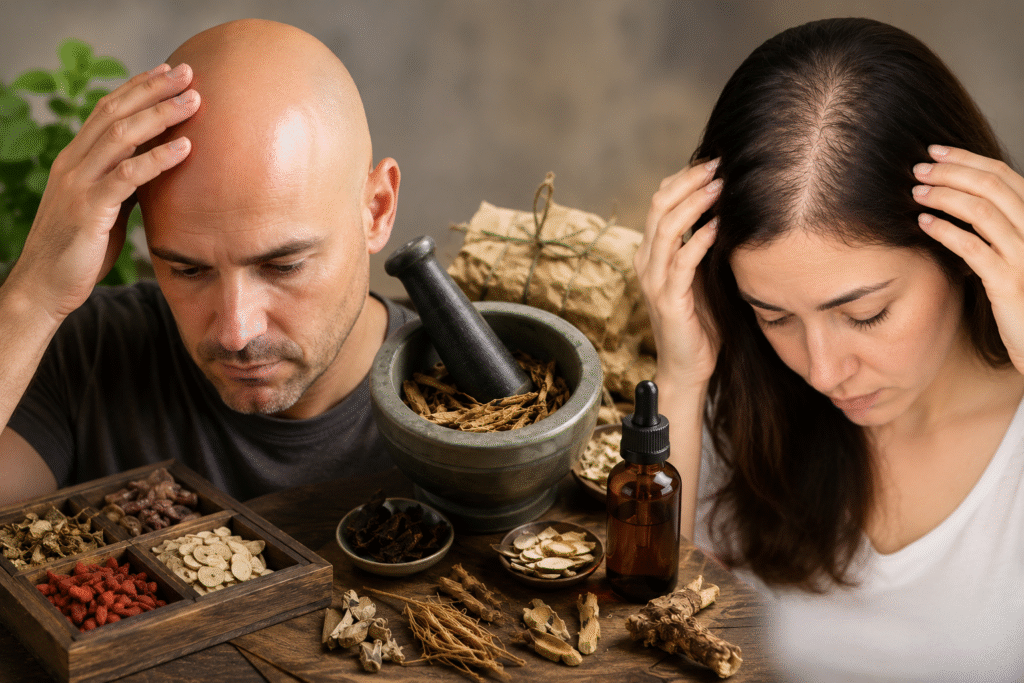
A medicinal root used in traditional Chinese medicine for more than 1,000 years may offer a potential new approach to treating hair loss, according to a recent scientific review. Researchers found that Polygonum multiflorum could help address several biological processes linked to androgenetic alopecia, the most common form of hair loss worldwide.
Androgenetic alopecia affects millions of men and women and develops gradually as hair follicles shrink over time. As the follicles become smaller, they produce thinner and weaker hair, eventually slowing or stopping hair growth altogether.
Current treatments include medications such as finasteride and minoxidil. Finasteride works by targeting hormones associated with follicle shrinkage, while minoxidil is applied directly to the scalp to stimulate hair growth. However, some patients remain concerned about potential side effects, including sexual dysfunction linked to finasteride and scalp irritation associated with minoxidil.
Traditional remedy draws scientific attention
According to the review, Polygonum multiflorum has been used in traditional Chinese medicine for centuries and is commonly associated with promoting hair health and supporting overall vitality.
Researchers noted that the herb may be particularly significant because it appears to influence multiple biological pathways involved in hair growth and hair loss, rather than targeting a single mechanism.
Potential impact on hair-loss hormone
One of the key factors involved in androgenetic alopecia is dihydrotestosterone (DHT), a hormone known to gradually shrink hair follicles and reduce their ability to produce healthy hair.
The review found that Polygonum multiflorum may help reduce the effects of DHT, potentially protecting hair follicles from one of the main drivers of pattern hair loss. Researchers said the findings highlight the herb’s potential for further study as scientists continue to explore new treatment options for androgenetic alopecia.
The review’s authors emphasized that additional research is needed to better understand the herb’s effectiveness and safety before it can be considered a standard treatment option.
Also Read :Strength training linked to lower risk of death and neurological disease, study finds