
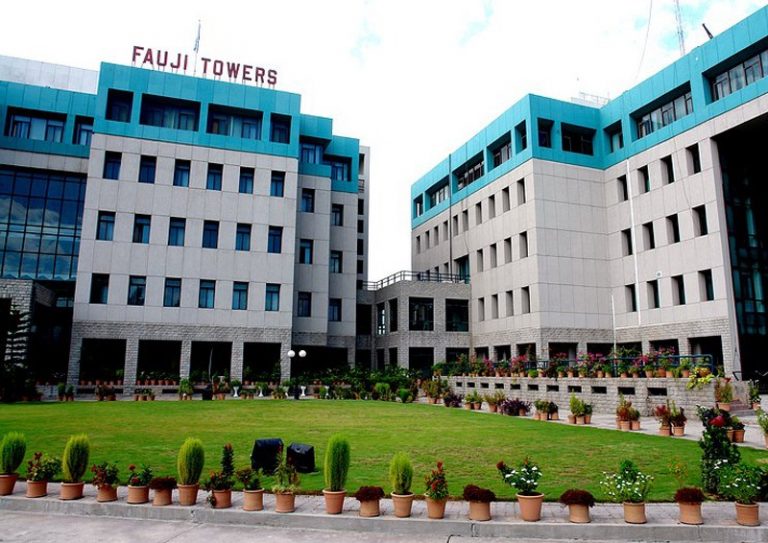
Fauji Foundation, established in 1954 as a charitable trust for Pakistan’s ex-servicemen, war widows and their dependents, has grown into one of the country’s largest and most diversified business groups. Created under the Charitable Endowments Act, the Foundation was originally designed to generate income for welfare services, including healthcare, education, stipends and vocational training for former armed forces personnel and their families.
Over the decades, Fauji Foundation has evolved into a powerful welfare-corporate institution. Its business interests now span fertilizers, cement, power generation, oil and gas, banking, food processing, logistics, port operations and renewable energy. The group includes around 23 companies, including six listed entities, and employs nearly 25,000 people.
The Foundation remains legally structured as a private trust, but its governance is closely linked with Pakistan’s military establishment. Its board is chaired by the Federal Secretary of Defence, while senior leadership positions have traditionally been held by retired military officers, including retired lieutenant generals. This structure makes Fauji Foundation different from conventional private-sector conglomerates and places it in a unique position within Pakistan’s economic landscape.
From Welfare Trust to Corporate Group
Fauji Foundation was created from leftover British-era military welfare funds after the partition of the subcontinent. Its initial capital was invested in commercial ventures, including a textile mill, and later expanded into healthcare and other welfare services. The Foundation says it operates on a self-sustaining model and does not rely on government grants.
Its stated mission remains twofold: to run profitable businesses and use commercial earnings to support welfare programmes for ex-servicemen and their families. According to the Foundation’s own position, a significant share of profits is directed toward welfare schemes. Critics, however, have questioned the exact balance between commercial expansion and welfare spending, citing limited public availability of detailed financial information.
Today, Fauji Foundation says its welfare network serves millions of beneficiaries. Its education system includes more than 100 schools and colleges, while its healthcare network includes 11 hospitals and several clinics and medical centres. Around 1.5 million patients reportedly use Fauji medical facilities each year, including veterans, dependents and civilian patients.
Major Businesses and Market Role
Fauji Foundation’s largest and most visible commercial interests are in fertilizers, energy, banking and cement. Fauji Fertilizer Company is among Pakistan’s largest urea producers and plays a major role in the national agriculture supply chain. Fauji Fertilizer Bin Qasim is also important for fertilizer production, particularly in the phosphate segment.
Mari Petroleum, another key affiliate, is a major oil and gas exploration and production company. It is linked to the Mari gas field, one of Pakistan’s largest gas reservoirs, and contributes to domestic gas output. Askari Bank gives the group a significant presence in the financial sector, while Fauji Cement and Askari Cement place it among the important players in Pakistan’s construction materials market.
The Foundation also operates in power generation through Fauji Kabirwala Power Company, Foundation Power Company Daharki and wind energy projects in Sindh. Its logistics and port-related businesses include Fauji Oil Terminal and Distribution Company and Fauji Akbar Portia Marine Terminal at Port Qasim. In the consumer sector, Fauji Foods, Fauji Cereals and other food ventures have expanded the group’s footprint into dairy, cereals and food processing.
This wide sectoral spread gives Fauji Foundation a role beyond welfare. It is also an industrial, financial and infrastructure group with influence across key areas of Pakistan’s economy.
Financial Scale and Welfare Impact
Fauji Foundation’s financial size has increased significantly over time. Older official figures placed group assets at more than $3.6 billion by 2016, while more recent estimates have valued the group at around $5.9 billion. Its listed companies are important players on the Pakistan Stock Exchange, and affiliates such as Mari Petroleum and Fauji Fertilizer have delivered strong corporate performance in recent years.
The Foundation says its business income supports welfare services. Its healthcare system provides subsidized and free treatment to eligible beneficiaries, while its education network serves tens of thousands of students. The Foundation also provides stipends, vocational training and other forms of support for former military personnel and their dependents.
Recent welfare expansion has included medical facilities, an artificial limb centre, a nursing college and a general hospital. These projects reflect the Foundation’s continued effort to present its commercial growth as a source of social support for veterans and their families.
Governance Questions and Public Scrutiny
Despite its welfare contribution, Fauji Foundation has faced public debate over transparency, governance and accountability. Critics argue that its close association with the military, its private-trust status and the presence of retired officers in senior roles create questions about oversight and competition.
One of the most frequently cited controversies involved the 2005 sale of Khoski Sugar Mill, when opposition lawmakers questioned the sale price and alleged irregularities. Fauji Foundation denied wrongdoing and maintained that it operated as a private trust. The issue nevertheless added to calls for greater scrutiny of military-linked business groups.
There has also been debate over whether such entities enjoy advantages not available to ordinary private companies. Critics point to questions about tax treatment, access to influence and limited disclosure. Supporters, however, argue that Fauji Foundation’s commercial success funds a large welfare system and contributes to employment, industrial output and social services.
Part of a Wider Military-Linked Economic Network
Fauji Foundation operates alongside other military-linked welfare and business institutions, including Army Welfare Trust, Bahria Foundation and Shaheen Foundation. Together, these entities form a broad network of military-associated economic activity in Pakistan.
However, Fauji Foundation remains the largest and most diversified among them. Compared with private groups such as Engro, Lucky, Nishat and Bestway, Fauji’s distinguishing feature is its welfare mandate. Unlike purely private conglomerates, it presents itself as a charitable trust that uses business profits to support ex-servicemen and their families.
Outlook
In recent years, Fauji Foundation has continued expanding into renewable energy, food processing, agriculture-related ventures, infrastructure and logistics. Its wind energy projects, fertilizer partnerships and port operations indicate a strategy focused on stable returns in essential sectors.
For Pakistan, Fauji Foundation remains a complex institution: a welfare trust with a major corporate footprint, a military-linked organization active in competitive markets, and a business group whose profits are officially tied to social welfare. Its future will continue to be watched closely as national debate grows over transparency, welfare delivery, economic influence and the role of military-linked enterprises in Pakistan’s corporate sector.
Also Read: Fauji Fertilizer Company: The Fertilizer Giant Behind Pakistan’s Food Security


 Today's E-Paper