
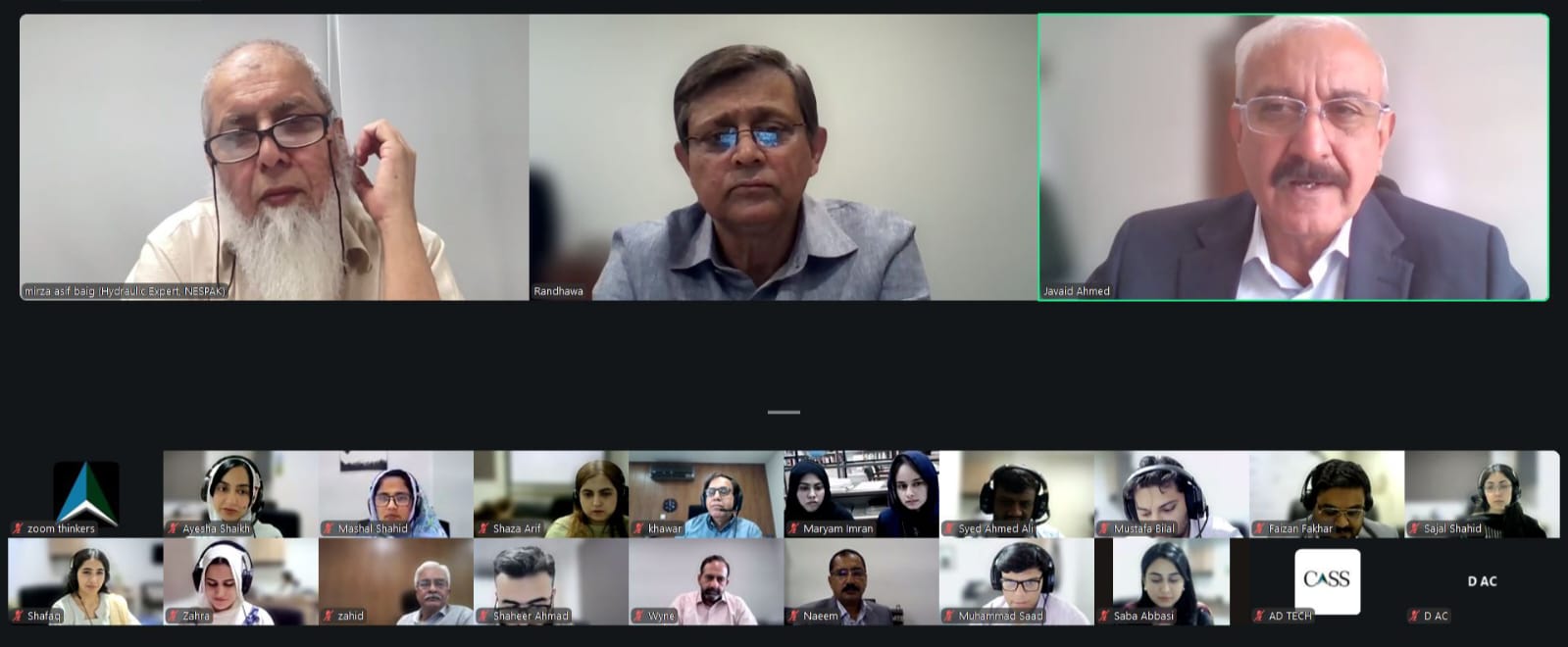
ISLAMABAD, July 6, 2026: The Centre for Aerospace & Security Studies (CASS) hosted an online discussion on the Future of the Indus Waters Treaty, bringing together experts to examine the legal, historical and strategic challenges facing the decades-old water-sharing agreement between Pakistan and India.
The virtual Catalyst Conversation, held on July 2, focused on how recent political developments, expanding hydropower infrastructure and climate-related pressures are reshaping the future of the treaty and regional water security. The event also explored the implications for stability in South Asia and Pakistan’s management of shared water resources.
Experts examine treaty implementation challenges
Moderating the discussion, CASS Director Air Marshal Hamid Randhawa (Retd) said the Indus Waters Treaty has remained in force despite decades of conflict and political tensions between Pakistan and India. However, he noted that recent developments, including India’s suspension of treaty obligations, growing hydro-infrastructure projects and climate-related challenges, have created new concerns that require renewed dialogue on regional water security.
The keynote address was delivered by former Pakistan Commissioner for Indus Waters Mirza Asif Baig, who presented an overview of the treaty’s history, implementation and the challenges surrounding its enforcement.
Baig said Pakistan has consistently raised objections to the design and operational features of several Indian hydropower projects on the western rivers allocated under the treaty. According to him, prolonged discussions over these objections have often continued while construction of the projects proceeded, limiting opportunities to resolve disputes before completion.
He also noted that although the Indus Waters Treaty is widely regarded as one of the world’s most durable transboundary water agreements, disputes over project implementation have persisted. He said deliberations within the Permanent Indus Commission have produced limited progress in several cases, leading Pakistan to seek dispute resolution through Neutral Expert and Court of Arbitration mechanisms, which can take considerable time.
Baig further observed that while the treaty has faced criticism for favouring India in some respects, it remains the only internationally recognised legal framework governing the shared river system between the two countries.
Water security remains a strategic concern
Concluding the session, CASS President Air Marshal Javaid Ahmed (Retd) said the Indus Waters Treaty has served as one of the world’s most resilient transboundary water-sharing agreements for more than six decades.
He said recent developments suggest that political tensions are placing increasing pressure on the treaty, raising concerns about its role in supporting regional stability and cooperative water management. He also stressed the strategic importance of water security and said Pakistan should continue to prioritise diplomatic and legal efforts while engaging the international community to protect its rights under the treaty.
The Centre for Aerospace & Security Studies regularly organises policy discussions and expert forums on national and international security issues as part of its research and public engagement initiatives.
Also Read: Water as a Strategic Tool: CASS Lahore Seminar Highlights Regional Challenges