
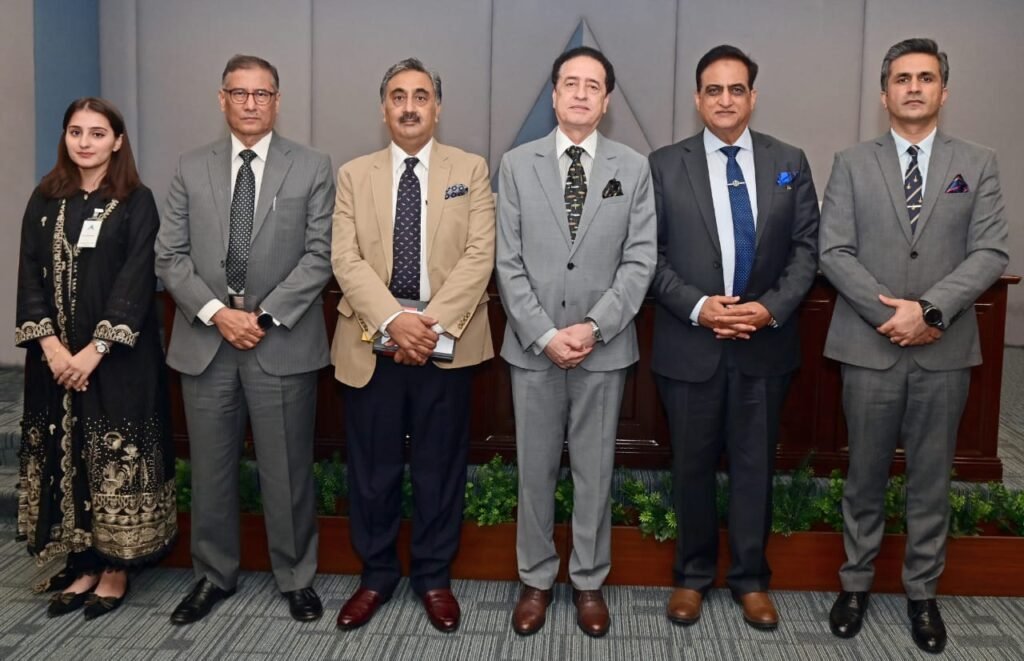
LAHORE, June 18, 2026: The Centre for Aerospace and Security Studies (CASS) Lahore hosted a seminar titled “Water as a Weapon in Modern-day Conflict: From International Treaties to Maritime Chokepoints,” focusing on the strategic, legal, and economic dimensions of water governance and maritime security in South Asia.
The event brought together academics, intellectuals, and domain experts, with Air Marshal Irfan Ahmad, Director National Security at CASS Lahore, delivering the opening address. Discussions centered on the use of water and waterways as instruments of geopolitical influence and the implications for regional stability and Pakistan’s security.
Water Governance and Hydrostrategy
Syed Muhammad Mehar Ali Shah, Pakistan Commissioner for Indus Waters, described South Asian water management as a “hydrostrategy” combining infrastructure, legal frameworks, and political signaling. He noted that the Indus Waters Treaty (IWT) has historically ensured stability in post-1948 water sharing, while Pakistan relies heavily on its river systems, dams, and barrages. Emerging challenges include flow regulation, data control, and “hydro-coercion,” where water resources can be used as tools of strategic pressure. He urged coordinated legal, technical, and diplomatic approaches to ensure sustainable water governance.
Maritime Security and Economic Potential
Vice Admiral Ahmed Saeed highlighted the strategic value of maritime routes, ports, and chokepoints. He referenced UNCLOS 1982, which balances freedom of navigation with coastal states’ rights, and emphasized Pakistan’s role in the Indian Ocean, where roughly 95% of trade and energy imports pass by sea. He estimated Pakistan’s untapped maritime potential at $40 billion and called for sustained investment and policy consistency to leverage it.
International Law and Conflict Context
Ahmer Bilal Soofi, President of RSIL, discussed how international law applies across peacetime, armed conflict, and occupation scenarios. He outlined doctrines such as anticipatory self-defense under Article 51 of the UN Charter and UNCLOS 1982 regulations on blockades and conflict accountability. He referenced India’s abrogation of Article 370 and hydrological measures in IIOJK, warning that “Sindoor 2.0” could perpetuate a conflict mindset and destabilize regional peace.
Water as a Geopolitical Instrument
In his concluding remarks, Air Marshal Asim Suleiman (Retd), President of CASS Lahore, stressed the geopolitical importance of water, citing the Indus Rivers’ central role in Pakistan’s economy. He condemned India’s unilateral suspension of the IWT, reaffirming its legal validity under PCA rulings. He also referenced Iran’s use of UNCLOS rights to block the Strait of Hormuz in a security context, highlighting global economic implications of water and maritime resource weaponization.
The seminar concluded with an interactive session discussing navigation charges, blockades, and international law violations, particularly India’s actions. Participants commended CASS Lahore for facilitating an engaging and comprehensive discussion on these pressing security and resource issues.
Also Read: CASS Hosts Discussion on Pakistan’s Budget Priorities and Fiscal Reform