
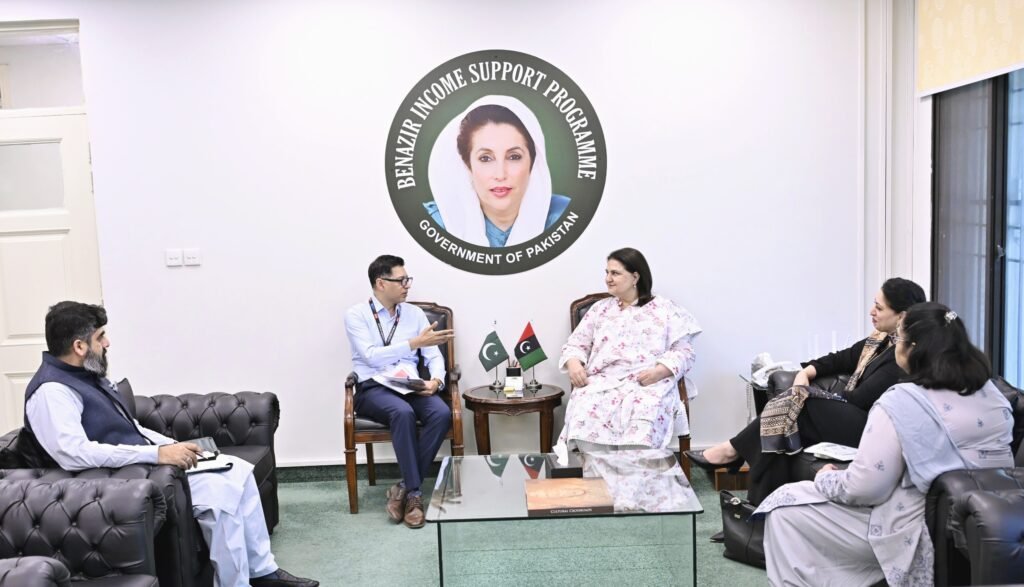
Islamabad — The Benazir Income Support Programme (BISP) and UN Women have discussed expanding collaboration on women’s empowerment, social protection and economic inclusion initiatives aimed at improving support systems for vulnerable groups in Pakistan.
The discussions took place during a meeting between BISP Chairperson Senator Rubina Khalid and UN Women Deputy Country Representative Fehmida Khan in Islamabad. The talks focused on enhancing existing welfare programmes and exploring new areas of cooperation in skills development, health awareness and entrepreneurship support.
Officials said the dialogue is part of ongoing efforts to strengthen Pakistan’s social protection framework, particularly for low-income women benefiting from government cash transfer programmes.
Focus on skills, health awareness and inclusion
According to details shared in the meeting, both sides reviewed potential collaboration under the Benazir Hunarmand Programme to expand skill development opportunities for beneficiaries.
They also discussed the establishment of Women Beneficiary Councils to improve awareness of maternal and child health under the Benazir Nashonuma Programme. Broader proposals included promoting women’s economic empowerment through entrepreneurship initiatives, with inclusive support measures for transgender and unmarried women.
Social protection impact highlighted
Chairperson Rubina Khalid highlighted findings from a recent World Bank LEWIE–CGE study, which estimated that every Rs1 transferred through BISP generates around Rs2.34 in local economic activity through multiplier effects.
She said BISP is also transitioning towards Social Protection Wallets for more than 10 million beneficiaries, describing it as one of the largest financial inclusion initiatives in the country aimed at improving secure and transparent payments for women.
UN Women response and next steps
UN Women Deputy Country Representative Fehmida Khan appreciated BISP’s initiatives, describing the programme as a significant example of women-focused social protection with potential for wider policy impact.
Both sides agreed to continue technical-level consultations, explore joint resource mobilisation, and develop a structured plan for future collaboration. Senior officials from BISP’s NSER/CCT and coordination divisions also attended the meeting.