
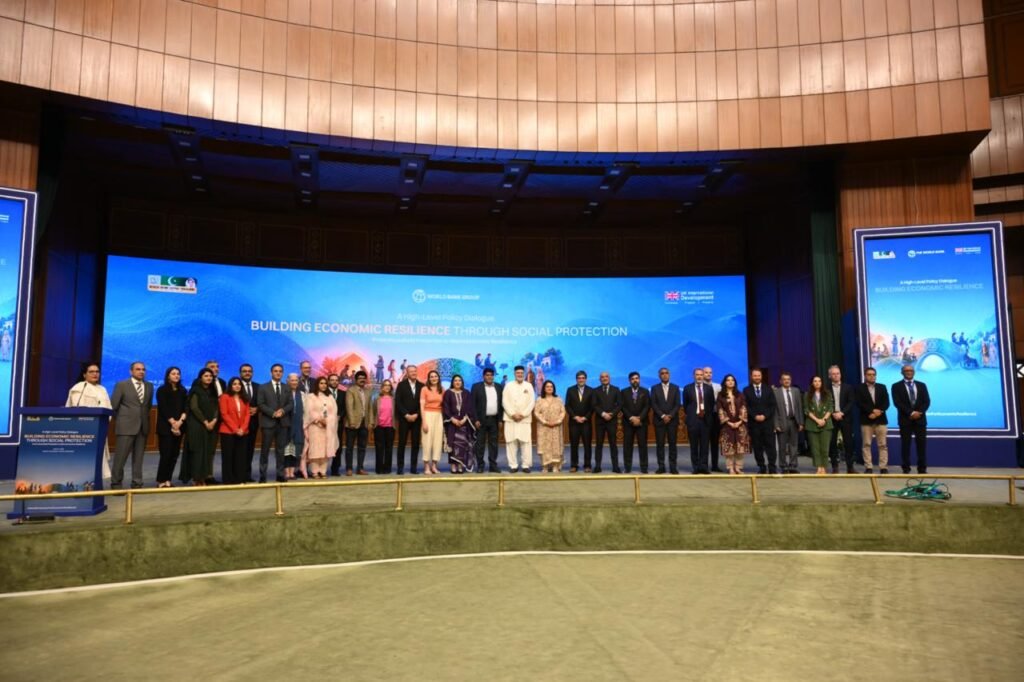
ISLAMABAD, June 9: A new analysis presented at a high-level policy dialogue in Islamabad found that every Rs1 transferred through the Benazir Income Support Programme (BISP) generates an estimated Rs2.34 in real income, highlighting the broader economic impact of Pakistan’s largest social protection initiative.
The findings were shared during a policy dialogue jointly organized by the Benazir Income Support Programme, the World Bank and the UK’s Foreign, Commonwealth and Development Office (FCDO). The event brought together government officials, development partners, researchers and representatives of international financial institutions to discuss the role of social protection in strengthening economic resilience.
According to the analysis, BISP-led social safety nets currently support more than 10.2 million households, representing about 24% of families across Pakistan.
Study highlights economic impact
The research presented at the event estimates that BISP generates approximately Rs1.67 trillion in annual income and contributes around Rs1.21 trillion in additional economic production.
The analysis also found that the programme supports an estimated 1.66 million full-time-equivalent jobs across the economy.
According to the findings, 68% of the income gains generated through the programme reach the poorest 40% of households. The study further estimates that around 24% of programme costs are offset through tax revenues amounting to approximately Rs174 billion annually.
Social protection and economic policy
Federal Minister for Poverty Alleviation and Social Safety Syed Imran Ahmad Shah said the government is expanding social protection initiatives alongside skills development programmes to increase employment opportunities.
He stated that social protection has become an important component of Pakistan’s economic policy framework and emphasized the need to align economic reforms with measures aimed at supporting vulnerable populations.
The minister also acknowledged the support of the World Bank and FCDO and highlighted the role of BISP in providing assistance to low-income households.
Focus on human development and inclusion
BISP Chairperson Senator Rubina Khalid said the programme has evolved beyond direct financial assistance and now plays a broader role in supporting human development and economic inclusion.
She noted that BISP initiatives include support for education, maternal and child health, and vocational training through programmes such as the Benazir Hunarmand Programme.
According to Rubina Khalid, strengthening social protection systems remains essential for reducing poverty and improving opportunities for disadvantaged communities.
Strengthening Pakistan’s social safety net
Participants at the dialogue discussed ways to enhance the effectiveness and responsiveness of Pakistan’s social protection framework in the face of economic and social challenges.
The event concluded with a call for continued collaboration among government institutions, development partners and research organizations to strengthen social safety nets and support long-term economic resilience.
Also Read: BISP expands outreach with seven new mobile registration vans