
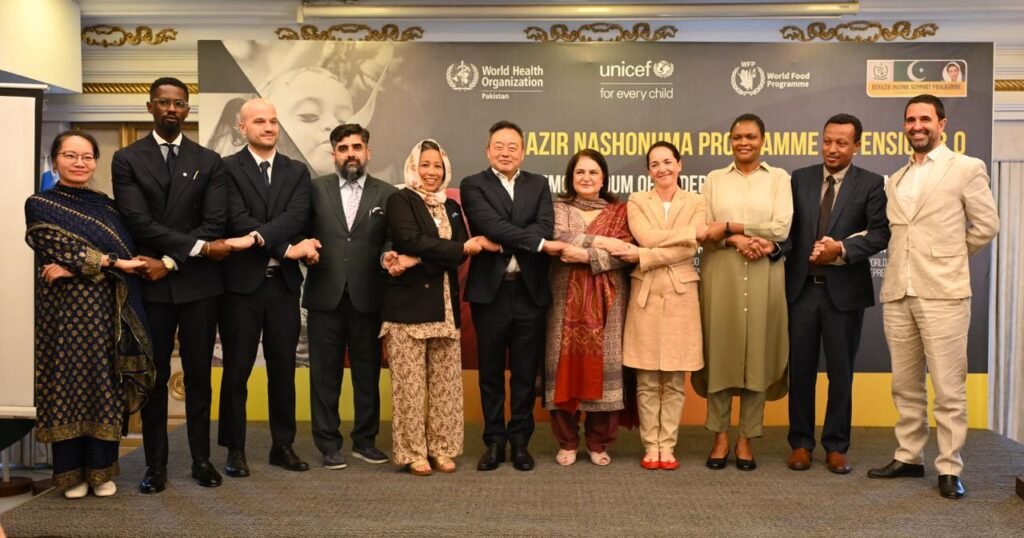
Three-year partnership extension aims to expand nutrition and health services as Pakistan battles high rates of child malnutrition
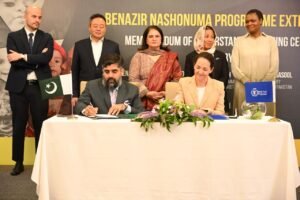
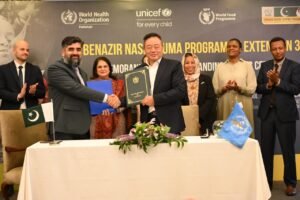
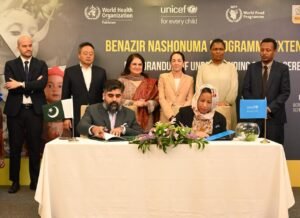
Islamabad: The Benazir Income Support Programme (BISP), in collaboration with the United Nations World Food Programme (WFP), UNICEF and the World Health Organization (WHO), has extended the Benazir Nashonuma Programme for another three years to protect an additional 3.3 million children and women from malnutrition across Pakistan.
The partnership extension was announced on Thursday, July 9, with the initiative expected to increase the programme’s total outreach from 4.7 million beneficiaries to nearly 8 million people since its launch in 2020.
Integrated into BISP’s social protection system, the Benazir Nashonuma Programme provides nutrition and health services to vulnerable pregnant and breastfeeding women and children under the age of two through a nationwide network of 578 facilitation centres and 224 nutrition stabilization centres.
Pakistan Faces Major Malnutrition Challenge
The programme expansion comes as Pakistan continues to face serious challenges related to child nutrition.
According to the programme partners, around four out of every 10 children under five in Pakistan suffer from stunting caused by chronic malnutrition, affecting nearly 10 million children.
The country also faces a high prevalence of wasting, which stands at 17.7 percent and affects around 5 million children, contributing to an estimated annual economic loss of $17 billion.
Officials said the Benazir Nashonuma Programme aims to address these challenges by combining financial support with nutrition, healthcare and awareness services for vulnerable families.
Programme Shows Positive Results
The partnership highlighted that the programme has produced significant outcomes, with enrolled children found to be 22 percent less likely to experience stunting at six months of age.
Evidence from the initiative also showed improvements in maternal nutrition, child survival rates, antenatal care access, healthy pregnancy weight gain and birth outcomes.
BISP Chairperson Senator Rubina Khalid said the programme reflects a commitment to ensuring that poverty does not prevent mothers and children from accessing essential nutrition and healthcare services.
She said the extension represents a renewed national effort to provide children with a healthier start in life and support families facing economic challenges.
UN Agencies Reaffirm Support
WFP Representative and Country Director in Pakistan Anita Hirsch said the extension would allow the organization to continue supporting the government and BISP in reaching more mothers and children with essential nutrition services.
UNICEF Deputy Representative in Pakistan Sharmeela Rassool praised the government’s commitment to nutrition-focused social protection and said the partnership would help strengthen systems, expand access to nutrition interventions and empower communities with better care practices.
WHO Representative in Pakistan Dr Luo Dapeng said the programme demonstrates the importance of science-based approaches combining health, nutrition, social protection, food systems, education and sanitation.
Through the renewed partnership, BISP, WFP, UNICEF and WHO will continue efforts to improve nutrition outcomes, strengthen healthcare access and build a healthier future for vulnerable communities across Pakistan.
Also Read: Faryal Talpur commends BISP reforms and expansion of social protection initiatives