
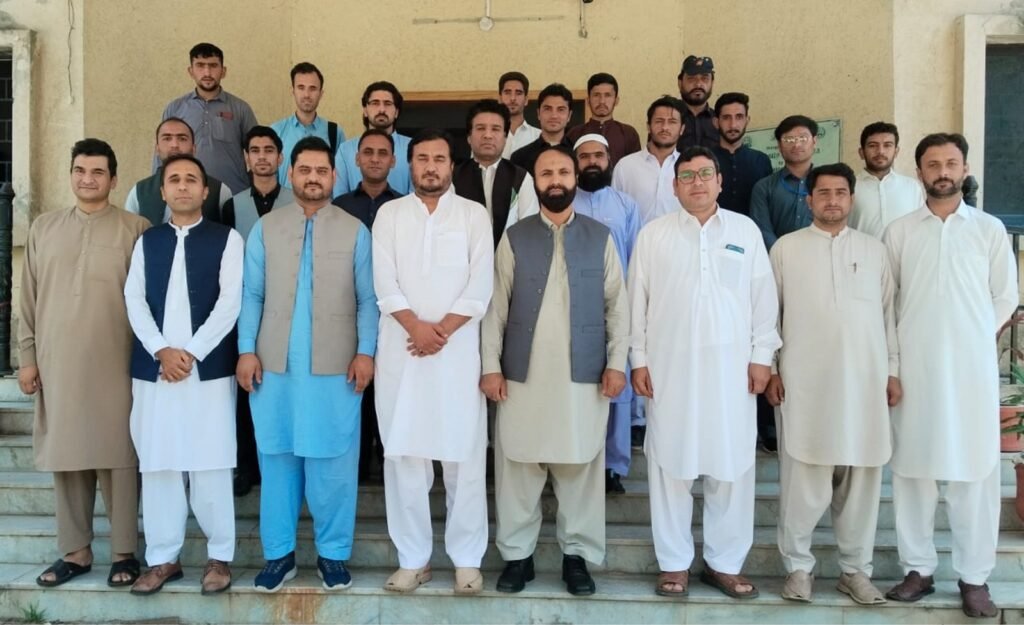
SHANGLA: Vice Chancellor of the University of Shangla, Prof. Dr. Sardar Khan, has called for collective action at both individual and institutional levels to address growing environmental challenges, including pollution, deforestation, biodiversity loss, and climate change.
He made these remarks while addressing a seminar titled “Inspired by Nature, For the Climate, For Our Future,” organized in connection with World Environment Day 2026. The event brought together academics, students, researchers, and environmental experts to discuss nature-based solutions and sustainable development.
The seminar was jointly organized by the Department of Environmental Sciences and the Office of Research, Innovation and Commercialization (ORIC) of the University of Shangla in collaboration with the Pakistan Academy of Sciences.
Addressing participants, Prof. Dr. Sardar Khan emphasized that environmental protection is not solely the responsibility of governments and institutions. He said every individual has a role to play in conserving natural resources and promoting environmentally responsible behavior.
“The environmental challenges we face today are directly linked to the future of coming generations. Promoting environmentally friendly practices and strengthening environmental awareness have become essential requirements of our time,” he said.
Renowned scholars and environmental experts Dr. Atta-ur-Rahman and Dr. Muhammad Nabi attended the seminar as keynote speakers. They highlighted the importance of environmental conservation, climate adaptation, and sustainable lifestyles in mitigating the effects of climate change.
The speakers stressed the need to integrate scientific research with practical environmental solutions to build resilient communities and ensure long-term sustainability.
Focus on nature-based solutions
A key theme of the seminar was the role of nature-based solutions in addressing climate challenges. Experts noted that protecting and restoring forests, wetlands, water resources, and other ecosystems can significantly reduce the impacts of climate change.
They explained that healthy ecosystems help absorb carbon emissions, strengthen biodiversity, improve water security, and provide protection against natural disasters.
The discussion also emphasized that effective climate action requires more than reducing greenhouse gas emissions. Participants highlighted the need to restore the relationship between people and nature while increasing investment in ecosystem-based initiatives.
Sustainable development and global cooperation
Speakers advocated for development models that balance economic growth, social progress, and environmental protection. They said sustainable development can only be achieved through policies and practices that safeguard environmental stability while meeting the needs of present and future generations.
The seminar also underscored the importance of international cooperation in addressing environmental and climate-related challenges. Participants called on governments, businesses, scientists, educational institutions, and local communities to work together to reduce environmental degradation and climate risks.
During interactive sessions, attendees discussed practical measures to enhance environmental awareness, promote climate literacy, and encourage community participation in conservation efforts.
Concluding the event, Prof. Dr. Sardar Khan appreciated the contributions of organizers, faculty members, researchers, and students. He reaffirmed the University of Shangla’s commitment to advancing environmental awareness, scientific research, and sustainable practices.
The vice chancellor said the university would continue promoting environmental stewardship and climate consciousness to help build a greener, safer, and more climate-resilient future.
Also Read :
RTS Commission holds online awareness session on public service rights in Peshawar