
GUIYANG: China’s data industry reached 6.78 trillion yuan, or about $1 trillion, in 2025 as the country accelerated efforts to integrate artificial intelligence with energy, manufacturing, agriculture and other sectors, according to officials and participants at the 2026 China International Big Data Industry Expo.
The three-day event in Guiyang, capital of southwest China’s Guizhou Province, brought together 372 domestic and international companies and more than 16,000 registered participants. The expo focused on computing power, large AI models, data circulation and emerging digital business models.
Liu Liehong, head of China’s National Data Administration, said the development of high-quality datasets was becoming increasingly important as artificial intelligence advanced.
Experts at the event said the quality, accuracy and depth of available data increasingly determine how effectively AI models can learn, reason and operate in real-world environments.
AI and data transform traditional industries
One of the clearest examples presented at the expo came from Guizhou’s energy sector, where hydropower, wind and solar facilities along the Wujiang River are being connected through a unified digital management system.
Guizhou Wujiang Hydropower Development Co. said it had combined meteorological, hydrological, renewable energy and grid-operation data to improve forecasting and power generation planning.
Technical teams have used historical data to train models capable of forecasting conditions up to 15 days in advance.
Company test figures showed forecast accuracy of 91.95% for wind power, 94.54% for solar generation and 94.1% for hydropower inflows, representing an improvement of about four percentage points from a year earlier.
Experts said such applications illustrate how AI and computing infrastructure are increasingly being used to improve efficiency in established industries rather than remaining limited to the technology sector.
New AI jobs emerge alongside automation
The expo also highlighted how the rapid growth of artificial intelligence is creating new types of employment even as concerns remain over automation replacing some existing jobs.
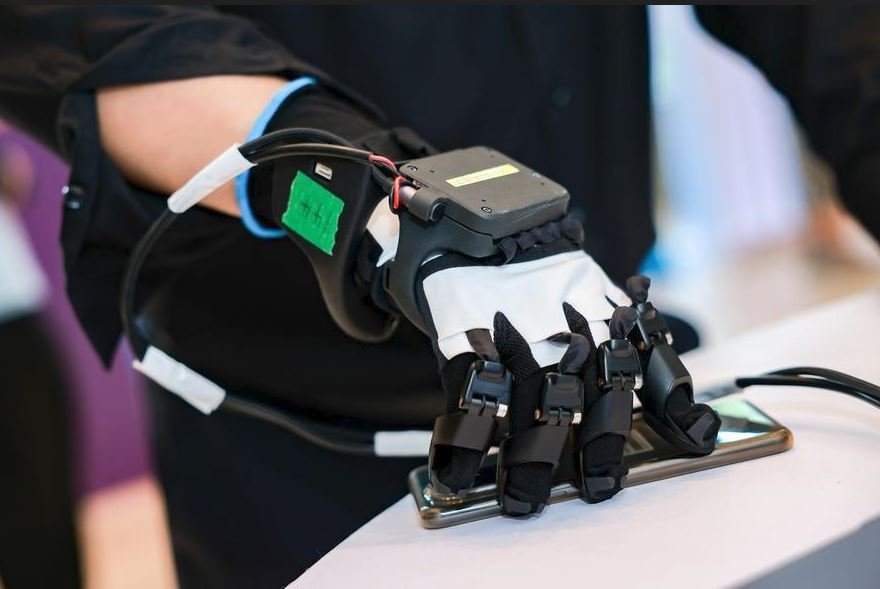
One emerging field is embodied intelligence, which uses real-world human movement and behaviour data to train robots to interact with physical environments.
In Guiyang, data collectors are recording activities such as walking, grasping objects and performing household tasks from a first-person perspective. The information is later processed and used to train robotic systems.
Shanghai Benyuan Digital Technology said its Guiyang operation employs around 400 people on site, while another 800 data collectors work across China.
The company said it had accumulated more than 100,000 hours of usable data for applications including embodied intelligence, autonomous driving and multimodal AI models.
Academics at the expo said AI was likely to reduce demand for some repetitive tasks while increasing demand for jobs requiring creativity, decision-making and collaboration with machines.
Data economy creates new business models
The expansion of AI is also changing the structure of businesses.
Organisers said some exhibitors at the expo were micro-enterprises with only a handful of employees, while others operated as so-called one-person companies using artificial intelligence and digital tools to handle tasks that previously required larger teams.
Participants said the trend reflected the falling cost of launching and operating technology-driven businesses.
Pakistan’s Punjab explores AI agriculture cooperation with China
International cooperation was another major theme, with companies and officials from countries including Pakistan, Singapore, Morocco, Canada, Zimbabwe and Chile attending the event.
A delegation of nearly 30 officials from Punjab visited Xinjiang and Guizhou to study Chinese expertise in smart agriculture, big data and artificial intelligence.
Punjab Agriculture Minister Syed Muhammad Ashiq Hussain Shah said the province was working to develop an AI-powered digital monitoring network for agriculture.
He said the delegation was seeking Chinese partners and studying technologies that could potentially be applied to Punjab’s farming sector.
The minister described the big data expo as an opportunity to present Punjab to potential partners and explore new areas of technological cooperation.
China-Africa digital trade platform showcased
Zimbabwean entrepreneur Dubuya Thulani presented a blockchain-based platform designed to connect African agricultural exporters with Chinese buyers.
The platform, Wazisana, allows farmers to upload videos showing their production processes, while AI converts the information into detailed product descriptions for potential buyers in China.
Thulani said the platform had already facilitated exports of products including coffee, wine and avocados.
Chile seeks cooperation on Latin American AI model
Chile’s Consul General in Chengdu, Cristian Davis Acosta, said his country was working on an AI model known as Latam-GPT, designed specifically for Latin America.
He said cooperation with Chinese institutions could offer opportunities for knowledge-sharing and joint development of new artificial intelligence tools.
Participants also called for broader access to digital infrastructure and AI expertise.
Muhammadou M.O. Kah, vice-chair of the United Nations Commission on Science and Technology for Development, urged greater international cooperation in digital public goods, open AI methodologies and capacity-building to ensure more countries can participate in the data economy.
The expo reflected China’s wider effort to link artificial intelligence with data infrastructure, industrial upgrading and international cooperation as the global digital economy continues to expand.