
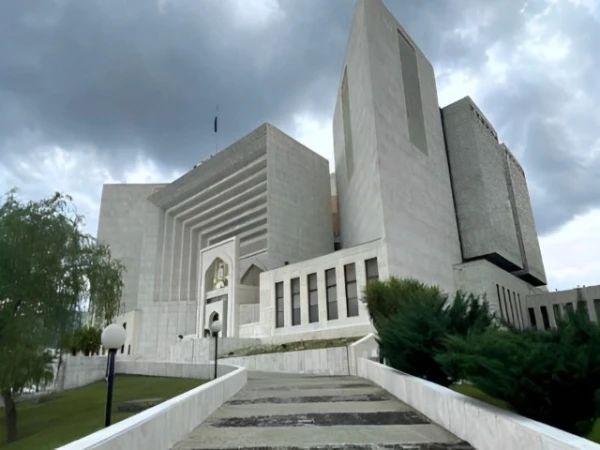
ISLAMABAD: The Supreme Court of Pakistan has upheld the life imprisonment sentence of a man convicted of an acid attack and issued a series of directives aimed at strengthening the prosecution of acid violence cases and improving support for survivors.
The ruling was issued by a three-member bench headed by Justice Hashim Kakar. The court dismissed the appeal of convict Abdul Mannan, who had sought a reduction in his sentence on the basis of age, and maintained the life sentence awarded for an acid attack on a woman, Iqra Parveen, in Faisalabad.
In its 13-page judgment, the court also ordered the convict to pay Rs1 million in compensation to the victim.
Court calls acid attacks among the most serious crimes
The Supreme Court described acid attacks as particularly grave offences, stating that such crimes cause lifelong physical, psychological and social harm to victims.
The judgment noted that acid violence often leaves survivors facing permanent injuries, emotional trauma and social exclusion, making it essential for the justice system to respond swiftly and effectively.
Directives for speedy trials
The court directed high courts across the country to ensure that acid attack cases are concluded within four months, in accordance with legal requirements.
According to the ruling, fast-track proceedings are necessary to prevent additional psychological distress for victims and to strengthen public confidence in the justice system.
The court also instructed high courts to closely monitor acid attack cases and ensure timely disposal of proceedings.
Recommendations on acid sales and survivor support
The judgment called for a complete ban on the open sale of acid to the general public and recommended the establishment of a centralized digital monitoring system for acid purchases and sales.
The court suggested that buyers be required to provide identification details, including biometric verification, to improve oversight and prevent misuse.
In addition, the Supreme Court recommended the creation of a National Acid Survivors’ Rehabilitation Fund to support victims of acid attacks.
The proposed measures include government-funded medical treatment, plastic surgery, psychological counseling, monthly financial assistance for severely affected survivors, and special consideration in public sector employment, education and welfare programs.
The court further recommended the issuance of disability certificates to individuals who suffer permanent disabilities as a result of acid attacks.
Judgment circulated to relevant authorities
The Supreme Court ordered that copies of the judgment be sent to all high courts, the Ministry of Law and Justice, provincial law departments, the Attorney General of Pakistan and provincial advocate generals for implementation and consideration of the directives contained in the ruling.
Also Read : Suspect in Quetta acid attack on woman doctor killed in alleged police encounter