
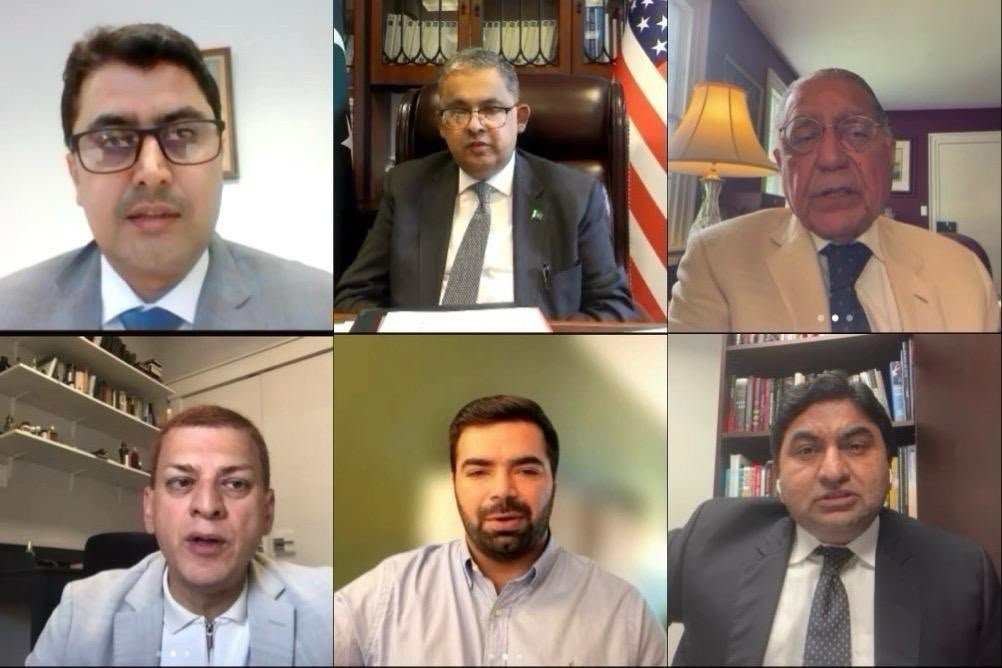
WASHINGTON: Pakistan has called for strict adherence to international law in addressing the Jammu and Kashmir dispute and protecting the Indus Waters Treaty, warning that unilateral actions risk deepening instability in South Asia.
The call came during a special webinar organized by the Embassy of Pakistan in Washington to mark Youm-e-Istehsal, observed on the seventh anniversary of India’s August 5, 2019, decision to revoke Articles 370 and 35A of its Constitution.
The event, titled “Contemporary Challenges to International Law in South Asia: Jammu and Kashmir Dispute and the Indus Waters Treaty,” brought together diplomats, legal experts and policy analysts to discuss the regional implications of India’s actions in Kashmir and concerns surrounding the future of the water-sharing agreement.
Messages from Pakistan’s president, prime minister and deputy prime minister and foreign minister were read during the event, reiterating Islamabad’s political, moral and diplomatic support for the people of Indian Illegally Occupied Jammu and Kashmir and their right to self-determination under relevant United Nations Security Council resolutions.
Pakistan’s Ambassador to the United States, Rizwan Saeed Sheikh, said international law remained the only credible framework for addressing the Kashmir dispute and wider regional tensions.
He said the legal dimensions of the dispute were closely linked to the Indus Waters Treaty because of their geographical, political and economic consequences.
Ambassador Sheikh argued that peace and stability in South Asia depended on respect for legal obligations and internationally accepted norms. He also urged Pakistan to use its growing diplomatic credibility to advance its positions on Kashmir and water security.

Former Pakistani ambassador to the United Nations Munir Akram said India’s post-2019 approach had intensified pressure on Kashmir while also creating wider security concerns for Pakistan.
He argued that there was no legal basis for placing the Indus Waters Treaty in abeyance and called for a coordinated diplomatic and legal strategy involving international organizations, legal experts and countries affected by transboundary water disputes.
The speakers said the treaty remained important for regional peace, food security, environmental sustainability and economic stability.
They also expressed concern over what they described as the increasing politicization and militarization of shared water resources.
Dr Farhan Mujahid, Secretary General of Kashmir Civitas, discussed the impact of demographic and political changes in Jammu and Kashmir and argued that these policies were altering the territory’s identity.
Ali Unar, President of the Foundation for American Security and Technology, called for stronger engagement with international legal scholars and downstream states to build broader support for preserving the treaty.
Dr Qamar Cheema, Executive Director of the Sanober Institute, warned against the risk of “hydro-hegemony” and said any weakening of the Indus Waters Treaty could have long-term consequences for regional stability.
The webinar concluded with participants supporting peaceful, lawful and internationally backed efforts to resolve the Jammu and Kashmir dispute and safeguard the Indus Waters Treaty.
Ambassador Sheikh reaffirmed Pakistan’s commitment to supporting the Kashmiri people’s right to self-determination in accordance with international law and United Nations resolutions.
Also Read: Pakistan Armed Forces Reaffirm Solidarity with Kashmiris on Youm-e-Istehsal