
Karandaaz Pakistan has launched two research studies on e-invoicing and agricultural spot trading as part of efforts to support digital transaction infrastructure and strengthen Pakistan’s digital economy.
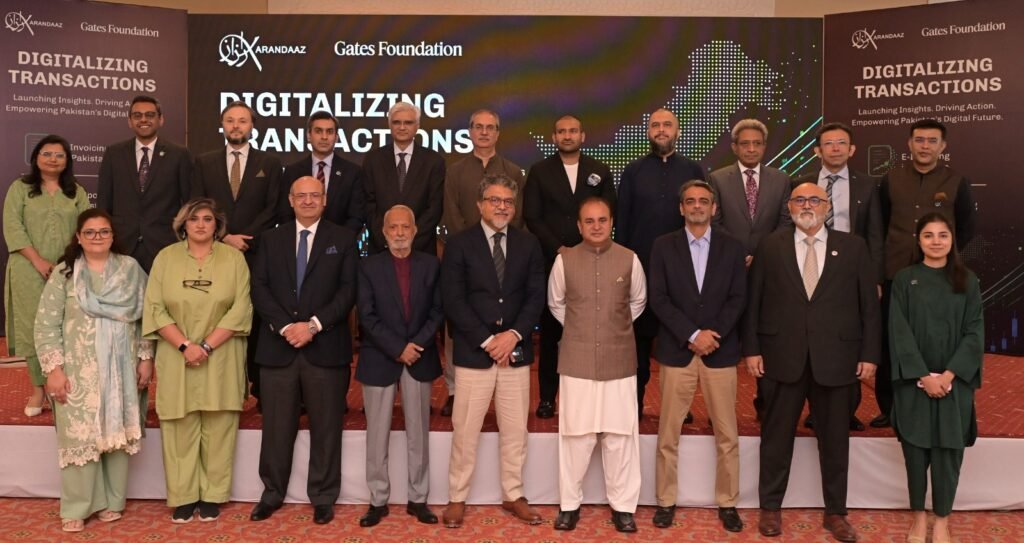
The Karandaaz e-invoicing and agri spot trading studies were launched at a stakeholder dialogue in Karachi titled “Digitalizing Transactions: Insights on E-Invoicing and Agri Spot Trading in Pakistan.” The event brought together policymakers, regulators, financial institutions, private sector representatives and development partners.
The two studies, titled E-Invoicing in Pakistan and Feasibility Study for Agri Spot Trading in Punjab, Pakistan, examine how digital transaction systems can improve access to finance, strengthen market transparency, support tax compliance and contribute to economic formalisation.
Karandaaz Pakistan said the e-invoicing study reviewed how digital invoicing could improve transaction visibility, support small and medium enterprise financing and help assess Pakistan’s readiness for broader adoption of electronic invoicing systems.
The second study examined the feasibility of a structured spot trading mechanism for agricultural commodities in Punjab. It identified opportunities to improve price discovery, market access and access to finance through systems such as electronic warehouse receipts.
Speaking at the launch, Karandaaz Pakistan Chief Executive Officer Waqas ul Hasan said Pakistan’s digital transformation requires greater awareness and institutional frameworks to support innovation. He said the research was aimed at informing dialogue with regulators and government while encouraging digital growth linked to real economic activity.
Ali Farid Khwaja, Commissioner Securities Markets Division at the Securities and Exchange Commission of Pakistan, said e-invoicing and electronic warehouse receipts could help move Pakistan from fragmented transactions toward trusted digital market infrastructure.
He said SECP’s role was to support responsible innovation, strengthen market confidence and enable frameworks where verified digital records improve transparency, reduce risk and expand access to finance.
The event included two panel discussions on the practical implications of the research findings.
The first panel, titled “Can Pakistan leverage E-Invoicing as a foundational infrastructure for economic formalization and SME finance?”, included representatives from the Federal Board of Revenue, Haball, Dynamic Resources Limited and Bank Alfalah. The discussion was moderated by Taimoor Ali, Group Head DFS Projects at Karandaaz.
The second panel, titled “Building transparent agri markets: Can agri spot trading improve price discovery and market access?”, brought together representatives from PMEX, the Prime Minister’s Office on Agriculture, NCGCL and Kissan Gudam. It was moderated by Hasnat Ashraf, Head Development Impact at Karandaaz.
Participants said modern transaction infrastructure could help improve transparency, expand access to finance and support more efficient market systems in Pakistan.
Karandaaz Pakistan said it would continue to support research, stakeholder engagement and ecosystem development to advance inclusive and sustainable digital economic growth.
Karandaaz Pakistan works to strengthen the country’s financial and digital ecosystem through investments, innovation and partnerships. It was established in 2014 with seed grant funding from the UK Government’s Foreign, Commonwealth and Development Office and receives grant funding from the Gates Foundation for its digital financial services work.
Also Read : UK to Ban Social Media Access for Children Under 16