
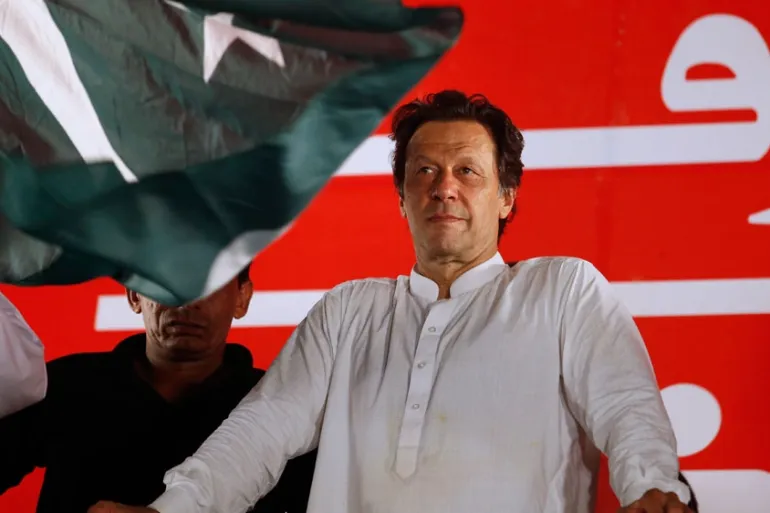
Imran Khan’s public life remains one of the most searched and debated political journeys in Pakistan’s modern history. From captaining Pakistan to its historic 1992 Cricket World Cup victory to serving as the country’s 19th prime minister in 2018, Khan has remained a defining figure in sports, philanthropy, and politics. His career reflects ambition, mass popularity, political upheaval, and deep national polarization.
While supporters view him as a reformist leader who challenged entrenched political dynasties, critics describe him as a polarizing populist whose rise and fall intensified Pakistan’s political divisions.
Quick Profile
- Full Name: Imran Ahmed Khan Niazi
- Date of Birth: October 5, 1952
- Place of Birth: Lahore, Pakistan
- Education: Keble College, Oxford (Philosophy, Politics & Economics)
- Cricket Role: Former Pakistan captain, all-rounder
- World Cup Win: 1992 ICC Cricket World Cup (Captain)
- Political Party: Pakistan Tehreek-e-Insaf (PTI), founded 1996
- Office Held: 19th Prime Minister of Pakistan (2018–2022)
- Key Initiatives: Ehsaas Program, 10 Billion Tree Tsunami
- Current Status: Currently incarcerated amid multiple legal cases and court proceedings
Born into a prominent Pashtun family in Lahore, Imran Khan was educated at elite institutions in Pakistan before moving to the United Kingdom for higher studies at Oxford University. He studied Philosophy, Politics and Economics at Keble College.
Khan made his international cricket debut in 1971 and rose to become one of the world’s leading all-rounders. In 1982, he was appointed captain of the Pakistan cricket team, a role in which he later achieved his greatest sporting success.
His defining moment came in 1992 when he led Pakistan to victory in the Cricket World Cup. The win turned him into a national icon and remains one of the most celebrated sporting achievements in Pakistan’s history.
After retiring from cricket, Khan shifted toward philanthropy. He played a central role in establishing the Shaukat Khanum Memorial Cancer Hospital in Lahore, a project funded through global donations and named after his mother. This strengthened his image as a public figure committed to social welfare.
Imran Khan entered politics in 1996 with the formation of Pakistan Tehreek-e-Insaf (PTI), a party built on anti-corruption, justice, and institutional reform. However, PTI struggled in its early years and failed to make significant electoral impact in the 1997 general elections.
Khan won a National Assembly seat in 2002 but remained largely on the political margins for nearly a decade. His political fortunes changed after 2011, when PTI began attracting massive public rallies across Pakistan, particularly among youth, middle-class voters, and overseas Pakistanis.
By the 2013 general elections, PTI had emerged as the second-largest political party by vote share and formed a provincial government in Khyber Pakhtunkhwa. Khan’s allegations of electoral rigging kept him in national headlines and strengthened his political momentum.
In 2018, PTI emerged as the leading party in the National Assembly, and Imran Khan was sworn in as Prime Minister of Pakistan on August 18, 2018. His government focused on welfare and governance reforms, including the Ehsaas poverty alleviation program, expansion of health coverage initiatives, and the ambitious 10 Billion Tree Tsunami project aimed at environmental restoration. His administration also emphasized anti-corruption measures, austerity, and institutional reform.
However, Khan’s tenure was marked by significant economic challenges. Pakistan faced inflation, rising debt, currency pressure, and the economic fallout of the COVID-19 pandemic. The government sought financial support from allied countries and later the International Monetary Fund (IMF) for stabilization.
Supporters credited his government for social welfare initiatives and foreign policy independence, while critics accused it of economic mismanagement and selective accountability.
Khan’s time in office was marked by tensions with opposition parties and state institutions. His anti-corruption campaign targeted major political opponents, but critics alleged political bias in accountability efforts.
In April 2022, Imran Khan became the first prime minister in Pakistan’s history to be removed through a parliamentary no-confidence vote. He rejected the decision, calling it part of a foreign-backed conspiracy, and launched a nationwide political campaign after his removal.
After leaving office, Khan became the center of multiple legal cases involving party funding, corruption allegations, state gifts (Toshakhana case), and the diplomatic cipher controversy. His arrest in 2023 triggered nationwide protests and a major political crisis across Pakistan.
Some convictions were later challenged or overturned, while several cases remain active, shaping his political future.
Imran Khan’s legacy remains deeply divided. His supporters view him as a reformer who challenged Pakistan’s political establishment and gave voice to youth-driven political change. His critics argue that his leadership style deepened polarization and institutional conflict.
Despite legal challenges and imprisonment, Khan continues to influence Pakistan’s political discourse through PTI’s strong support base and continued public engagement.
From cricket captain to prime minister and from national hero to political prisoner, Imran Khan’s journey reflects both the promise and instability of Pakistan’s political system. His story remains unfinished, continuing to evolve with Pakistan’s shifting political landscape.
Also Read: Asif Ali Zardari: Political Survivor, Presidency, Controversies And Legacy