
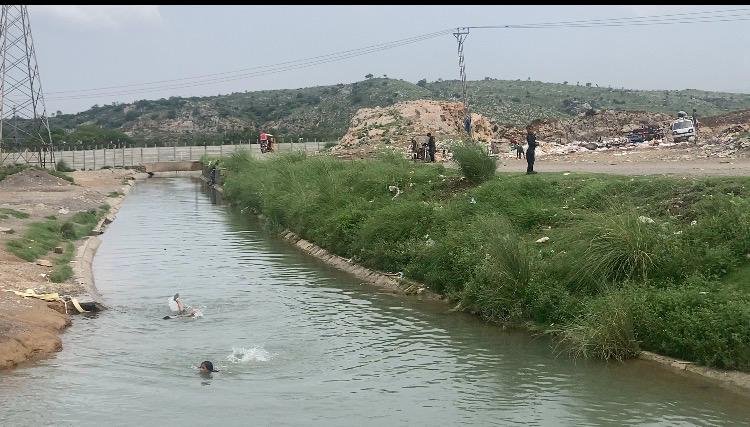
ISLAMABAD: Large quantities of municipal and commercial waste reportedly dumped along the banks of the Khanpur Canal have raised concerns among residents and environmental activists about waste management and the potential impact on a watercourse supplying the twin cities.
Residents and environmental circles have accused the Rawalpindi Waste Management Company (RWMC) of failing to prevent waste from accumulating at the site. Household garbage, plastic bags, commercial refuse, disposable packaging and other discarded material can reportedly be seen along sections of the canal bank, with some waste potentially reaching the watercourse.
RWMC personnel present at the site reportedly said that around 60 tonnes of waste is being dumped there daily, prompting questions over the source of the waste and the arrangements in place for its collection and final disposal.
The concerns are particularly significant because Khanpur Dam is an important source of water for Islamabad and Rawalpindi. Water supply from the dam to the twin cities has previously been curtailed during annual desilting of the Khanpur canal, demonstrating the canal’s importance to the region’s water-supply system.
Monsoon Raises Pollution Concerns
Environmental activists have warned that the risk could increase during the monsoon season. Rainwater flowing through a waste-accumulation site can carry plastic, solid waste and potentially contaminated runoff towards nearby watercourses.
Kalsoom Choudhry, a social activist, questioned what monitoring arrangements had been put in place to prevent the reported dumping site from becoming a permanent waste-disposal point.
Munaza Peerzada, chairperson of a local NGO working in environmental and social sectors, called for an immediate scientific assessment of the potential environmental impact of waste accumulated near the canal.
Residents said the issue should not be treated simply as a sanitation problem, arguing that any potential contamination of a watercourse connected with the twin cities’ water-supply system warrants precautionary measures.
They urged the Punjab Environmental Protection Agency (EPA), WASA, district administration and other relevant departments to collect water samples from multiple locations and arrange independent laboratory testing, with the results made public.
Calls for Action
Residents have demanded an immediate halt to dumping along the canal, removal of accumulated waste and establishment of a permanent monitoring mechanism.
They also called for protective barriers, warning signs and surveillance cameras at vulnerable points to prevent further dumping. Some residents further urged authorities to restrict bathing and washing activities where necessary to protect water quality.
When contacted, Assistant Director of the Punjab Environmental Protection Agency Shazia Maryum said relevant stakeholders would be brought together to address the matter. She said coordinated measures would be taken to eliminate the dumping site and prevent hazardous material from entering the watercourse.
RWMC Operations Manager Shehryar Khan declined to comment when contacted about the reported dumping and the company’s waste-disposal arrangements, saying he was not authorised to comment.
RWMC’s documented responsibilities include collection, transportation and disposal of solid waste, making proper disposal and monitoring central to its waste-management mandate.
The residents called for a comprehensive review of waste-disposal practices at the site, including identification of those responsible for monitoring the area.
They said authorities should determine whether waste is actually entering the canal and assess the potential environmental and public-health consequences through transparent scientific testing.
The concerns come amid broader evidence that inadequate solid-waste management has been a longstanding environmental challenge in the Islamabad-Rawalpindi region. Research has previously identified municipal solid waste and untreated sewage as significant pollution concerns in local watercourses.
The reported dumping allegations and the claimed figure of 60 tonnes per day could not be independently verified from publicly available sources. A scientific assessment of the canal water and an official response from RWMC would be necessary to establish the extent of any contamination or regulatory violations.
Also Read :Children Selling Cheap Goods at Twin Cities Signals Raise Exploitation Concerns