
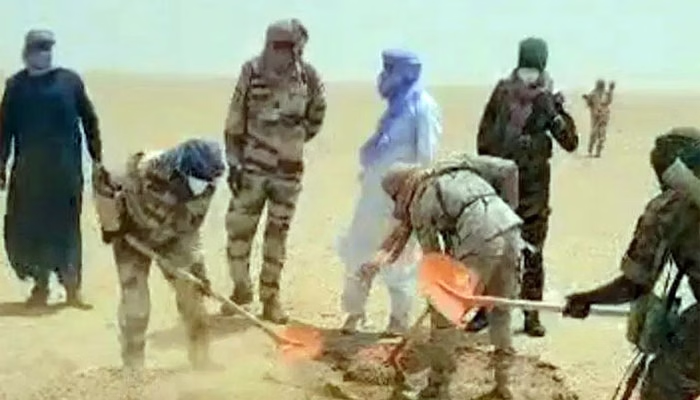
ABUJA: At least 50 people died of thirst after their vehicle broke down in the Sahara Desert in Niger, leaving them stranded for several days without access to water, local authorities said.
The victims were returning from neighboring Mali after attending Eid al-Adha celebrations when their vehicle became immobilized approximately 80 kilometers west of Assamaka, a key border crossing between Niger and Algeria. The incident highlights the dangers faced by travelers crossing remote desert routes in one of the world’s harshest environments.
According to the governor of the Agadez region, the group became trapped in an isolated area characterized by extreme temperatures and a lack of basic services, making survival increasingly difficult.
Only two people survived the ordeal. Authorities said the survivors managed to reach Assamaka on foot and alerted officials, triggering a rescue operation.
Vehicle reportedly stranded for days
Officials said the vehicle had departed from the Malian town of Talhandak but lost its way and became stranded. The driver and passengers reportedly spent several days attempting to repair the vehicle but were unable to get it running again.
As water supplies ran out and temperatures remained high, most of the passengers succumbed to dehydration. Rescue teams later found dozens of bodies around and beneath the disabled vehicle.
All of the victims were reported to be citizens of Niger. Local authorities buried the deceased in mass graves following the recovery operation.
Another stranded group rescued
During the return journey from the rescue mission, emergency responders discovered another broken-down vehicle carrying more than 60 passengers. According to officials, the group had been stranded for three days after their vehicle’s battery failed.
The rescue team, which included members of the Niger military, distributed water, assisted with repairs, and helped the passengers resume their journey safely.
Risks remain high on desert migration routes
The Sahara Desert remains a major transit route for migrants and travelers moving across West Africa toward North Africa and Europe. Humanitarian groups have repeatedly warned about the dangers posed by extreme weather, isolation, and limited access to emergency assistance.
A local non-governmental organization working in the region said awareness campaigns have long sought to educate drivers and passengers about the risks of crossing desert routes, particularly those leading toward Algeria and Libya.
Regional authorities said the tragedy underscores the vulnerability of people traveling through remote border areas in search of economic opportunities or better living conditions.
Also Read : Echoes of War in the Desert