
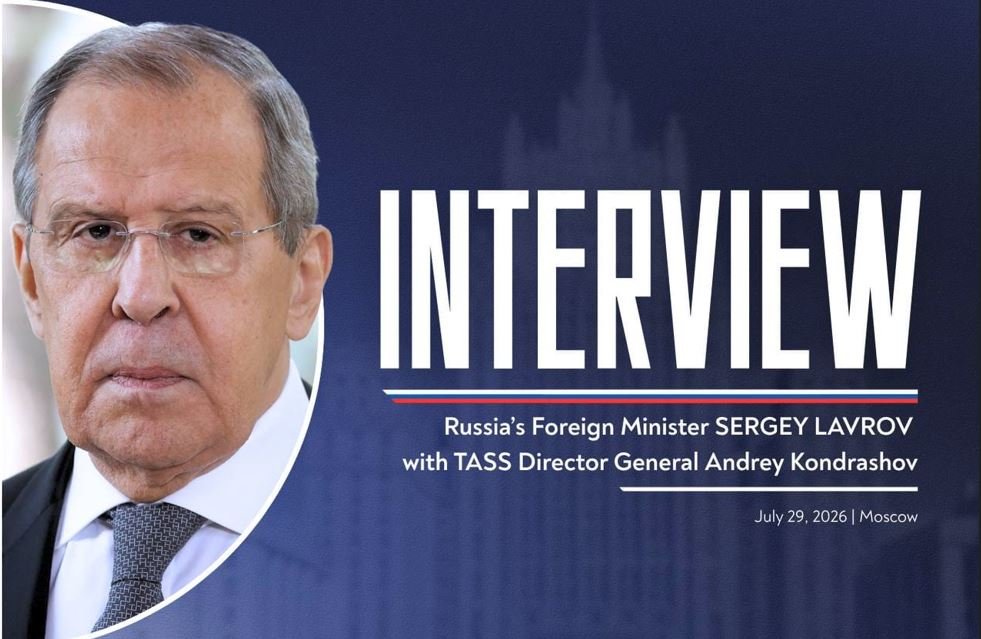
MOSCOW, July 30, 2026: Russian Foreign Minister Sergey Lavrov has rejected Western proposals for a ceasefire in Ukraine, describing them as an ultimatum intended to freeze the front line while allowing Kyiv and its European allies to regroup.
In an interview with Russia’s TASS news agency published on July 29, Lavrov said relations between Moscow and the West could not return to their pre-February 2022 state and argued that Russia must rely on its own military, economic and diplomatic strength.
The remarks offered a detailed account of Moscow’s position on the Ukraine war, possible negotiations and Russia’s longer-term relationship with Europe and the United States.
Lavrov accused Western governments of seeking what they have called a “strategic defeat” for Russia and claimed that some policymakers wanted to weaken or divide the country. He did not provide new evidence to support those allegations.
He said Russia’s principal foreign-policy objectives were to preserve its sovereignty, secure its borders and prevent outside powers from influencing how the country was governed.
Lavrov Calls Ceasefire Proposal an Ultimatum
Lavrov said Western officials wanted a ceasefire before substantive negotiations involving Russia, Ukraine, the United States and European countries.
According to his account, the proposal would freeze the current front line, permit the deployment of multinational forces led by France and Britain and leave Ukraine’s government in place before political talks began.
Lavrov characterised those conditions as an ultimatum rather than a genuine negotiating framework.
Western governments and Ukraine have previously argued that any settlement must protect Ukraine’s sovereignty and provide credible security guarantees against renewed Russian military action.
Lavrov said Moscow would not accept arrangements that, in its view, allowed Ukraine and its allies time to rebuild their military capabilities.
Russia Claims Continued Battlefield Advances
The Russian foreign minister claimed that Russian forces were making daily progress along the front, although more slowly than Moscow would prefer.
He said the pace of operations reflected an effort to limit Russian military casualties. The interview did not provide independently verifiable evidence for the scale of the claimed advances.
Lavrov also accused Ukraine of using long-range weapons and attacks inside Russian-held or Russian territory to compensate for setbacks on the battlefield.
He described those operations as terrorism. Ukraine says its strikes are directed at military and logistical targets used to support Russia’s war effort.
Lavrov further alleged that Western governments were portraying Ukraine’s long-range strikes as evidence that Kyiv could eventually defeat Russia.
Lavrov Sharpens Criticism of Europe
The foreign minister accused European governments of reviving policies aimed at containing and weakening Russia.
He singled out German Chancellor Friedrich Merz, referring to statements about Germany assuming a leading role in Europe, and warned that European leaders should consider the consequences of increasingly confrontational policies toward Moscow.
Lavrov repeatedly compared Russia’s present conflict with the Soviet Union’s struggle against Nazi Germany during the Second World War.
Such comparisons are central to the Kremlin’s public justification for the war but are rejected by Ukraine and Western governments. Ukraine is a democratic state whose president, Volodymyr Zelensky, is Jewish, and Moscow’s claim that it is fighting Nazism has been widely disputed internationally.
No Return to Earlier Russia-West Relations
Lavrov said Russia’s experience since February 2022 had demonstrated that Moscow could no longer depend on political agreements or assurances from Western countries.
He referred to President Vladimir Putin’s earlier statement that there would be no return to the relationship Russia maintained with Europe and the United States before the full-scale invasion of Ukraine.
The foreign minister said the war would have lasting consequences for Russia’s foreign policy and national identity.
He argued that Russia should view itself as an independent civilisation and build international relationships without accepting political conditions from Western capitals.
The interview came as diplomatic contacts between Moscow and Washington continued despite deep disagreements over Ukraine. Lavrov met US Secretary of State Marco Rubio in Manila on July 23, where the two sides discussed the battlefield situation and bilateral relations, according to Russian and US accounts.
No agreed framework for a ceasefire or comprehensive peace settlement has been announced.
Also Read: Russia Warns New US Sanctions Bill Could Raise Energy Prices and Hurt American Economy