
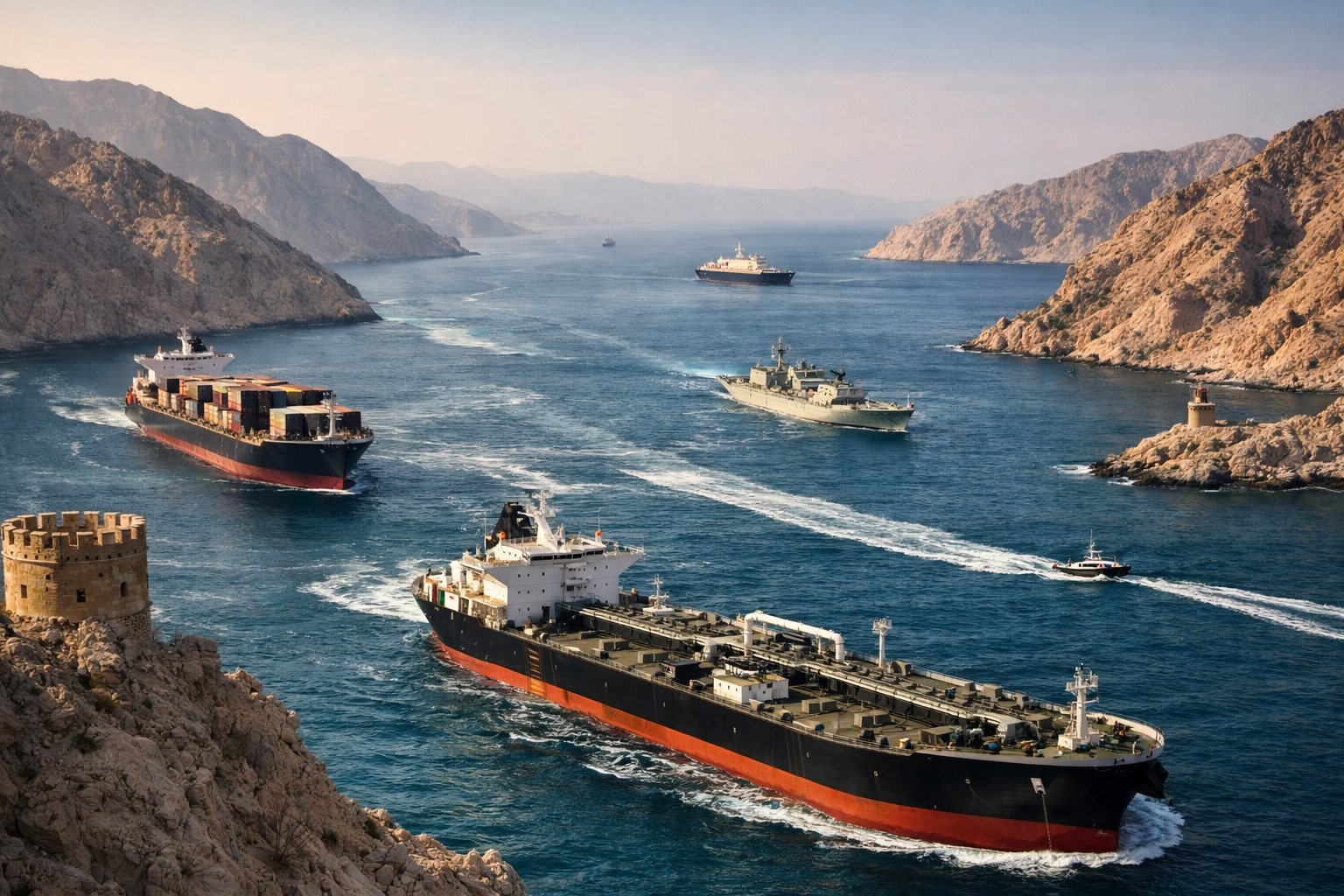
TEHRAN/MUSCAT: Iran and Oman have reached an understanding on the geographical boundaries of shipping routes through the strategically important Strait of Hormuz, as both countries move towards preparing a joint framework for maritime movement amid heightened regional tensions.
Iranian Foreign Ministry spokesperson Esmail Baghaei confirmed that Tehran and Muscat are working on a joint statement regarding the arrangement, while stressing that the process would depend on avoiding interference from any third party.
He said Iranian officials were also in contact with their counterparts in Pakistan and Qatar regarding developments related to the waterway.
Temporary Maritime Arrangement Reported
US media reports, citing sources, said Iran, Oman, and the United States had reached a temporary 60-day understanding regarding shipping movement through the Strait of Hormuz.
Under the reported arrangement, vessels heading towards Gulf countries would use Iranian waters for passage through the strait, while ships travelling towards the Arabian Sea would use Omani waters.
The reports said no transit fees would be charged during the temporary period, while efforts would be made within 30 days to remove naval mines from the area.
However, Iranian state media reported that discussions were taking place only between Tehran and Muscat, and Washington was not part of the talks. Iranian officials warned that continued violations by the United States could affect the implementation of any arrangement.
Why the Strait of Hormuz Matters to the World
The Strait of Hormuz is one of the most important maritime chokepoints in global energy trade, connecting Gulf oil-producing nations with major markets across Asia, Europe, and North America.
Around 20 percent of the world’s oil supply and a significant share of global gas shipments pass through the waterway, making its stability crucial for international energy markets.
Approximately 21 million barrels of oil per day are transported through the route from countries including Saudi Arabia, the United Arab Emirates, Kuwait, and Iran.
The passage is also vital for Qatar, the world’s leading LNG exporter, which relies on the waterway for energy exports.
The narrow maritime corridor, located between Iran and Gulf Arab states, links the Persian Gulf with the Gulf of Oman and the Arabian Sea. It handles thousands of commercial vessels every year, including oil tankers and cargo ships carrying goods between Asia and the Gulf region.
Impact on Pakistan’s Energy and Economic Interests
For Pakistan, developments in the Strait of Hormuz carry direct economic importance due to the country’s dependence on Gulf energy supplies.
A significant portion of Pakistan’s crude oil and petroleum imports comes from Gulf countries, including Saudi Arabia and the United Arab Emirates, making uninterrupted maritime access essential for energy security and economic stability.
Any disruption in shipping activity through the waterway can influence global oil prices, transportation costs, and import expenses for energy-dependent economies, including Pakistan.
Beyond energy, the Gulf region remains a major economic partner for Pakistan, hosting millions of Pakistani workers and serving as an important source of remittances and trade opportunities.
Islamabad has maintained diplomatic engagement with regional countries and has repeatedly emphasized the importance of stability in the Gulf and surrounding regions. Any agreement that helps maintain freedom of navigation and reduces tensions in the Strait of Hormuz will therefore remain closely watched in Pakistan.
Global Markets Watch Next Steps
The reported Iran-Oman understanding comes as international markets continue monitoring developments around the Strait of Hormuz, where even temporary disruptions can have wider consequences for energy prices, shipping routes, and global trade.
Analysts say sustained stability in the waterway will depend on diplomatic engagement, regional coordination, and the ability of involved parties to prevent further escalation.
Also Read: Strait of Hormuz Reopening Expected Within Hours as Talks Make Progress