
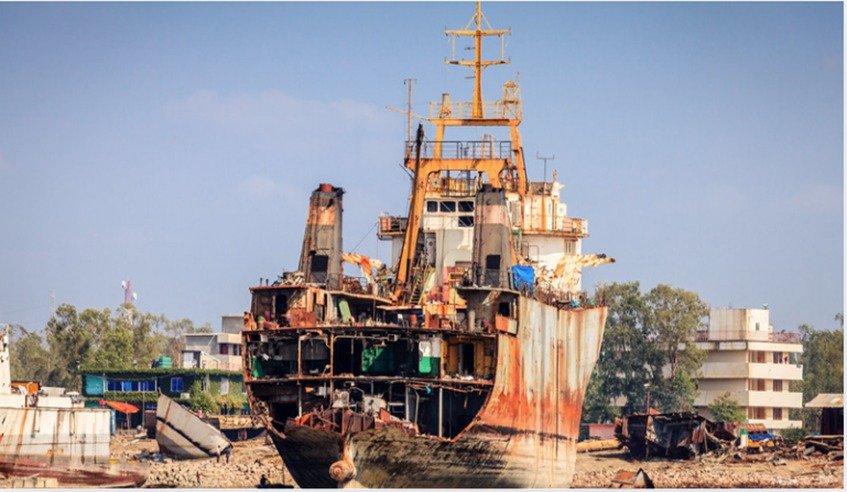
ISLAMABAD — Pakistan’s shipbreaking sector has seen a sharp drop in global market share, reflecting reduced activity and rising competition, according to a report by Planning Commission of Pakistan.
The report, titled Blue Economy under URAAN Pakistan 2026, states that Pakistan’s share in global shipbreaking declined from about 16.6% in 2022 to nearly 4% in 2025. The findings highlight a significant slowdown in activity at Gadani Shipbreaking Yard, the country’s main dismantling facility.
According to the report, only 12 out of 321 ships dismantled worldwide in 2025 were processed at Gadani, underscoring the sector’s reduced role in the global market.
Competition and regulatory challenges
The decline has been attributed to regulatory hurdles, limited compliance with international standards and growing competition from countries such as Bangladesh and India, which have expanded their ship recycling capacity.
The report notes that Pakistan is still in the early stages of complying with the Hong Kong International Convention for the Safe and Environmentally Sound Recycling of Ships, with its first certified yard approved only in early 2026.
In contrast, competing countries have made faster progress in meeting environmental and safety standards, helping them attract a larger share of global business.
Infrastructure gaps and modernization needs
Officials also cited inadequate infrastructure and delays in modernisation as key factors affecting competitiveness. The report emphasises the need for upgrades in facilities, improved environmental compliance and streamlined regulations.
Despite the decline, the sector retains potential due to Pakistan’s strategic location and availability of labour. The report suggests that targeted policy reforms and investment could help restore growth.
Economic importance
The shipbreaking industry plays a role in supplying recycled steel and supporting industrial activity. Reviving the sector could contribute to employment generation and reduce reliance on imported raw materials.
The report concludes that reversing the downturn will require coordinated efforts, including regulatory reform, infrastructure development and alignment with international standards.