

Few public figures have influenced Pakistan’s conversation around online trading and cryptocurrency as visibly as Waqar Zaka. While he did not introduce trading to the country, his campaigns helped push digital assets from social media discussions into courtrooms, policy circles and eventually the national regulatory agenda.
Long before cryptocurrency became part of official policy debate, Zaka was publicly lobbying for its legal recognition and greater state engagement with the sector. His activism also reached the courts, helping place the legal status and future regulation of digital assets before policymakers and financial authorities.
In 2020, proceedings before the Sindh High Court drew attention to the State Bank of Pakistan’s position on cryptocurrency. A year later, the court formed a committee to examine the feasibility and regulation of digital assets, with Zaka involved as the petitioner.
Those developments helped move cryptocurrency beyond online speculation and into a broader national debate. Pakistan was being forced to confront a central policy question: should digital trading remain outside the formal financial system, or should it be regulated through licensed institutions and clear investor safeguards?
Trading as a Skill, Not a Shortcut
Zaka’s public identity has increasingly centred on trading education across cryptocurrency, stocks and other financial markets.
His strongest message is that trading should be treated as a discipline built on mathematics, statistics, probability, market analysis and risk management rather than a shortcut to instant wealth.
That distinction matters in Pakistan, where social media frequently promotes unrealistic profit claims, excessive leverage and the idea that anyone can become financially independent through a few successful trades.
Professional trading requires an understanding of capital preservation, position sizing, portfolio exposure and the possibility of significant losses. Even experienced traders cannot eliminate market risk, and no strategy can guarantee consistent returns.
Zaka’s most useful contribution to the debate is therefore not the promotion of any single asset class. It is the argument that trading must be approached as a learned skill supported by data, discipline and responsible risk control.
That message is especially relevant for Pakistan’s young, digitally connected population, which now has easier access to global markets through mobile applications, online exchanges and social media communities.
Pakistan’s Biggest Trading Problem Is Not Lack of Interest
Public interest in online trading is growing rapidly. Pakistan’s larger challenge is ensuring that investors participate through safe, transparent and regulated channels.
The Pakistan Stock Exchange advises prospective investors to understand market fundamentals, verify brokers and trade only through authorised institutions. Investors who deal with unregistered intermediaries may have limited regulatory protection or legal recourse if funds are lost or misused.
The Securities and Exchange Commission of Pakistan has also warned the public against unlicensed online trading platforms and investment schemes promising unusually high or guaranteed returns.
The regulator has stressed that listed securities and commodities must be traded through licensed brokers. Its Jamapunji platform and official complaint channels are intended to help investors learn about financial markets and report suspicious activity.
These warnings expose one of the biggest risks facing Pakistan’s emerging trading culture. Public enthusiasm can grow much faster than financial literacy, leaving inexperienced investors vulnerable to scams, misleading promotions, unregulated offshore platforms and excessive leverage.
A sustainable trading ecosystem will therefore require more than wider market access. It will depend on investor education, licensed intermediaries, transparent disclosures and effective mechanisms for resolving complaints.
Pakistan Is Moving Towards Regulated Digital Trading
Pakistan’s approach to virtual assets has changed significantly.
The State Bank’s earlier position restricted regulated financial institutions from facilitating transactions involving virtual currencies because no formal legal and regulatory framework existed.
That approach has since started to shift as Pakistan moves towards licensing and supervising virtual asset businesses.
The Virtual Assets Act, 2026 created a regulatory framework for exchanges, wallet providers, brokerages, advisers and other virtual asset service providers. The Pakistan Virtual Asset Regulatory Authority was tasked with overseeing licensing, compliance, cybersecurity, anti-money-laundering controls and client-asset protection.
The State Bank also replaced its earlier prohibition-era instructions with rules allowing banks to open accounts for licensed or cleared virtual asset service providers and their customers, subject to regulatory requirements.
The transition does not eliminate the risks associated with cryptocurrency. It does, however, signal that Pakistan is moving from avoidance towards supervised participation.
Pakistan is also expanding access to conventional investments. The State Bank’s InvestPak platform has widened digital access to government securities for retail and corporate investors, creating another regulated route into financial markets.
Together, these developments suggest that the country’s trading ecosystem is gradually moving towards a more formal and structured model.
The Real Test Begins Now
The wider story is no longer only about Waqar Zaka.
His advocacy helped generate public attention and pushed difficult questions into the national conversation. But the future of trading in Pakistan will be decided by the quality of the institutions built around that interest.
A mature financial market cannot depend on personalities, viral profit claims or speculation alone. It requires transparent licensing, secure payment channels, tax clarity, cybersecurity standards, investor protection and widespread financial education.
Pakistan now has an opportunity to convert growing public curiosity into responsible participation.
That will require regulators, exchanges, universities, financial institutions and educators to promote disciplined decision-making rather than hype.
Waqar Zaka helped make trading part of Pakistan’s mainstream debate. The country’s real challenge is whether that debate can now evolve into a regulated, informed and sustainable financial ecosystem.
Also Read: Gold Price In Pakistan Falls On Thursday, July 23, 2026 After Four-Day Rally

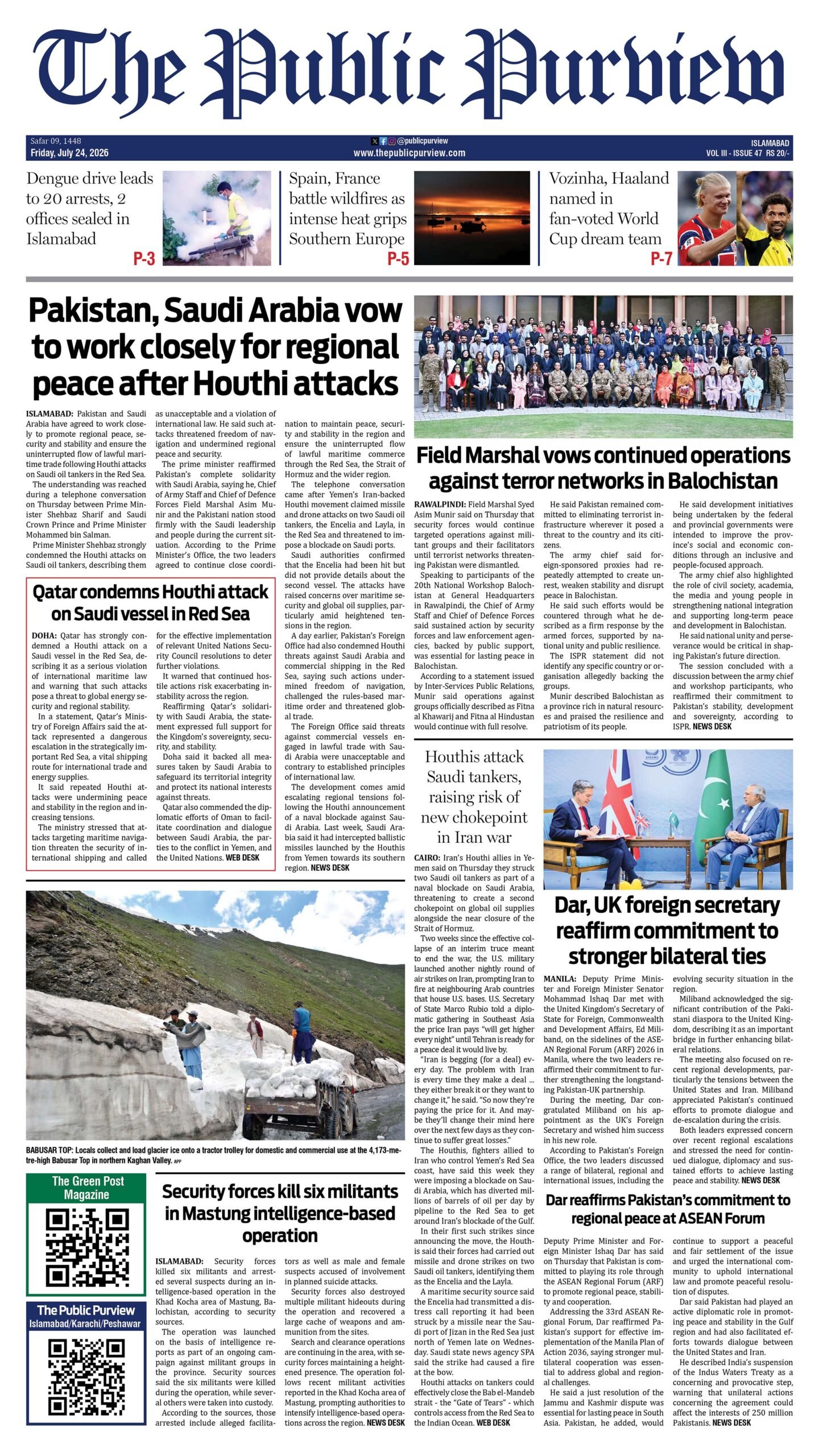 Today's E-Paper