
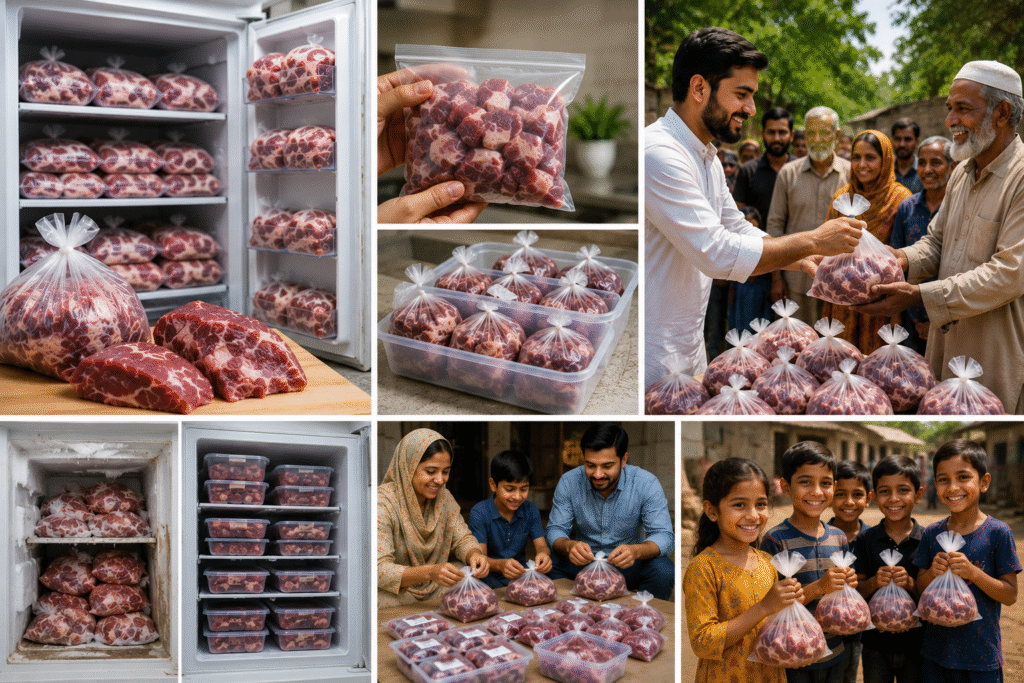
As families prepare for Eid-ul-Adha, food safety experts are advising households to store sacrificial meat properly and avoid keeping large quantities in freezers for extended periods, warning that long-term storage can affect quality, nutritional value and food safety.
Millions of households receive significant amounts of meat during Eid-ul-Adha, making freezers an essential tool for preservation. However, experts say improper storage practices, temperature fluctuations and prolonged freezing can reduce meat quality and increase the risk of spoilage once the meat is thawed.
While freezing slows bacterial growth and extends shelf life, it does not completely prevent changes in the meat. Over time, frozen meat can develop freezer burn caused by exposure to air, leading to dryness, discoloration and a decline in taste and texture. Nutritionists also note that prolonged freezing may gradually reduce freshness and moisture content, even though protein levels generally remain stable.
Safe storage practices
Experts recommend using freezer-safe packaging, sealing meat properly and labeling portions with storage dates to ensure older items are used first. They also advise checking thawed meat for unusual odours, excessive discoloration or changes in texture before cooking.
Food safety guidelines emphasize maintaining consistent freezer temperatures and avoiding repeated thawing and refreezing, which can affect quality and increase contamination risks. Proper packaging also helps prevent moisture loss and cross-contamination with other foods.
Sharing meat can reduce waste
Beyond storage concerns, social welfare advocates encourage families to distribute a larger share of sacrificial meat among relatives, neighbours and underprivileged households.
For many low-income families, Eid-ul-Adha may provide one of the few opportunities during the year to consume quality meat. Experts say timely distribution can reduce pressure on household freezers, minimise food waste and ensure that more families benefit from the blessings of the occasion.
They recommend a balanced approach: storing only the quantity that can reasonably be consumed within the coming months while sharing the remaining meat with those in need. Such practices can help preserve food quality, protect public health and reflect the spirit of compassion and community associated with Eid-ul-Adha.
Also read more