
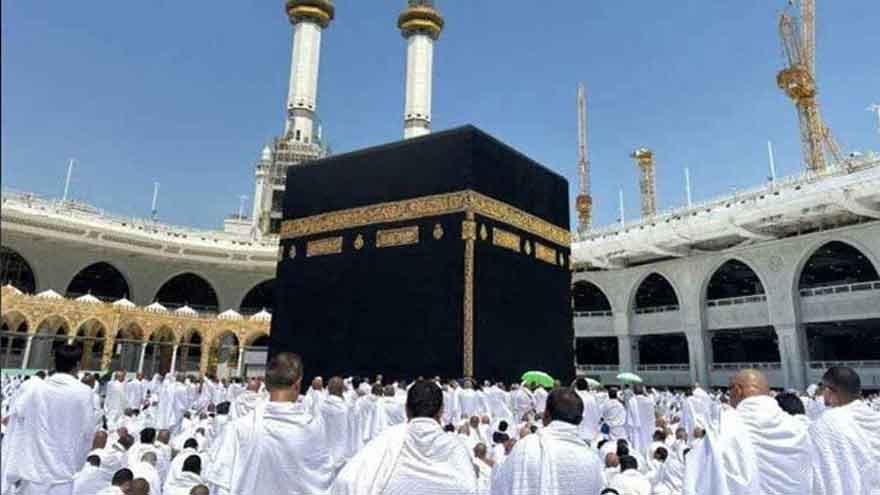
Intro:
Every year, millions of Muslims travel to Makkah for Hajj and Umrah, where they encounter many Arabic terms related to rituals, prayers, and sacred locations. Understanding these terms can help pilgrims perform the journey with greater clarity and confidence.
Here is a simple guide to important Hajj and Umrah terms explained in easy language.
Hajj and Umrah glossary
Arafat
The plain where pilgrims gather on 9th Dhul Hijjah to perform Wuquf Arafat, the most important ritual of Hajj.
Ayyam al-Tashreeq
The three days after Eid al-Adha when pilgrims stay in Mina and perform Rami at the Jamarat.
Hady
The animal sacrifice offered on 10th Dhul Hijjah after stoning Jamrat al-Aqabah.
Halq
Complete shaving of the head by male pilgrims after Hajj or Umrah to exit Ihram.
Ihram
The sacred spiritual state entered before beginning Hajj or Umrah, with specific rules and dress requirements.
Iztiba’
A practice during Tawaf where men keep the right shoulder uncovered.
Jamrat al-Aqabah
The largest pillar stoned during Hajj on 10th Dhul Hijjah.
Jamarat
The three stone pillars in Mina where pilgrims perform Rami.
Makkah
The holiest city in Islam where the Kaaba is located.
Mina
The area where pilgrims stay during major days of Hajj and perform Rami.
Muzdalifah
The place where pilgrims spend the night after Arafat and collect pebbles for Rami.
Nafl Prayer
Optional prayers offered before entering Ihram or after Tawaf.
Niyyah
The formal intention made before beginning Hajj or Umrah rituals.
Qasar
Cutting a small portion of hair after Hajj or Umrah. Women perform Qasar instead of Halq.
Ramal
Brisk walking by men during the first three rounds of Tawaf.
Rami
The ritual of throwing pebbles at the Jamarat during Hajj.
Sa’i
Walking seven times between the hills of Safa and Marwah.
Safa
The hill where the Sa’i ritual begins.
Tahallul
The state achieved after completing certain rituals that allows pilgrims to exit Ihram restrictions.
Talbiyah
The prayer beginning with “Labbayk Allahumma Labbayk” recited during Ihram.
Tawaf
Seven circuits around the Kaaba performed during Hajj and Umrah.
Tawaf al-Ifadah
The mandatory Tawaf performed after the rituals of Yawm al-Nahr.
Tawaf al-Wida
The farewell Tawaf performed before leaving Makkah.
Wuquf Arafat
The central pillar of Hajj involving prayer and supplication at Arafat.
Wuquf Muzdalifah
The night stay and worship in Muzdalifah after leaving Arafat.
Yawm al-Arafah
The Day of Arafah, considered the most important day of Hajj.
Yawm al-Nahr
The Day of Sacrifice when pilgrims perform Rami, Hady, Halq or Qasar, and Tawaf al-Ifadah.
Yawm al-Tarwiyah
The first major day of Hajj when pilgrims travel to Mina and stay overnight.
Why learning Hajj terminology matters
Understanding key Hajj and Umrah terms helps pilgrims prepare for the spiritual journey and better understand each ritual performed during the pilgrimage in Saudi Arabia.
Also read: Hajj Guide 2026: Step-by-step Hajj explained for first-time pilgrims