
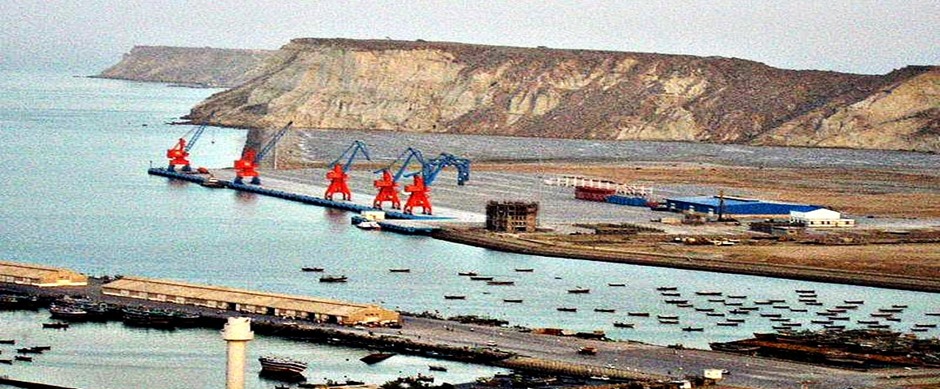
China’s rapidly expanding trade with Central Asia is creating new opportunities for Pakistan to strengthen its position as a regional trade, logistics, and transit hub linking western China and landlocked Central Asian economies to global markets through Gwadar and Karachi ports.
According to official Chinese customs data, trade between China and the five Central Asian countries reached a record $94.8 billion in 2024. The increase reflects growing economic integration across the region and is drawing attention to Pakistan’s potential role in facilitating commerce between Central Asia, China, the Middle East, and international maritime markets.
The growth in trade has been accompanied by a significant expansion in transportation connectivity. Chinese transport authorities reported that 11,920 freight train journeys operated between China and Central Asia during 2024, an increase of 11.3 percent compared to the previous year. The trend accelerated further in 2025, with 8,526 freight train trips recorded during the first seven months alone, up 23.2 percent year-on-year.
Why Pakistan’s geography matters
Pakistan occupies a strategic location at the intersection of South Asia, Central Asia, and the Middle East. Unlike Central Asian states, which are landlocked and dependent on lengthy overland trade routes, Pakistan offers access to warm-water ports through Karachi and Gwadar.
Analysts say this geographic advantage could become increasingly valuable as China continues expanding economic partnerships across Central Asia and seeks diversified trade routes that reduce transit times and logistical costs.
The China-Pakistan Economic Corridor (CPEC), a flagship component of China’s Belt and Road Initiative, has already created transportation infrastructure connecting western China with Pakistan’s Arabian Sea coastline. Experts believe growing China-Central Asia trade volumes could increase the commercial importance of these corridors in the coming years.
New corridors begin commercial operations
Pakistan has recently activated alternative westward trade routes through China and Iran to improve connectivity with Central Asian markets. According to reports cited by Business Recorder, these corridors are designed to reduce dependence on Afghan transit routes while strengthening commercial links with Kazakhstan, Kyrgyzstan, Tajikistan, Turkmenistan, and Uzbekistan.
The first shipment from Kyrgyzstan recently arrived through the newly operational trade corridor connecting Central Asia with Pakistan’s southern seaports, marking an important step from planning toward actual commercial activity.
Industry observers view the arrival of the shipment as evidence that regional connectivity projects are beginning to generate tangible trade flows rather than remaining limited to policy discussions and diplomatic agreements.
Railway project could transform regional logistics
One of the most significant initiatives under discussion is the Uzbekistan-Afghanistan-Pakistan Railway Project.
Pakistan’s Ministry of Foreign Affairs has stated that the railway is intended to connect Central Asian countries with Pakistani ports while facilitating regional trade and transit. The proposed corridor would link Termez in Uzbekistan with Pakistan through Afghanistan, substantially reducing cargo transit times between Central Asia and South Asia.
Regional support for the railway project has strengthened in recent months. Uzbekistan approved procedures in early 2026 to advance the joint feasibility process, while Kazakhstan has expressed interest in financing connectivity projects that would provide access to Pakistani ports through Afghanistan.
If completed, the railway could become one of the most important transportation links connecting Central Asia with international shipping routes.
Economic benefits for Pakistan
Experts believe increased regional trade could create opportunities across multiple sectors of Pakistan’s economy.
Dr. Khalid Waleed, Senior Research Fellow at the Sustainable Development Policy Institute (SDPI), said many Central Asian economies remain dependent on long and expensive trade routes through Russia, the Caucasus, and Iran. He argued that Pakistan could emerge as the shortest commercial outlet for several Central Asian states if it provides efficient customs processing, modern logistics services, and secure cargo movement.
According to industry estimates, stronger transit trade could generate demand for warehousing, freight forwarding, trucking, cold storage facilities, customs services, and port operations. Such growth could help diversify Pakistan’s economy by creating new revenue streams beyond traditional exports.
Challenges remain
Despite the opportunities, analysts caution that infrastructure alone will not guarantee success.
Noman Ahmed, an assistant director at a freight forwarding and supply chain services company, said international traders prioritize predictable border management, digital customs systems, efficient clearance procedures, and secure transit operations. He noted that Pakistan must address operational challenges to attract sustained cargo traffic and compete with alternative regional corridors.
Experts also point to regional security concerns, cross-border coordination requirements, and the successful implementation of rail and road projects as factors that will influence the long-term viability of emerging trade routes.
Growing role in Eurasian trade
China’s Belt and Road Initiative increasingly emphasizes diversified Eurasian trade corridors amid evolving geopolitical and supply-chain challenges. As regional connectivity projects move forward, Pakistan’s role could expand significantly due to its geographic position and access to international shipping routes.
Pakistan’s Foreign Office has stated that the Uzbekistan-Afghanistan-Pakistan railway initiative has the potential to promote regional stability, economic growth, and stronger trade integration between South Asia and Central Asia. If current projects advance from planning to large-scale implementation, Pakistan could emerge as a key gateway connecting Central Asian economies with global markets.
Also Read: China’s circular economy model offers lessons for Pakistan’s sustainable industrial growth