
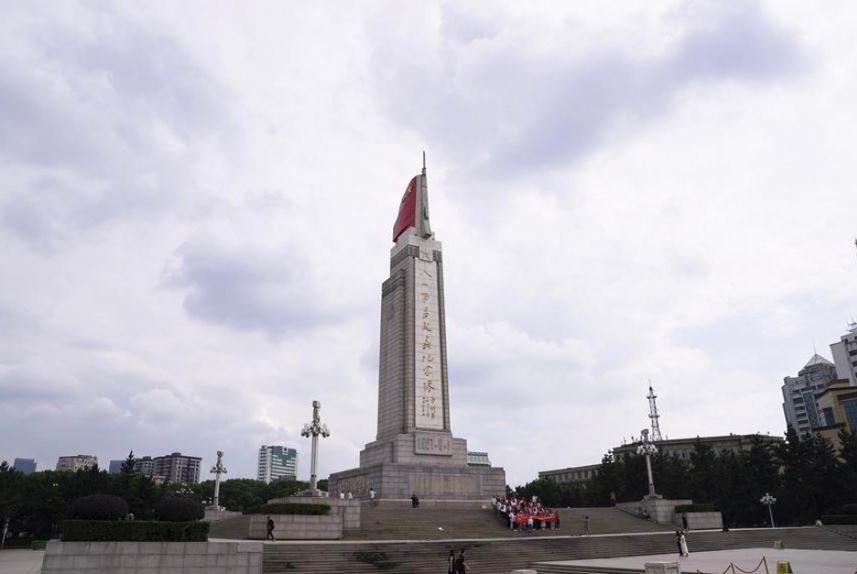
BEIJING, August 2, 2026: China marked the 99th founding anniversary of the People’s Liberation Army on Saturday, highlighting advances in military modernisation, combat readiness and overseas humanitarian operations as the force approaches its centenary.
The anniversary traces its origins to the Nanchang Uprising of August 1, 1927, which China regards as the beginning of the Communist Party-led armed forces. The PLA has since developed into a modern military equipped with aircraft carriers, strategic missiles, stealth fighters and advanced cyber and unmanned systems.
Xi Calls for Faster Military Modernisation
Chinese President Xi Jinping, who also chairs the Central Military Commission, has called for stronger political guidance and innovation-led development as China advances the modernisation of its armed forces.
During a recent study session of the Communist Party’s Political Bureau, Xi urged efforts to improve the quality of national defence development and accelerate military innovation.
He has also placed renewed emphasis on political discipline within the military. At a training session for senior defence officials in April, Xi called for deeper political rectification and urged commanders to uphold the traditions and discipline of the armed forces.
China says its anti-corruption campaign within the PLA has targeted officials regardless of rank and is intended to strengthen discipline and political control across the military.
Reforms Reshape PLA Command Structure
Since 2012, China has implemented wide-ranging defence reforms aimed at improving joint operations, command efficiency and the integration of new technologies.
Under the revised structure, the Central Military Commission exercises overall leadership, theatre commands oversee military operations, and individual services focus on developing combat capabilities.
The PLA is also expanding the use of mechanised, information-based and intelligent technologies across its forces.
China has showcased a growing range of domestically developed military equipment in recent years, including new-generation battle tanks, hypersonic weapons, cyber-electronic warfare systems and unmanned platforms.
Carrier-based aircraft such as the J-35, J-15T and KJ-600 have also been integrated into China’s expanding naval aviation programme. The aircraft completed electromagnetic catapult-assisted launch tests in 2025, strengthening China’s ability to operate a more complete carrier air wing.
Combat Readiness Remains Central
Chinese military leaders continue to place combat readiness at the centre of the PLA’s modernisation programme.
The aircraft carriers Liaoning and Shandong have conducted joint training in the western Pacific, while naval and air forces have carried out readiness patrols in the South China Sea.
Chinese authorities describe the country’s defence policy as defensive and maintain that stronger military capabilities are intended to protect sovereignty, national security and regional stability.
China Highlights Peacekeeping and Humanitarian Role
Alongside its military expansion, China has highlighted the PLA’s participation in United Nations peacekeeping, anti-piracy patrols and overseas evacuation missions.
China is the largest contributor of peacekeeping personnel among the five permanent members of the UN Security Council and one of the leading financial contributors to UN peacekeeping operations, according to Chinese state media.
PLA Navy escort missions have continued in the Gulf of Aden and waters off Somalia, where Chinese vessels have supported anti-piracy operations and helped protect international shipping routes.
China has also expanded overseas medical deployments. The naval hospital ship Auspicious Ark departed Qingdao on July 22 for Mission Harmony-2026, a humanitarian mission expected to last more than 200 days across Africa and South Asia.
The ship will provide free medical services and conduct cultural exchanges during its first overseas deployment. It follows the return of the hospital ship Silk Road Ark, which completed a 234-day medical mission earlier this year.
As the PLA enters its 100th year, China is expected to continue combining military modernisation with expanded overseas security, peacekeeping and humanitarian operations.
Also Read: China’s 2026–30 Industrial Strategy Offers Key Insights for Strengthening Pakistan’s SEZs