
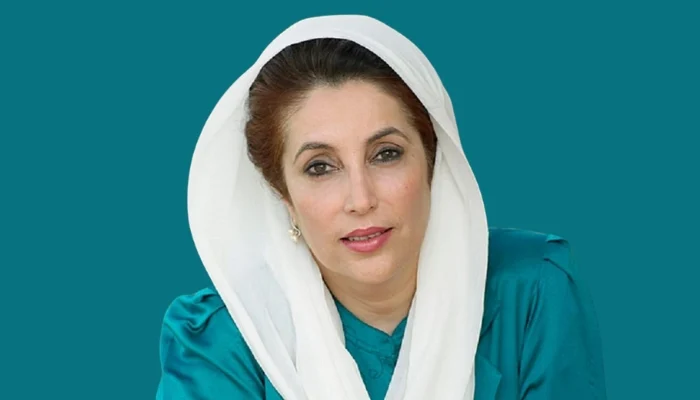
The 73rd birth anniversary of former prime minister Benazir Bhutto, the first woman to lead a Muslim-majority country, is being observed today.
Benazir Bhutto was born in Karachi on June 21, 1953. She was the daughter of former prime minister Zulfikar Ali Bhutto and later led the Pakistan Peoples Party through some of the country’s most challenging political periods.
She served twice as prime minister of Pakistan, first from 1988 to 1990 and then from 1993 to 1996. Her election in 1988 made her the first elected woman head of government in the Muslim world.
After completing her education abroad, Benazir Bhutto returned to Pakistan and became involved in political and diplomatic activities alongside her father. Following the dismissal of Zulfikar Ali Bhutto’s government in 1977 and his subsequent trial, she emerged as a prominent political figure.
In 1982, Benazir Bhutto became chairperson of the Pakistan Peoples Party. During General Zia-ul-Haq’s rule, she faced detention, house arrest and exile.
After returning to the country, she contested the 1988 general elections and was elected prime minister. She returned to power for a second term after the 1993 elections.
Benazir Bhutto’s political career remains an important chapter in Pakistan’s history, particularly in relation to democracy, constitutional rule, political resistance and public mobilisation.
On October 18, 2007, she returned to Pakistan after nearly nine years in exile. Her welcome procession in Karachi was attacked, though she survived.
On December 27, 2007, Benazir Bhutto was assassinated after addressing an election rally at Liaquat Bagh in Rawalpindi. Her death is remembered as one of the most significant tragedies in Pakistan’s political history.