
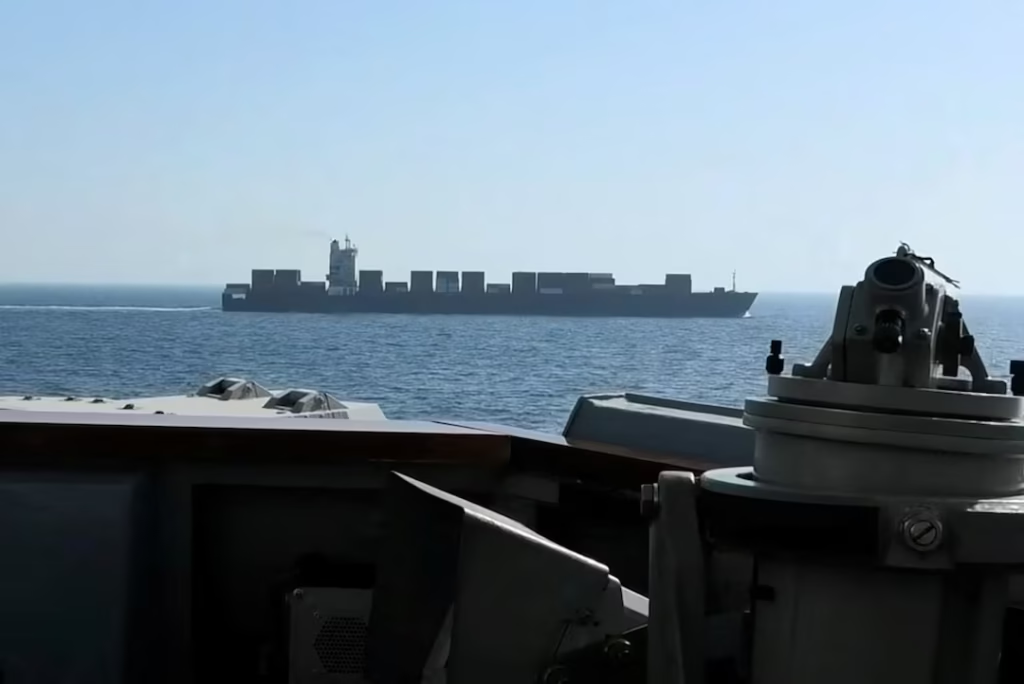
WASHINGTON/CAIRO, April 20 — The US-Iran ceasefire is under increasing strain after the United States seized an Iranian cargo ship accused of breaching a naval blockade, while Iran said it has no plans to join a second round of negotiations with Washington.
The escalation has heightened concerns over global oil supply, as tensions intensify around the Strait of Hormuz — a key shipping route that carries about 20% of the world’s oil. Oil prices rose and markets showed volatility as uncertainty over the ceasefire grew.
US seizure of vessel escalates tensions
The U.S. military said it intercepted an Iranian-flagged cargo vessel near Iranian waters on Sunday after a prolonged standoff. According to U.S. Central Command, forces disabled the ship’s engines before Marines boarded it from helicopters and took control.
President Donald Trump said U.S. authorities had taken custody of the vessel and were inspecting its cargo. Iranian officials said the ship had departed from China and condemned the operation, warning of retaliation.
Strait of Hormuz remains flashpoint for energy markets
The incident comes amid ongoing maritime restrictions from both sides. The United States has maintained a blockade targeting Iranian ports, while Iran has intermittently restricted traffic through the Strait of Hormuz.
The waterway is a critical global energy corridor, and reduced shipping activity has increased fears of prolonged supply disruption, supporting higher oil prices and market uncertainty.
Iran says no plans for further negotiations
Iran’s Foreign Ministry said there are currently no plans to participate in a second round of talks with the United States, citing a lack of trust and ongoing tensions.
Foreign Ministry spokesperson Ismail Baghaei said conditions were not suitable for further negotiations and accused Washington of undermining diplomacy through recent actions, including alleged ceasefire violations and military pressure.
He said discussions had previously taken place on proposals presented in Pakistan, but claimed the situation had since deteriorated. Iranian officials also alleged that the U.S. naval blockade and the seizure of an Iranian vessel violated international law.
Islamabad talks uncertain amid tight security
Pakistan, which has been facilitating mediation efforts, continued preparations for talks in Islamabad despite uncertainty over participation. Authorities deployed extensive security measures across the capital, restricting movement near the proposed venue.
Conflicting signals from U.S. officials regarding the delegation have added to doubts over whether the talks will proceed before the ceasefire deadline.
Conflict impact widens
Now in its eighth week, the conflict has triggered one of the most significant shocks to global energy markets in recent years. Disruptions in the Strait of Hormuz have amplified geopolitical risks and economic uncertainty.
The broader confrontation continues to affect multiple countries in the region, with ongoing military activity and security concerns extending beyond maritime routes.
Also read: US delegation leaves Islamabad after inconclusive talks with Iran