
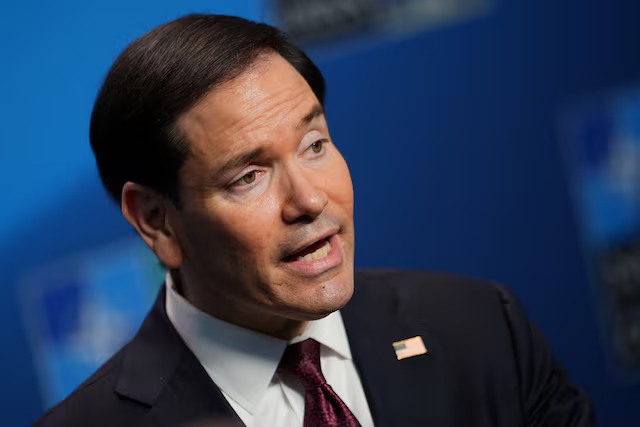
WASHINGTON: Pakistan’s Deputy Prime Minister and Foreign Minister Ishaq Dar is scheduled to meet US Secretary of State Marco Rubio in Washington on Friday, with discussions expected to cover bilateral relations and the latest developments related to efforts to end the Iran conflict.
The meeting comes at a sensitive time for regional diplomacy, as reports suggest progress has been made in negotiations involving Iran and the United States. The outcome of those discussions could have implications for regional security, global energy markets, and shipping through the Strait of Hormuz.
According to Pakistan’s Foreign Ministry, Dar arrived in Washington on Friday and is expected to return to Pakistan later the same day. Rubio’s official schedule lists the meeting for 10 a.m. local time.
Focus on diplomacy and regional peace
Pakistan has said the talks will focus on bilateral relations and the country’s efforts to promote regional peace and stability through dialogue and diplomacy.
Islamabad has been actively engaged in diplomatic outreach as efforts continue to reduce tensions linked to the Iran conflict. Pakistan’s military leadership has also played a role in regional diplomatic initiatives aimed at supporting peace efforts.
Reports point to progress in negotiations
Recent reports have indicated movement in negotiations involving Tehran and Washington. Reuters reported, citing sources, that an initial understanding had been reached to extend a ceasefire announced earlier this year and ease restrictions affecting shipping through the Strait of Hormuz.
However, Iranian media have stated that no final agreement has yet been concluded and that details of the proposed arrangement have undergone changes in recent days.
US President Donald Trump has not formally approved any reported agreement, while officials on both sides continue discussions on key issues.
Strait of Hormuz remains a key concern
The Strait of Hormuz remains central to negotiations because of its importance to global energy supplies. Before the conflict, the strategic waterway handled roughly one-fifth of the world’s oil and gas shipments.
Shipping activity in the area remains closely monitored by governments and energy markets. Vessel tracking data showed limited tanker movement through the strait on Friday, although some commercial vessels continued operating in the region.
Iran has maintained that transit through the waterway remains subject to security oversight by its authorities.
Key issues still under discussion
Iran has called for sanctions relief, access to frozen overseas assets, and a reduction in the US military presence in the region. The United States has continued to press Iran over its nuclear programme, which Tehran says is intended for peaceful purposes.
The Washington meeting between Dar and Rubio is expected to provide an opportunity for both countries to discuss regional developments as diplomatic efforts continue.
Also Read: Iran president thanks Pakistan for role in efforts to end conflict