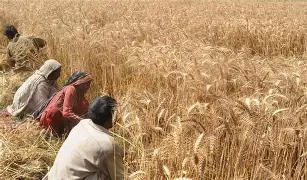
ISLAMABAD, Apr 20 (ABC): Pakistan has expanded its research efforts to develop high-yield hybrid wheat, joining the global race to produce more productive and climate-resilient crop varieties, as leading agricultural institutions in Punjab collaborate under a unified programme with technical support from Australian experts.
“Hybrid wheat research is a joint project launched by various research institutes in Punjab to develop a variety with sufficient yield potential to meet the growing future demand for this cereal,” said Dr Javed Ahmad, Chief Scientist at the Wheat Research Institute (WRI), Faisalabad.
Talking to Wealth Pakistan, he said the initiative is being led by experts from Muhammad Nawaz Sharif University of Agriculture, Multan, with active participation from the University of Agriculture, Faisalabad, and WRI Faisalabad.
“This joint effort reflects a significant step toward strengthening Pakistan’s food security and adapting its agriculture sector to the challenges of climate change,” he added.
Dr Ahmad noted that Pakistani scientists can develop both genetically modified (GMO) and hybrid crop varieties, but environmental laws do not permit this in the country.
Under the joint project, MNS University of Agriculture, Multan, is leading research on hybrid wheat using Australian Blue Aleurone (BLA) technology, which involves introducing a gene to control specific breeding traits.
He said Prof Richard Trethowan of the University of Sydney has been providing technical support. Trethowan has developed a breakthrough non-GMO hybrid wheat technology after three decades of research. Often described as a “biologically perfect system,” it prevents self-pollination, enabling cross-breeding for yields exceeding 20%, along with improved disease resistance and tolerance to heat and drought.
Despite ongoing research in multiple institutions, Dr Ahmad acknowledged that Pakistan has yet to develop a commercially viable hybrid wheat variety.
He said hybrid wheat, once developed, would be less susceptible to diseases and pests and deliver higher yields. He added that China leads global research in hybrid wheat, followed by the United States, Australia and France.
“These countries have made significant progress, but no country has yet introduced hybrid wheat for large-scale commercial cultivation,” he said.
However, he stressed that commercialisation is only a matter of time. “Several global companies are preparing to introduce hybrid wheat commercially, which could set a precedent for others,” he said.
Dr Ahmad also highlighted the need for continuous innovation in crop development. “Any variety cultivated over a long period becomes more vulnerable to diseases and pests, while its yield potential declines, making the development of new varieties essential,” he said. He added that agriculture remains a constant contest between scientists and evolving pests that adapt to overcome new crop varieties.
Biotechnologists have welcomed Pakistani scientists’ efforts and expressed optimism that hybrid wheat could prove transformative for the country’s agriculture sector.
“The development of crops like rice, cotton and maize has already contributed significantly to the prosperity of Pakistan’s farming community,” said Dr Kausar Abdullah Malik, a leading biotechnologist and former interim federal minister for food security and national research.
Talking to Wealth Pakistan, he said researchers worldwide are at various stages of hybrid wheat development, but they have not yet succeeded in launching a commercial variety.
He said that whenever hybrid wheat is commercialised, it would mark a breakthrough comparable to the introduction of short-statured, high-yielding crop varieties in the 1960s.
Pakistan expands research to develop high-yield hybrid wheat