
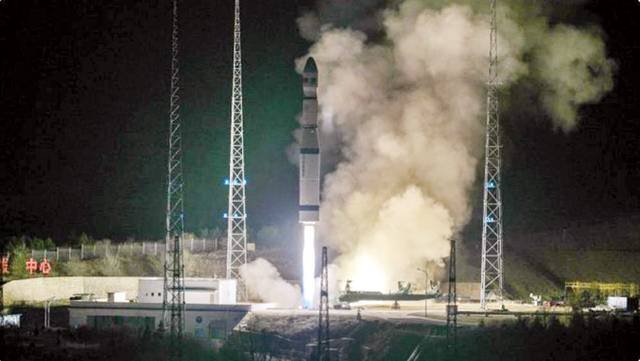
RAWALPINDI — April 25, 2026: Pakistan has successfully launched its indigenous Electro-Optical Satellite (EO-3) from China, in a development officials describe as a key milestone in advancing the country’s space and technological capabilities.
According to the Inter-Services Public Relations (ISPR), the satellite was launched from the Taiyuan Satellite Launch Center with support from SUPARCO. The EO-3 satellite is designed to provide high-resolution imaging data for multiple national applications, including urban planning, disaster management, agriculture, and environmental monitoring.
Officials said the satellite will play a central role in building an integrated Earth observation system aimed at supporting policy planning and improving data-driven decision-making across sectors.
Applications across key sectors
The EO-3 satellite is expected to enhance Pakistan’s capacity to monitor natural disasters, manage food security challenges, and track environmental changes. Authorities noted that access to indigenous satellite data will reduce reliance on external sources and improve response times in emergencies.
The launch is also seen as part of broader efforts to strengthen Pakistan’s technological self-reliance and expand its capabilities in space-based research and observation.
Government and international support
Prime Minister Shehbaz Sharif praised the scientists and engineers involved in the mission, highlighting their technical expertise and commitment.
He also acknowledged the role of China as Pakistan’s long-standing partner in space cooperation, noting continued collaboration between the two countries in advancing space technology.
Strategic significance
Officials described the EO-3 launch as a foundational step toward developing a comprehensive Earth observation infrastructure in Pakistan. The system is expected to support long-term socio-economic planning and contribute to sustainable development initiatives.
The mission adds to Pakistan’s growing portfolio of space projects and reflects increasing investment in science and technology sectors.
Also read: SUPARCO launches Space4Climate initiative to support climate monitoring and policy planning