
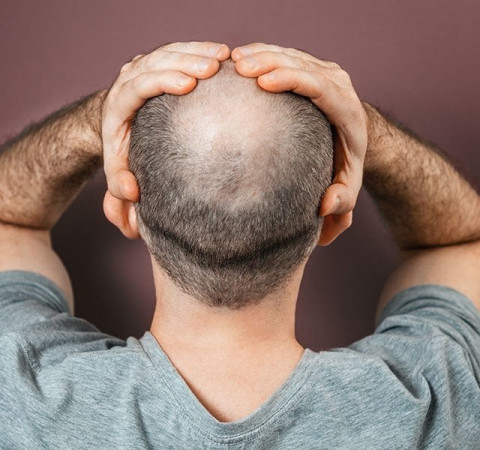
Scientists are reporting new progress in experimental hair loss treatments that could one day help regrow hair rather than only slow or prevent further shedding.
The research is significant for people affected by baldness because current options, including minoxidil and hormone-targeting medicines, do not work equally for everyone and usually require continued use to maintain results.
Several emerging approaches are now focused on reactivating dormant hair follicles, improving blood supply around follicles and using regenerative medicine to create new follicle-like structures.
Experimental injection targets dormant follicles
One treatment drawing attention is ABS-201, an experimental therapy designed to target the prolactin receptor, a pathway being studied for its role in androgenetic alopecia. Absci says the treatment is being evaluated in a Phase 1/2a clinical trial to assess safety, tolerability and hair growth effects.
Preclinical studies have suggested that blocking this pathway may help preserve follicle stem cells and support hair shaft production, though the treatment has not yet been approved for public use.
Stem cell research opens new possibilities
Researchers have also studied ways to reactivate hair follicle stem cells by influencing their metabolism. Work linked to UCLA has explored the role of lactate production in follicle stem cell activity, forming the basis for experimental topical treatments such as PP405.
Another area of research involves 2-deoxy-D-ribose, a naturally occurring sugar. A 2024 animal study found that the compound helped stimulate blood vessel formation and hair regrowth in mice, with results described as comparable to minoxidil in that model.
Scientists are also using tissue engineering to grow hair follicle-like structures in laboratory settings. Such work remains early, but researchers say it may eventually support treatment for severe baldness, burns or skin conditions that permanently damage follicles.
Treatments still need clinical proof
Experts caution that most of these approaches remain experimental and require further human testing before they can become widely available.
While the findings point to promising new directions, patients are advised to rely on approved treatments and consult qualified medical professionals before using any unregulated hair growth products.
Also Read : What magic happens when tomato juice is applied to hair? Find out this amazing remedy