
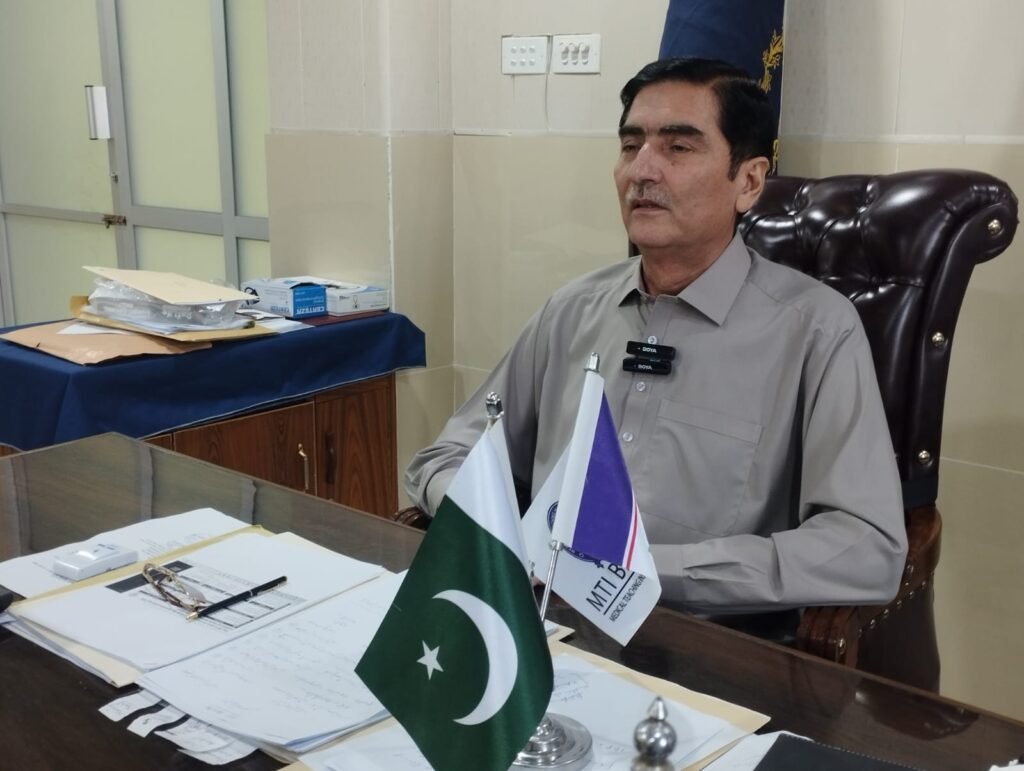
Feature based on an exclusive conversation with Hospital Director Dr Iftikhar Ullah
Provision of quality healthcare has long remained a critical challenge in the southern districts of Khyber Pakhtunkhwa, particularly in Bannu and its surrounding regions. Serving a population of over a million, the district also caters to patients from North and South Waziristan, Karak, Lakki Marwat, Tank, and even bordering areas of Afghanistan. In this context, the teaching hospitals operating under the Medical Teaching Institution (MTI) Bannu—including Khalifa Gul Nawaz Teaching Hospital, District Headquarters Hospital, and Women and Children Hospital—hold central importance for the entire region.
In recent months, the hospital administration has undertaken a series of reforms aimed at improving service delivery and restoring public confidence. According to Hospital Director Dr Iftikhar Ullah, the core objective of these efforts is to ensure the provision of timely, quality, and dignified healthcare services at the local level.
Dr Iftikhar Ullah noted that one of the major challenges in the past was the excessive reliance on referrals, where even manageable cases were sent to larger cities. This practice not only imposed financial and psychological burdens on patients but also resulted in delays in treatment. Addressing this issue became a key priority for the current administration, with a focus on minimizing referrals and strengthening in-house treatment capacity.
As part of this strategy, several departments have been reinforced and new specialties introduced. Services such as neurosurgery, vascular surgery, and plastic surgery are now available locally, enabling patients to access advanced medical care within their own district—a development considered a significant milestone.
The scope of reforms has extended beyond clinical services to include improvements in the overall hospital environment. Cleanliness standards have been enhanced, wards have been refurbished, and efforts have been made to create a more organized and patient-friendly atmosphere. Dr Iftikhar Ullah emphasized that a clean and well-managed environment plays a vital role in the healing process.
Simultaneously, considerable attention has been given to the professional development of healthcare staff. Through training sessions and workshops, doctors, nurses, and support staff are being equipped not only with improved technical skills but also with a stronger understanding of patient care and communication. This has contributed to a noticeable improvement in patient experience and workplace environment.
In terms of discipline and accountability, a biometric attendance system has been strictly implemented, with salaries linked to attendance. This measure has significantly improved staff punctuality and ensured the consistent availability of personnel across departments.
Important steps have also been taken to ensure the availability of medicines, particularly in emergency wards. Essential drugs are now being provided within the hospital, reducing the need for patients to purchase medicines externally. Additionally, patients admitted under the Sehat Sahulat Programme are receiving free medications, easing the financial burden on low-income families.
Given the high incidence of trauma cases in the region, special emphasis has been placed on emergency and trauma care services. The establishment of improved emergency facilities and a dedicated trauma center has enhanced the hospital’s capacity to respond effectively to critical situations.
Infrastructure development has also remained a key focus area. Efforts are underway to address energy challenges through solarization projects, while a centralized oxygen supply system has been made operational to ensure uninterrupted availability. These initiatives have not only improved service reliability but have also contributed to cost efficiency.
To strengthen diagnostic services, modern medical equipment has been installed, allowing patients to access essential tests and imaging facilities within the hospital premises. This has reduced both the time and cost associated with seeking diagnostic services elsewhere.
The establishment of complaint cells marks another important step towards transparency and accountability. According to Dr Iftikhar Ullah, public feedback is essential for institutional improvement, and the administration is committed to addressing concerns and incorporating constructive suggestions into policy and practice.
Dr Iftikhar Ullah described these reforms as a collective effort involving the administration, healthcare staff, government, and the public. He noted that the progress achieved over the past few months is only the beginning, with clear targets set for further improvements in the near future.
Overall, the ongoing reforms at MTI Bannu reflect a positive and structured approach towards strengthening healthcare delivery in the region. If sustained, these efforts have the potential to transform local hospitals into reliable centers of quality healthcare, not only for Bannu but for the wider region as well.