
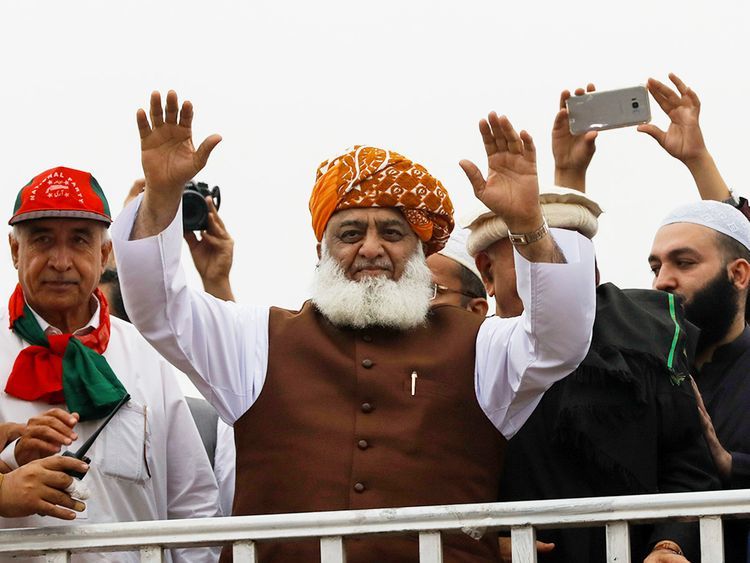
Maulana Fazal-ur-Rehman (b. June 1953) is one of the most influential and enduring religious politicians in Pakistan, having led the Jamiat Ulema-e-Islam (Fazl faction) since 1980. Over more than four decades, he has evolved from a madrasa-educated cleric into a central figure in Pakistan’s parliamentary opposition politics, coalition engineering, and street mobilization strategies.
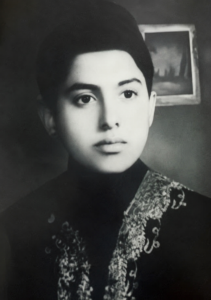
Early Life and Political Entry (1953–1980)
Born in Dera Ismail Khan in June 1953, Fazal-ur-Rehman belongs to a prominent Pashtun religious family. His father, Maulana Mufti Mahmud, served as Chief Minister of Khyber Pakhtunkhwa (then NWFP) in 1972–73, giving him early exposure to both religious scholarship and governance.
After completing traditional Deobandi madrasa education, he pursued higher studies, earning a BA from the University of Peshawar and later an MA from Al-Azhar University. His formal political entry came in 1980, following the death of his father, when he assumed leadership of JUI at the age of 27—marking the beginning of his long political dominance in religious politics .
Rise Under Martial Law and Early Opposition Politics (1980–1988)
During the 1980s Zia-ul-Haq martial law period, Fazal-ur-Rehman was arrested multiple times for political activism and opposition to authoritarian rule. He joined the Movement for Restoration of Democracy (MRD), aligning religious politics with anti-dictatorship movements.
By this time, he had also begun consolidating control over JUI, which later split into JUI-F and JUI-S factions, with Fazl retaining the dominant organizational structure.
Electoral Entry and Parliamentary Rise (1988–1999)
Fazal-ur-Rehman entered the National Assembly in 1988, winning his first seat from Dera Ismail Khan. After a brief defeat in 1990, he returned in 1993, establishing himself as a consistent parliamentary figure.
Throughout the 1990s, he formed tactical alliances with both the Pakistan Peoples Party and Pakistan Muslim League-N, demonstrating early signs of his pragmatic coalition politics. In this era, he also blocked attempts by Nawaz Sharif to assume the title “Amir-ul-Momineen,” reinforcing his influence in religious-political legitimacy debates.
Peak Influence Under Musharraf and MMA Era (2002–2007)
The 2002 general elections marked a turning point. Fazal-ur-Rehman led the Muttahida Majlis-e-Amal (MMA), an alliance of religious parties, which achieved major electoral success in Khyber Pakhtunkhwa and Balochistan.
He personally won two National Assembly seats (NA-24 and NA-25, Dera Ismail Khan) and became Leader of the Opposition in 2004. During this period, he also played a key role in negotiating the 17th Constitutional Amendment (2003–2004), which legitimized General Pervez Musharraf’s presidency—highlighting his dual role as opposition leader and political negotiator .
Transition, Alliances, and Shifting Political Strategy (2008–2018)
After 2008, Fazal-ur-Rehman transitioned into a coalition-supporting role, aligning with different governments while maintaining JUI-F’s independence.
In 2013, he won multiple National Assembly seats from Dera Ismail Khan and Lakki Marwat under the revived MMA framework, reinforcing his dominance in southern Khyber Pakhtunkhwa.
However, the 2018 general elections marked a major setback. Contesting again under MMA, he lost both Dera Ismail Khan seats (NA-38 and NA-39), significantly reducing JUI-F’s parliamentary strength and triggering claims of electoral manipulation .
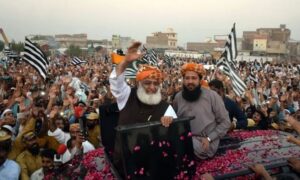
Street Power Politics and Long Marches (2004–2019)
Fazal-ur-Rehman has consistently used street mobilization as a political tool alongside parliamentary engagement.
- 2004: Led a long march on Islamabad opposing constitutional changes under Musharraf, which contributed to political compromise and later amendments.
- October–November 2019: Launched the famous “Azadi March” in Islamabad demanding government resignation, marking one of the largest opposition sit-ins of the decade.
- 2021–2022: As head of the Pakistan Democratic Movement (PDM), he organized nationwide protests against inflation and electoral legitimacy concerns.
These movements established him as a key pressure politician capable of mobilizing mass religious-political support.
Ideology and Political Positioning
Fazal-ur-Rehman advocates for the gradual implementation of Islamic principles within Pakistan’s constitutional system. He supports Sharia-oriented legislation but insists on constitutional methods rather than armed struggle.
His ideology combines religious conservatism with political flexibility. While he has opposed several progressive social reforms, he has also publicly condemned extremist violence in later years and repositioned himself as a parliamentary democrat.
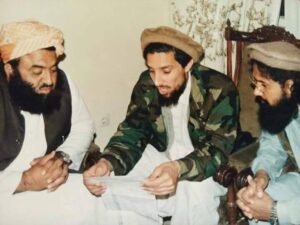
Electoral Base and Current Standing
His political strength remains concentrated in southern Khyber Pakhtunkhwa, particularly Dera Ismail Khan and Bannu. He has historically failed to secure sustained electoral success in Punjab or Sindh, limiting his national reach.
In 2024, he returned to the National Assembly through a by-election in Pishin (Balochistan), reaffirming his continued relevance in opposition politics.
Conclusion
Maulana Fazal-ur-Rehman’s political journey—from his entry in 1980, parliamentary rise in 1988, opposition leadership in 2004, MMA peak in 2002, electoral setback in 2018, to his return in 2024—reflects the evolution of religious coalition politics in Pakistan.
His legacy remains complex: a cleric-politician who has simultaneously opposed and engaged with state power, combined street agitation with parliamentary negotiation, and maintained influence across multiple political eras in Pakistan
Also Read: Asif Ali Zardari: Political Survivor, Presidency, Controversies And Legacy