
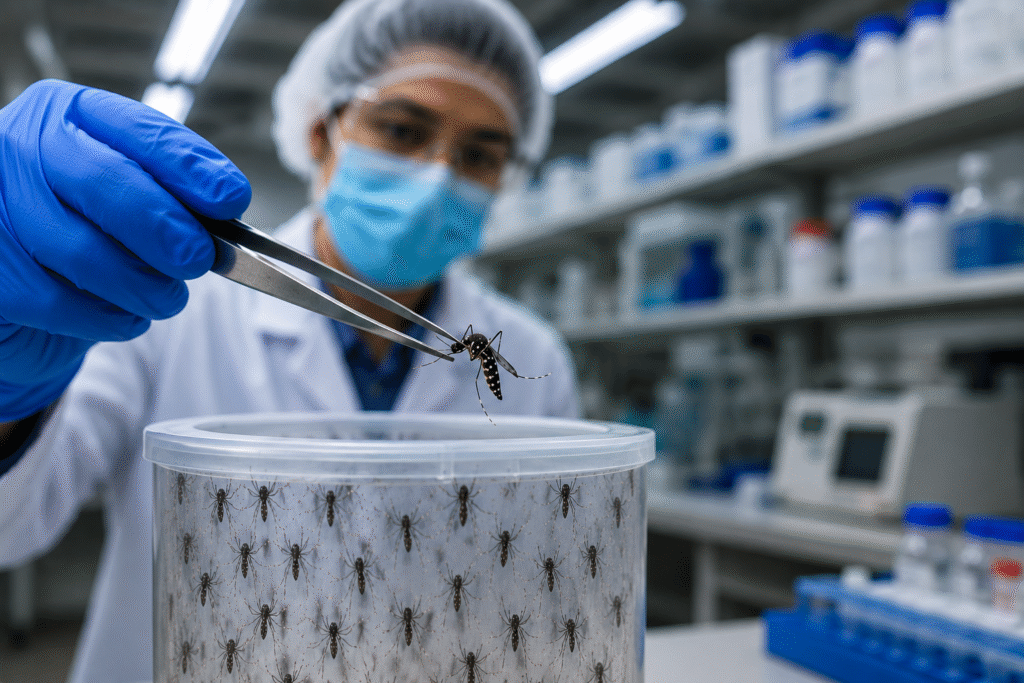
CURITIBA: Brazil is expanding the use of mosquitoes infected with the Wolbachia bacterium as health authorities attempt to slow the spread of dengue, which continues to rise across the country amid growing climate-related risks.
Scientists say the modified mosquitoes help block the transmission of dengue, Zika and chikungunya viruses. However, researchers warn the spread of dengue is advancing faster than the country’s ability to breed and distribute the insects on a national scale.
Brazilian scientist Luciano Moreira, who helped develop the Wolbachia method, said climate change has contributed to the spread of dengue into regions that were previously less affected.
The world’s largest mosquito bio-factory, located in Curitiba, can produce up to 100 million mosquito eggs per week. The insects are released into urban areas, where they gradually replace mosquitoes that transmit harmful viruses.
Dengue remains a major health challenge
Brazil recorded more than 6,000 dengue-related deaths during a major outbreak in 2024. Health officials say more than 200 million people remain at risk across the country.
Researchers reported significant declines in dengue cases in some cities where the Wolbachia method has been tested. In Niteroi, dengue cases reportedly fell by 89%, while Campo Grande recorded a 63% reduction.
Despite the results, scientists and public health experts say expansion efforts face logistical and administrative challenges. Officials cited limited demand, coordination problems and operational difficulties in some areas.
Programme to expand to more cities
Brazil’s Health Ministry said the programme is expected to expand to 54 additional cities this year, increasing the number of participating municipalities to 70.
Health experts stressed that the Wolbachia programme is not a standalone solution but part of a broader strategy that also includes vaccination, mosquito control measures and public awareness campaigns.
Brazil last year developed the world’s first single-dose dengue vaccine, while several other countries continue research into additional immunisation options.