
Rising tensions push UN Security Council toward vote on maritime security as Trump signals major defence spending increase
Washington / New York — April 03, 2026: US President Donald Trump said the United States could reopen the Strait of Hormuz, as the ongoing crisis with Iran continues to disrupt global oil supply and heighten geopolitical tensions.
In a statement posted on Truth Social, Trump said that with “a little more time,” the US would be able to restore access to the critical waterway, which remains effectively closed following Iranian retaliation to US-Israeli strikes launched in late February.
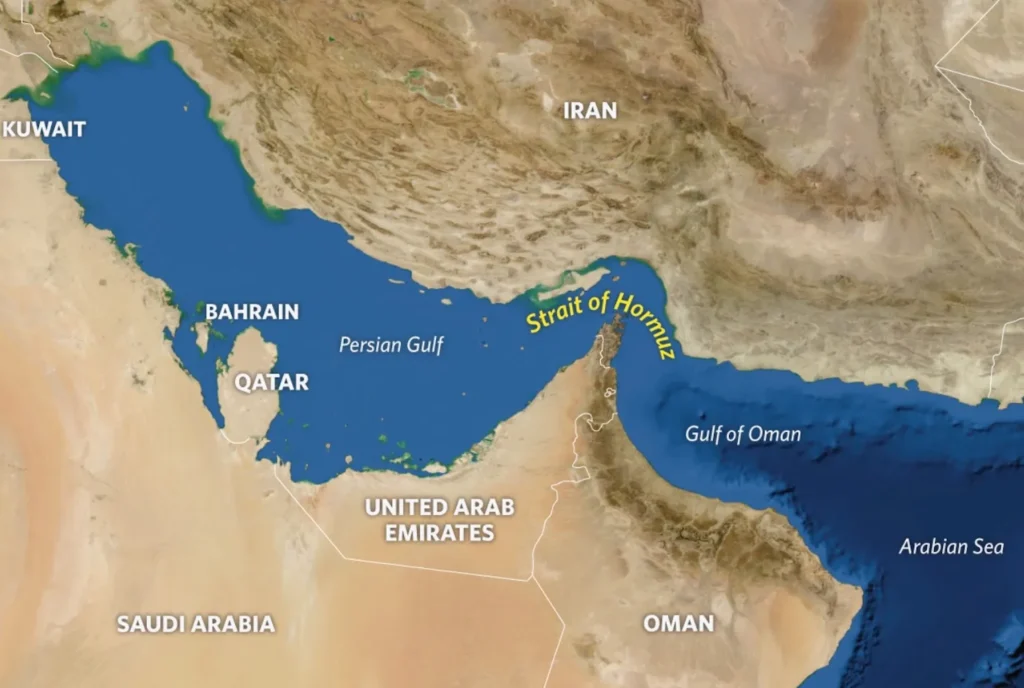
The Strait of Hormuz, through which nearly 20 percent of the world’s oil supply passes, has become the focal point of the crisis. Its disruption has triggered sharp increases in global energy prices and raised serious concerns about supply stability worldwide.
The conflict, now in its fifth week, has intensified pressure on Washington to secure a swift resolution, as financial markets react to uncertainty and regional instability deepens.
Trump has also reiterated warnings targeting Iranian infrastructure, while Tehran has signaled potential further retaliation, underscoring the risk of escalation.
Meanwhile, diplomatic efforts are underway at the United Nations, where the Security Council is set to vote on a draft resolution aimed at protecting commercial shipping in and around the Strait of Hormuz.
The resolution, introduced by Bahrain, proposes authorizing “all necessary defensive measures” to ensure maritime security for an initial period of six months. The vote is expected to take place on Saturday.
Bahrain, currently holding the rotating presidency of the Security Council, has sought to build consensus by revising the draft language, with support from Gulf states and the United States.
However, China has opposed any move that could be interpreted as authorizing the use of force. Addressing the council, China’s UN envoy Fu Cong warned that such measures could escalate tensions and lead to serious consequences.
Amid these escalating tensions, Trump has also signaled a sharp increase in US military spending, proposing a $1.5 trillion defense budget for 2027 — a significant jump from the $901 billion approved for 2026. The proposal, announced on Truth Social, comes as the administration cites growing global security challenges and ongoing military engagements.
The suggested increase has already lifted shares of major US defense contractors in after-hours trading, reflecting investor expectations of higher military expenditure. However, the plan faces uncertainty as it would require approval from Congress, where even narrow majorities may not guarantee smooth passage.
Budget analysts have raised concerns over the scale of the proposal, warning it could significantly add to US debt despite Trump’s claim that tariff revenues would help offset the cost. Some experts also questioned whether the defense sector has the capacity to absorb such a rapid surge in spending.
The Strait of Hormuz remains a critical chokepoint for global energy trade, and its continued disruption highlights the broader economic and security implications of the ongoing US-Iran confrontation.