
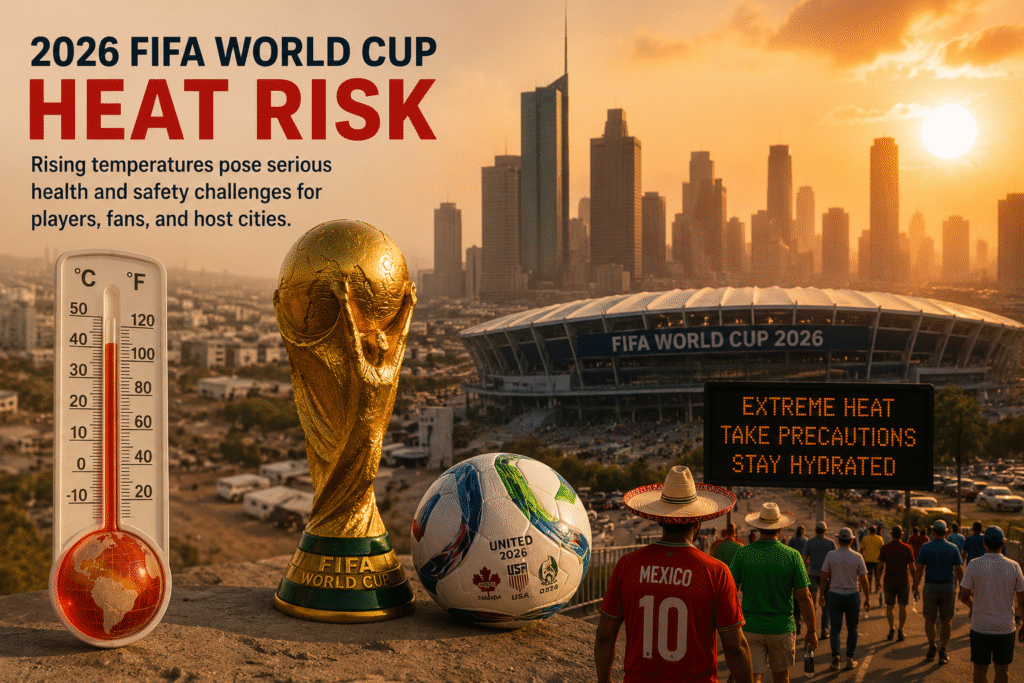
A new climate study has warned that players and fans at the 2026 FIFA World Cup could face dangerous heat conditions as rising global temperatures increase weather-related risks during the tournament.
The research, conducted by climate group World Weather Attribution, found that nearly a quarter of the 104 matches scheduled across the United States, Mexico and Canada may be played in temperatures exceeding safety limits recommended by global players’ union FIFPRO.
According to the study, around five matches could take place under conditions considered unsafe for play, where postponement may be necessary. Researchers used the Wet Bulb Globe Temperature (WBGT) index, which measures heat stress based on temperature, humidity and the body’s ability to cool itself.
FIFPRO medical director Vincent Gouttebarge said the findings support the need for stronger heat mitigation measures to protect player health and performance during extreme weather conditions.
FIFA outlines heat protection measures
FIFA said it has already developed heat-risk planning for the tournament, including three-minute hydration breaks during each half, cooling infrastructure for fans and players, adapted work-rest cycles and increased medical preparedness.
The governing body said safety protocols would be adjusted based on real-time weather conditions at each venue.
FIFPRO recommends cooling interventions when WBGT exceeds 26 degrees Celsius and suggests postponing matches if levels rise above 28°C, conditions linked to dangerous heat stress.
Stadium concerns remain in several host cities
The analysis found that several stadiums without air conditioning, including venues in Miami, Kansas City, New York and Philadelphia, could face elevated heat risks during summer matches.
Researchers also warned that spectators attending outdoor fan zones and public viewing events may remain exposed to prolonged periods of extreme heat, even in cities with climate-controlled stadiums.
The report said the final at MetLife Stadium in New Jersey carries a significantly higher risk of exceeding recommended heat thresholds compared to the 1994 FIFA World Cup hosted in the United States.
Climate scientists involved in the study said the findings raise broader questions about scheduling future international sporting events during peak summer periods in regions vulnerable to extreme temperatures.