
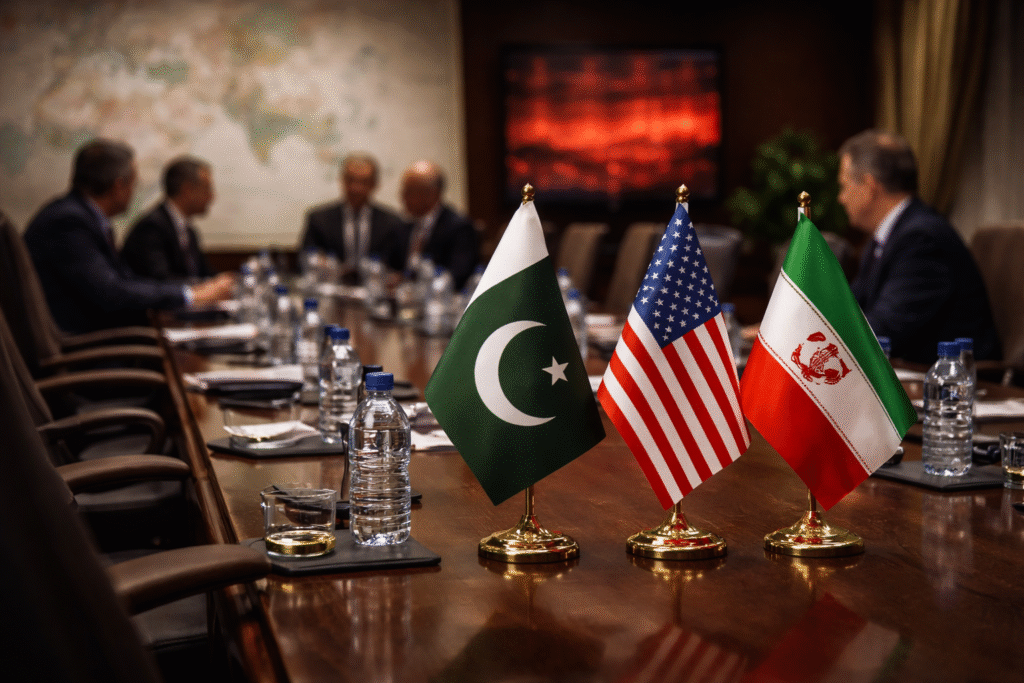
Washington/Islamabad: Pakistan has emerged as a potential venue for indirect US-Iran engagement, as President Donald Trump delayed planned strikes on Iran’s power infrastructure amid ongoing backchannel contacts aimed at easing tensions.
According to reports by Axios and Reuters, US officials have been in communication with a senior Iranian figure through intermediaries, with Pakistan, Turkey and Egypt facilitating contacts. The development comes as Washington explores diplomatic options following weeks of escalation linked to the Strait of Hormuz.
A reporter for Axios said US envoy Steve Witkoff held meetings with representatives from Pakistan, Turkey and Egypt, and separately with Iranian Foreign Minister Abbas Araqchi, indicating that these countries could play a role not only in mediation but also in hosting or enabling further engagement between the two sides.
Pakistan’s role as potential host
Diplomatic activity suggests Pakistan may serve as a neutral ground for future interactions between US and Iranian delegations, given its working ties with both sides and its involvement in ongoing contacts. While no formal venue has been announced, officials familiar with the discussions indicate that regional partners are being considered for facilitating in-person or indirect exchanges.
Iran has acknowledged “initiatives” aimed at reducing tensions, according to statements carried by Iranian media, but has maintained that any resolution would require direct US participation.
Pause in strikes linked to diplomatic push
Trump said he ordered a five-day delay in military action after what he described as “very good and productive” discussions, adding that there was a “real possibility” of reaching an agreement. However, he declined to specify the exact Iranian counterparts involved.
The pause in planned strikes, combined with intensified diplomatic contacts, signals a potential shift toward negotiation, even as tensions remain high and the conflict continues to impact regional security and global energy markets.