
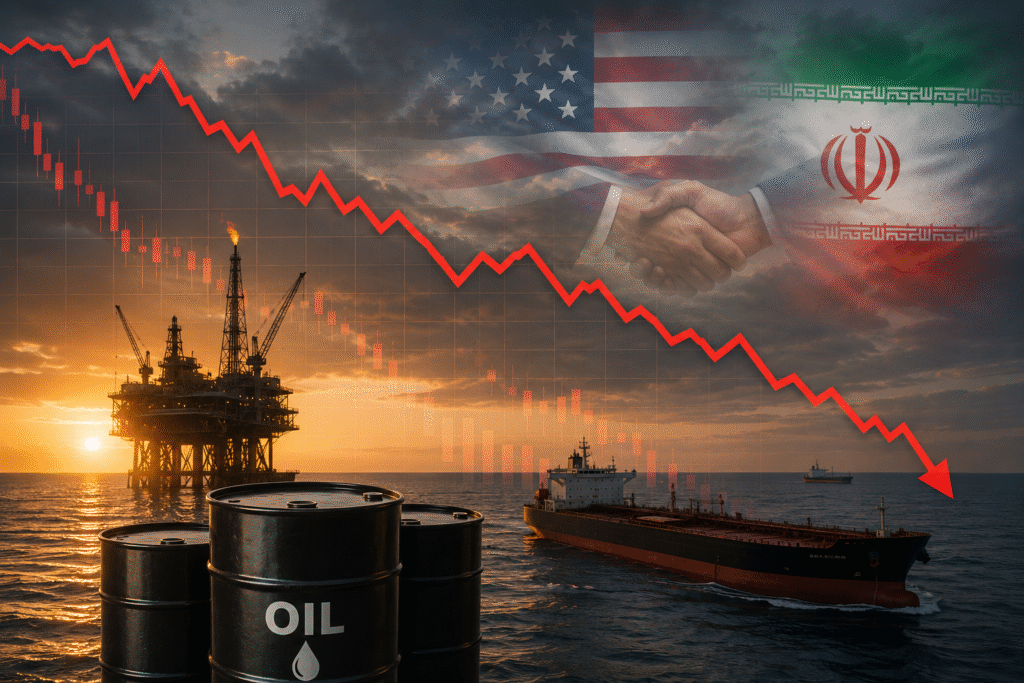
LONDON: Global oil prices fell sharply on Wednesday after renewed diplomatic progress between the United States and Iran raised expectations of a possible easing of tensions in the Gulf region and the reopening of disrupted energy supply routes.
The market reaction followed reports that Washington and Tehran were moving closer to a preliminary framework agreement aimed at reducing hostilities and launching broader negotiations on sanctions, maritime security and regional stability.
Brent crude futures dropped by more than eight percent to nearly $100 a barrel, reaching their lowest level in almost two weeks. U.S. West Texas Intermediate crude also recorded a steep decline during trading as investors reacted to signs of potential de-escalation in the Gulf conflict.
The decline came after weeks of elevated oil prices linked to disruptions in shipping through the Strait of Hormuz, one of the world’s most critical energy corridors.
Pakistan mediation linked to diplomatic progress
A Pakistani source familiar with the negotiations said the United States and Iran were nearing agreement on a memorandum intended to open formal talks on unresolved issues, including sanctions relief, maritime access and nuclear-related concerns.
Pakistan mediates as US and Iran near breakthrough Gulf conflict deal
Earlier, Axios reported that U.S. officials expected Iran’s response on several major points within 48 hours, describing the discussions as the closest both sides had come to a breakthrough since the conflict began.
Pakistan has remained involved in mediation efforts after hosting the only publicly known peace talks connected to the Gulf crisis last month. Officials familiar with the process said Islamabad continued facilitating communication between both sides.
Iranian officials have maintained that Tehran would support only what they described as a fair and comprehensive agreement.
Strait of Hormuz tensions disrupted global oil markets
The Gulf conflict has significantly affected commercial shipping and energy flows through the Strait of Hormuz since February, creating uncertainty across global oil markets.
The tensions previously pushed Brent crude to its highest level since March 2022 before Wednesday’s sharp decline.
Energy traders and shipping companies have closely monitored developments in the region because a major share of global crude exports passes through the strait.
Market sentiment was also influenced by fresh inventory data from the United States. According to market sources citing figures from the American Petroleum Institute, U.S. crude oil inventories fell by more than eight million barrels during the latest reporting week, while gasoline and distillate stocks also recorded declines.
Official inventory figures from the U.S. Energy Information Administration were expected later on Wednesday.
Markets respond to signs of possible de-escalation
Analysts said global financial markets responded positively to indications that diplomatic negotiations could reduce geopolitical risks in the Gulf and improve stability in international energy supply chains.
Investors continue to monitor developments surrounding the US-Iran talks due to their potential impact on oil prices, shipping activity and broader economic conditions.