
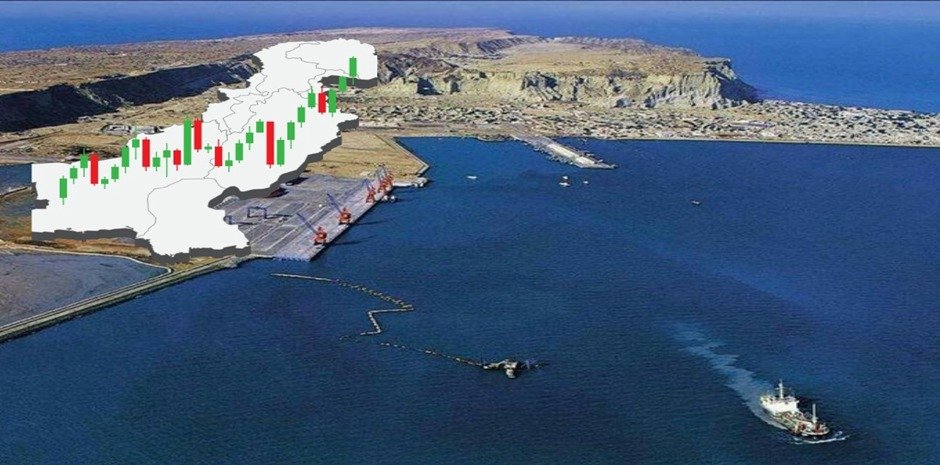
ISLAMABAD, April 27: Pakistan’s blue economy contributes only around one percent to the national gross domestic product (GDP), far below the 7 to 35 percent contribution recorded by comparable maritime nations, underscoring a significant gap between potential and actual utilisation of ocean-based resources.
According to a Planning Commission report titled “Blue Economy under URAAN Pakistan 2026,” the country holds substantial maritime advantages, including a 1,001-kilometre coastline, an extended continental shelf spanning nearly 290,000 square kilometres, and proximity to key global shipping routes. Despite these strengths, the maritime sector remains largely underdeveloped.
The report characterises Pakistan’s maritime domain as a “strategic asset” that has historically been underutilised, noting that the extended continental shelf effectively functions as a “sixth province,” expanding the country’s economic footprint beyond its terrestrial boundaries.
Globally, the blue economy has become a major engine of growth, valued at approximately $2.85 trillion in 2024 and projected to surpass $5 trillion by the early 2030s. In contrast, Pakistan’s maritime economic activity is primarily limited to ports, shipping trade, and fisheries, with minimal diversification into higher-value sectors.
The report points out that countries such as Norway, the Maldives, and the United Arab Emirates derive a significantly larger share of their GDP from marine-based industries by leveraging sectors like coastal tourism, offshore energy, aquaculture, and advanced shipping services.
In Pakistan, however, structural challenges including limited sectoral diversification, weak governance frameworks, and insufficient investment in value-added industries continue to hinder growth. The fisheries sector, which provides livelihoods to nearly one million people, remains largely dependent on raw catch volumes with limited processing and export enhancement.
Similarly, the shipping and shipbuilding industries have yet to reach their full potential, while ports handling about 95 percent of the country’s trade face operational inefficiencies and mounting regional competition.
Other high-potential areas such as coastal tourism, offshore energy exploration, and marine resource development also remain largely untapped, further restricting the sector’s contribution to the overall economy.
The report calls for a coordinated and integrated policy approach to unlock the blue economy’s full potential, stressing the need for stronger collaboration between federal and provincial governments, enhanced private sector participation, and improved regulatory mechanisms.
It further highlights the importance of aligning maritime sector development with the broader URAAN Pakistan National Economic Transformation Plan, which focuses on boosting exports, upgrading infrastructure, and ensuring sustainable economic growth.
The report concludes that while Pakistan possesses the necessary geographic advantage, natural resources, and human capital to build a robust maritime economy, realising this potential will require consistent policy direction, institutional alignment, and targeted investment across key sectors.