
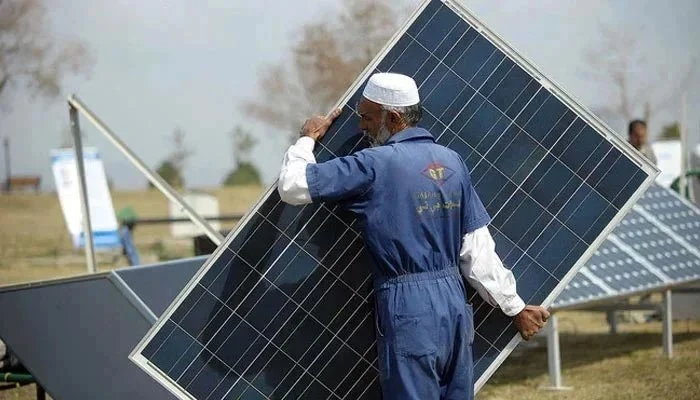
Pakistan became the world’s third-largest importer of solar panels in 2024 after importing 17 gigawatts (GW) of solar power systems, according to the Pakistan Climate Prosperity Plan (CPP). The report says the country’s solar imports doubled compared with the previous year, driven by rising electricity tariffs and falling global solar panel prices.
Prepared jointly by the Ministry of Finance and the Ministry of Climate Change, the report outlines a long-term strategy to expand renewable energy, reduce reliance on imported fossil fuels, and address Pakistan’s growing energy sector debt.
Solar Expansion Linked to Energy Transition
According to the report, Pakistan aims to generate 60% of its energy from clean sources by 2030, increase renewable electricity generation to 50% by 2035, and raise that share to 95% by 2040.
The plan also calls for the retirement or conversion of 14,000 megawatts (MW) of fossil fuel power plants by 2035, while reducing transmission and distribution losses from 19% to 8%. Other targets include nationwide electricity access, rooftop solar systems in all government secondary schools by 2035, and the development of carbon credit projects.
High Electricity Costs Drive Solar Demand
The report says higher electricity tariffs, volatile global energy prices, and currency pressures have increased the cost of power generation, encouraging households and businesses to adopt solar energy.
It notes that expanding the use of indigenous renewable resources—including solar, wind, hydropower, and biomass—could reduce fuel imports, strengthen energy security, ease pressure on foreign exchange reserves, lower emissions, and help reduce electricity costs over the long term.
Grid Upgrades Key to Renewable Growth
The report emphasizes that investment in grid modernisation and energy storage will be essential to support the rapid growth of renewable energy and improve the reliability of the national electricity system.
It also recommends restructuring high-cost power purchase agreements (PPAs), introducing more cost-reflective electricity tariffs, gradually retiring inefficient fossil fuel plants, and expanding transparent auctions for new renewable energy projects to attract private investment.
The report says these measures could help reduce circular debt while creating a more efficient and sustainable power sector capable of meeting Pakistan’s future electricity demand.
Also Read : Solar Panel Prices Drop by Up to Rs9,000 Across Pakistan