
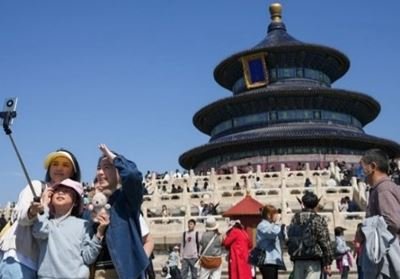
ISLAMABAD: Pakistan could significantly strengthen urban tourism by linking it with transport, heritage conservation, digital services, city branding and support for local businesses, experts say, pointing to China’s development model as a useful reference.
Tourism specialists argue that Pakistan should stop treating urban tourism as a separate sector and instead integrate it into broader city planning, infrastructure development and economic policy.
Aftab Rana, Managing Director of the Pakistan Tourism Development Corporation, said China’s progress in urban tourism was built on long-term government planning, sustained investment and coordination between transport, culture, technology and commercial development.
He said Pakistan could adopt similar principles by preparing tourism master plans for individual cities and improving transport links between airports, railway stations, roads and major attractions.
Rana identified Lahore, Peshawar, Multan, Taxila and Karachi as cities with strong potential for heritage-led regeneration. He said historic districts could be revitalised through better public spaces, conservation, visitor facilities and organised cultural activity.
He also called for greater use of smart tourism tools, including digital ticketing, destination applications and AI-powered visitor information systems.
Public-private partnerships, he added, could help attract investment in hotels, entertainment, transport and tourism services.
According to Rana, Pakistan’s urban tourism strategy should extend beyond historic monuments and promote local food, shopping, festivals, creative industries and cultural events.
He said each city needed a distinct tourism identity and a safe, well-managed night-time economy supported by markets, performances and accessible public spaces.
Professional training for tour guides, hospitality workers and destination managers would also be essential to improving visitor experiences and creating employment, he said.
Umme Aiman Qureshi, Senior Research Analyst for Urban Planning, Development and Policy at The Urban Unit, said China’s tourism success came from embedding the sector within urban development rather than managing it in isolation.
She said investments in airports, rail networks, metro systems, pedestrian zones, waterfronts, public spaces and visitor signage had made Chinese cities more accessible and encouraged multi-city travel.
Qureshi noted that China recorded 6.52 billion domestic tourism trips in 2025, generating approximately $882 billion in tourism spending, according to figures cited in the discussion.
She said the integration of historic districts, museums, traditional architecture, food, festivals and cultural performances had helped Chinese cities create complete visitor experiences rather than relying only on individual attractions.
China has also used tourism to regenerate older neighbourhoods, former industrial areas and waterfronts by converting them into cultural districts, creative centres and leisure destinations, she said.
Pakistan has already introduced heritage walks, night tours, food streets, festivals and cultural trails in several cities, but these initiatives often remain disconnected, Qureshi added.
She said municipal authorities, tourism departments, development agencies, private businesses and local communities needed to work under a coordinated urban tourism strategy.
Tourism routes should connect historic sites with food districts, markets, transport, signage, safety services and digital information so visitors can move through cities more easily.
Qureshi said local vendors, artisans, restaurants, guides, performers and transport operators should remain central to urban tourism planning. Regulated markets, affordable kiosks, training, digital payments and simplified licensing could help small businesses benefit directly from tourism growth.
She added that Pakistan should adapt selected features of China’s model rather than attempt a direct copy.
Lahore, Karachi, Rawalpindi, Multan and Peshawar already possess major cultural and historical assets, she said, but the priority should be to improve basic services, consolidate existing initiatives and give each city a clear tourism identity.
Also Read: CBD Punjab Showcases Engineering Resilience During Record Lahore Rains