
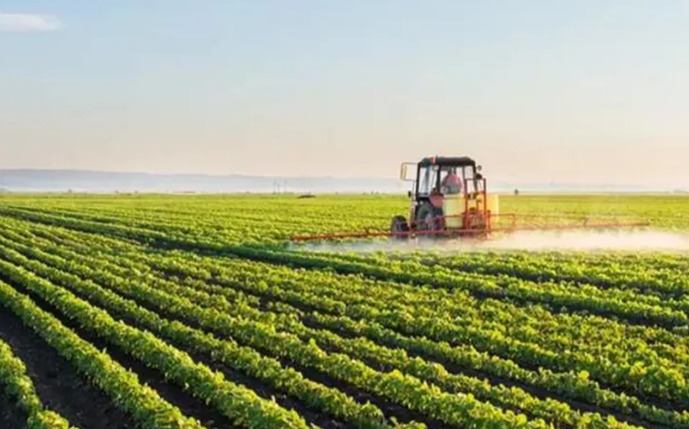
Islamabad — Agriculture is expected to remain a key pillar of Pakistan’s economy in the upcoming financial year 2026-27, with the government targeting broad-based growth across crops, livestock, fisheries and forestry alongside a push to boost exports and improve productivity.
The projection is outlined in the Annual Plan 2026-27 reviewed by Wealth Pakistan, which sets an overall agriculture growth target of 3.6 percent. The outlook highlights the sector’s continued importance for food security, rural livelihoods and overall economic stability, particularly as Pakistan pursues reforms linked to climate resilience and value-added exports.
The plan is aligned with broader national development frameworks, including URAAN Pakistan and the 13th Five-Year Plan, and focuses on improving productivity, digitalisation in farming systems, private-sector participation and climate adaptation.
Crop, livestock and fisheries targets outlined
According to the document, crop production is expected to grow by 3.1 percent in FY27, driven by gains in major and minor crops. Cotton ginning is projected to rise modestly, while livestock — the largest contributor to agricultural value addition — is targeted to expand by 3.9 percent.
Fisheries and forestry are also expected to post steady growth of 1.7 percent and 1.9 percent respectively, contributing to overall sectoral expansion.
Livestock output projections include 6.661 million tonnes of total meat production, 77,035 million litres of milk, and nearly 29,862 million eggs, reflecting continued demand growth in domestic markets.
Investment, inputs and policy direction
The government has allocated Rs4.183 billion under the Public Sector Development Programme (PSDP) for the Ministry of National Food Security and Research in FY2026-27. The funds will support nine ongoing schemes and one new initiative aimed at strengthening agricultural performance.
The plan also emphasizes research and development, improved seed systems, and cluster-based farming models designed to enhance export competitiveness and productivity.
Input availability indicators show continued support for farmers, including projected fertiliser demand of 6.572 million tonnes of urea and 1.837 million tonnes of DAP. Seed availability targets include wheat, cotton and paddy varieties, with paddy seed supply exceeding estimated requirements.
Climate resilience and export focus
A central feature of the strategy is climate resilience, with policymakers seeking to integrate climate adaptation into agricultural planning and promote sustainable farming practices.
The government also aims to reduce the food-sector trade deficit by strengthening high-value exports, improving supply chains and encouraging innovation across crop and livestock systems.
Officials say the combined approach is intended to keep agriculture a stable growth engine while adapting to environmental pressures and shifting global market demands.