
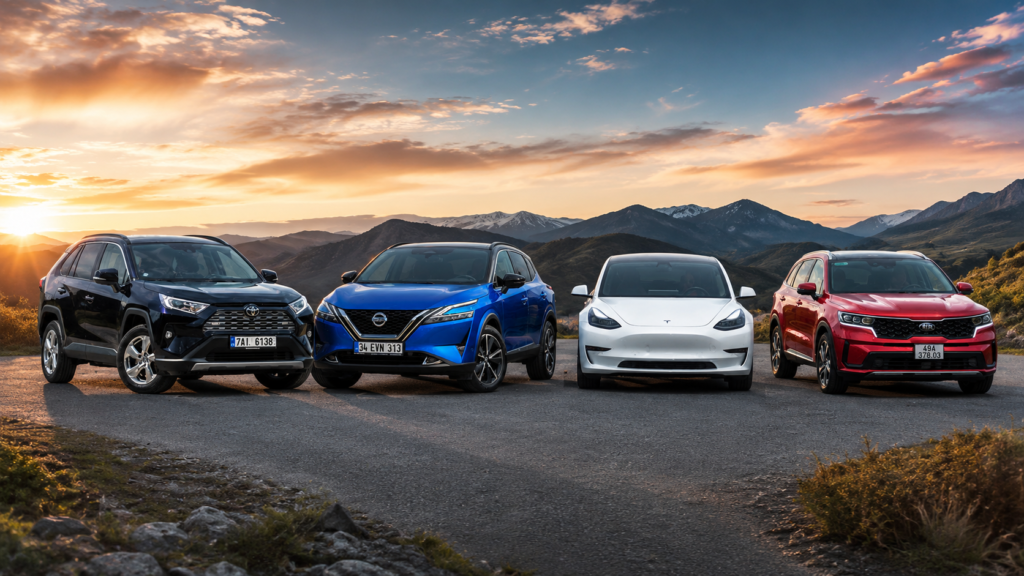
Toyota has emerged as the most reliable car brand in the latest 2026 reliability ranking, beating Subaru and luxury marque Lexus as Japanese automakers dominate the top positions.
The annual reliability assessment, based on Consumer Reports owner survey data, ranks 26 automotive brands according to predicted reliability. Toyota secured the top position with a score of 66 out of 100, followed by Subaru at 63 and Lexus at 60.
Honda and BMW completed the top five, while Nissan, Acura, Buick, Tesla and Kia also secured places among the 10 most reliable car brands.
The results underline a wider trend in the automotive industry: established and carefully refined vehicle technology continues to outperform many newly introduced platforms and complicated powertrain systems.
2026 Car Reliability Ranking at a Glance
| Rank | Car Brand | Reliability Score |
|---|---|---|
| 1 | Toyota | 66 |
| 2 | Subaru | 63 |
| 3 | Lexus | 60 |
| 4 | Honda | 59 |
| 5 | BMW | 58 |
| 6 | Nissan | 57 |
| 7 | Acura | 54 |
| 8 | Buick | 51 |
| 9 | Tesla | 50 |
| 10 | Kia | 49 |
| 11 | Ford | 48 |
| 12 | Hyundai | 48 |
| 13 | Audi | 44 |
| 14 | Mazda | 43 |
| 15 | Volvo | 42 |
| 16 | Volkswagen | 42 |
| 17 | Chevrolet | 42 |
| 18 | Cadillac | 41 |
| 19 | Mercedes-Benz | 41 |
| 20 | Lincoln | 40 |
| 21 | Genesis | 33 |
| 22 | Chrysler | 31 |
| 23 | GMC | 31 |
| 24 | Jeep | 28 |
| 25 | Ram | 26 |
| 26 | Rivian | 24 |
How Car Reliability Scores Are Calculated
The predicted reliability ranking draws on extensive vehicle-owner feedback collected by Consumer Reports.
Survey data covers hundreds of thousands of vehicles and examines reported problems across major mechanical and technological areas. These can include engines, transmissions, electric motors, batteries, charging equipment, electronics, climate systems, infotainment and body hardware.
Problems are assessed according to their seriousness and potential effect on vehicle operation.
The findings are then used to estimate the predicted reliability of individual models and identify broader patterns across car brands.
Importantly, a brand’s overall position does not mean every vehicle carrying its badge will deliver identical reliability. Individual models, powertrains and model years can perform very differently.
1. Toyota — Reliability Score: 66
Toyota leads the 2026 car reliability ranking with a score of 66, reinforcing its longstanding reputation for durability and proven engineering.
The Japanese automaker has traditionally taken a cautious approach to vehicle development, often refining established engines, platforms and hybrid systems instead of replacing several major technologies simultaneously.
That strategy has helped Toyota build a strong reliability record across cars, SUVs and pickup trucks.
Improved results for key models also strengthened the company’s overall position. Toyota’s extensive experience with conventional hybrid technology remains a major advantage as more buyers move towards electrified vehicles.
For motorists focused on long-term dependability, Toyota’s position at the top of the ranking makes it one of the strongest brands to consider in 2026.
2. Subaru — Reliability Score: 63
Subaru ranks second with a predicted reliability score of 63.
The Japanese manufacturer has developed a loyal customer base through practical SUVs, all-wheel-drive vehicles and relatively consistent engineering across its model range.
One factor supporting Subaru’s reliability is its use of shared components and established mechanical systems across multiple vehicles. This allows engineers to gradually improve technology rather than introducing completely unfamiliar systems with every redesign.
Models such as the Impreza and Crosstrek have helped support Subaru’s reputation for dependability.
The brand narrowly misses the top position but remains one of the strongest performers in the 2026 ranking.
3. Lexus — Reliability Score: 60
Lexus takes third place with a score of 60, making it the highest-ranked luxury car brand on the list.
Toyota’s premium division benefits from access to established platforms, engines and hybrid technology developed across the wider Toyota group.
This allows Lexus to combine luxury features with mechanical systems that have often already undergone extensive development.
The brand remains particularly strong among buyers seeking comfortable vehicles with smooth drivetrains and potentially lower reliability concerns than some European luxury rivals.
Its third-place position confirms that premium features and strong predicted reliability do not have to be mutually exclusive.
4. Honda — Reliability Score: 59
Honda ranks fourth with a reliability score of 59.
The Japanese automaker has built a global reputation around efficient engines, practical vehicle design and carefully developed mechanical systems.
Popular nameplates including the Civic, Accord and CR-V have helped make Honda a major choice for motorists who prioritise manageable ownership and long-term use.
However, buyers should still assess individual vehicles carefully. Reliability can change significantly depending on the model and powertrain technology used.
Honda’s strong overall score nevertheless places it firmly among the most reliable car brands in 2026.
5. BMW — Reliability Score: 58
BMW is ranked fifth and stands as the highest-placed European car manufacturer.
The result is particularly notable because luxury vehicles often feature complicated electronic systems, powerful engines and advanced technology that can create additional reliability concerns.
BMW’s performance suggests improvements across several established models and powertrains.
The German automaker continues to combine its traditional focus on driving performance with stronger predicted reliability, helping it outperform several major European rivals including Audi, Volvo, Volkswagen and Mercedes-Benz.
6. Nissan — Reliability Score: 57
Nissan secures sixth position with a score of 57.
One of Japan’s largest automotive manufacturers, Nissan produces vehicles ranging from compact cars and family crossovers to electric models.
The result points to stronger consistency across parts of its model range.
For buyers, Nissan’s ranking is significant because the company competes heavily in mainstream vehicle segments where affordability, maintenance and long-term dependability can strongly influence purchasing decisions.
7. Acura — Reliability Score: 54
Acura ranks seventh with a predicted reliability score of 54.
As Honda’s premium division, Acura combines sportier performance and luxury equipment with engineering resources shared across the wider Honda group.
The brand’s strong position demonstrates the potential reliability advantages of using established platforms and major components.
Acura remains particularly popular in North America, where its SUVs and performance-oriented vehicles compete against German and other Japanese luxury brands.
8. Buick — Reliability Score: 51
Buick takes eighth position and is the highest-ranked traditional US automotive brand in the survey.
The General Motors marque now focuses heavily on comfortable crossovers and SUVs, positioning itself between mainstream and premium competitors.
Its score of 51 places it ahead of Tesla, Ford, Chevrolet, Cadillac, Lincoln, Chrysler, GMC, Jeep and Ram.
For buyers seeking an American brand with comparatively strong predicted reliability, Buick stands out in the 2026 ranking.
9. Tesla — Reliability Score: 50
Tesla climbs into the top 10 with a reliability score of 50.
The electric car manufacturer has recorded a major improvement as established models mature and some previously reported problems decline.
The Model 3 and Model Y have played an important role in Tesla’s stronger performance. However, reliability still varies considerably across the company’s lineup.
The result is an important development for the electric vehicle market, suggesting that EV reliability can improve as manufacturers refine production processes, software and vehicle hardware.
Tesla ranks ninth overall, comfortably ahead of several established global manufacturers.
10. Kia — Reliability Score: 49
Kia completes the top 10 with a score of 49.
The South Korean manufacturer has expanded rapidly across petrol, hybrid and fully electric vehicle segments while maintaining competitive pricing and modern design.
Its reliability results vary between models and powertrains, particularly as the company introduces more advanced electrified vehicles.
Despite those differences, Kia’s overall performance is strong enough to secure the final position among the 10 most reliable car brands in the ranking.
Ford and Hyundai Just Miss the Top 10
Ford and Hyundai share a predicted reliability score of 48, placing them 11th and 12th respectively.
Ford’s wide product range includes pickup trucks, SUVs, commercial vehicles and electric models. Such a diverse lineup can produce significant reliability differences between vehicles.
Hyundai has also rapidly expanded its hybrid and electric offerings alongside conventional petrol-powered models.
Both manufacturers remain close to the top 10 but demonstrate why buyers should research a specific vehicle rather than relying exclusively on a manufacturer’s overall score.
Audi and Mazda Rank in the Middle
Audi ranks 13th with a score of 44, while Mazda follows in 14th place at 43.
Audi remains known for advanced interiors, all-wheel-drive technology and premium performance. However, sophisticated electronics and electrified systems can increase vehicle complexity.
Mazda, meanwhile, has historically performed strongly in reliability assessments but has faced challenges as it introduces new platforms, engines and plug-in hybrid technology.
The results highlight a common automotive trend: major vehicle redesigns can experience more early problems than established models.
Volvo, Volkswagen and Chevrolet Score 42
Volvo, Volkswagen and Chevrolet each receive a reliability score of 42.
The three brands operate in very different areas of the automotive market but share the same predicted reliability score.
Volvo continues its transition towards electrification and technology-focused premium vehicles. Volkswagen combines established conventional models with a growing electric lineup, while Chevrolet offers everything from affordable crossovers to pickup trucks, sports cars and EVs.
For all three manufacturers, model-level research remains particularly important.
Cadillac and Mercedes-Benz Share a Score of 41
Cadillac and Mercedes-Benz are tied with reliability scores of 41.
Both luxury manufacturers have increasingly introduced sophisticated digital technology, driver-assistance systems and electrified powertrains.
These features can improve comfort and vehicle capability but also introduce more systems that may develop problems.
Their positions in the lower half of the ranking demonstrate that luxury status and advanced technology do not automatically translate into stronger predicted reliability.
Lincoln Ranks 20th
Lincoln receives a score of 40 and ranks 20th.
Ford’s luxury division focuses primarily on premium SUVs with comfortable interiors and extensive technology.
The brand’s position reflects the challenges luxury manufacturers can face when combining complex electronics, advanced features and newer powertrain systems.
Genesis Falls to 21st
Genesis ranks 21st with a predicted reliability score of 33.
Hyundai’s luxury division has quickly gained recognition for its styling, premium cabins and competitive value.
However, its rapid expansion into new vehicle segments and electric technology has created reliability challenges.
The result shows that strong design and luxury features do not necessarily guarantee long-term dependability.
Chrysler and GMC Score 31
Chrysler and GMC share a reliability score of 31.
Chrysler now has a relatively small vehicle lineup, meaning problems affecting individual models can have a greater impact on its overall brand score.
GMC specialises in trucks and SUVs, many of which use sophisticated powertrains, four-wheel-drive hardware and extensive electronic technology.
Both brands rank in the bottom five of the 2026 list.
Jeep Ranks 24th
Jeep receives a reliability score of 28.
The American brand remains globally recognised for off-road vehicles such as the Wrangler and Grand Cherokee, but predicted reliability continues to be a concern.
Electronics, build quality and complicated powertrains can affect individual models.
Jeep’s position is a reminder that strong off-road capability and brand popularity are separate considerations from predicted vehicle reliability.
Ram Ranks 25th
Ram places 25th with a reliability score of 26.
The manufacturer specialises in pickup trucks and commercial vans and is particularly known for the Ram 1500.
Its vehicles are often praised for powerful engines, towing capability and comfortable interiors. However, mechanical and electronic complexity has contributed to weaker predicted reliability.
Only Rivian ranks below Ram.
Rivian Records the Lowest Reliability Score
Rivian finishes at the bottom of the ranking with a score of 24.
The American electric vehicle company is still relatively young compared with most established global manufacturers.
Its adventure-focused R1T pickup and R1S SUV have attracted attention for performance, design and off-road capability. However, reported concerns involving vehicle hardware, electronics and production quality have affected its reliability position.
Rivian’s result illustrates the challenges facing newer EV manufacturers as they simultaneously develop vehicles, software and large-scale production systems.
Why Japanese Car Brands Dominate the 2026 Ranking
Japanese automakers occupy six of the first seven positions in the reliability table.
Toyota, Subaru, Lexus, Honda, Nissan and Acura all rank near the top, while Kia gives South Korea another place in the top 10.
A major factor is the gradual development strategy used by several Japanese manufacturers.
Rather than introducing entirely new engines, transmissions, platforms and electronic systems at the same time, brands such as Toyota and Honda often refine existing technology over several vehicle generations.
Shared components can also help manufacturers identify problems earlier and apply engineering improvements across multiple models.
This does not mean every Japanese vehicle is automatically reliable, but the 2026 results show a clear regional strength at brand level.
Are Hybrid Cars More Reliable Than EVs?
The latest reliability findings continue to show strong results for conventional hybrid vehicles.
Manufacturers including Toyota and Lexus have spent decades refining hybrid powertrains. Mature battery systems and established petrol-electric technology can help these vehicles deliver strong reliability.
Fully electric vehicles and plug-in hybrids have produced more mixed results.
EVs introduce different potential trouble areas, including charging equipment, battery systems, electric drive components, software and electronics.
Plug-in hybrids can be particularly complicated because they combine a conventional engine with electric motors, batteries and charging hardware.
Tesla’s improved position demonstrates that EV reliability can strengthen as vehicles and production systems mature. Rivian’s last-place ranking, however, shows that newer manufacturers can still face significant challenges.
Does a Reliable Brand Mean Every Model Is Reliable?
No. Brand rankings should be treated as a starting point rather than a final buying decision.
Reliability can differ significantly between vehicles produced by the same manufacturer.
A proven model that has been in production for several years may perform considerably better than a newly redesigned vehicle from the same brand.
Engine choices, hybrid systems, electric powertrains and model years can also affect reliability.
Car buyers should therefore examine the predicted reliability of the specific vehicle they plan to purchase.
What Is the Most Reliable Car Brand in 2026?
Toyota ranks first in the 2026 predicted reliability ranking with a score of 66.
Subaru is second with 63, followed by Lexus at 60, Honda at 59 and BMW at 58.
The top five demonstrate the continued strength of Japanese manufacturers, while BMW stands as the highest-ranked European car brand.
What the 2026 Car Reliability Ranking Means for Buyers
The 2026 ranking delivers a clear message for car buyers: proven technology and gradual engineering improvements continue to matter.
Toyota leads the industry, while Subaru and Lexus remain close behind. Honda and Nissan strengthen the Japanese presence near the top, and BMW delivers the strongest performance among European manufacturers.
Tesla’s rise into the top 10 is one of the ranking’s most notable developments and suggests improving reliability among established electric vehicles.
At the opposite end of the table, Rivian, Ram and Jeep face the greatest predicted reliability challenges.
However, buyers should not choose a vehicle based on brand position alone. The specific model, model year and powertrain remain critical factors when assessing long-term dependability.
Sources: Consumer Reports and Cars.com
Also Read: Kia Sportage Price Cut Explained: Why the 2026 Model Costs Less