
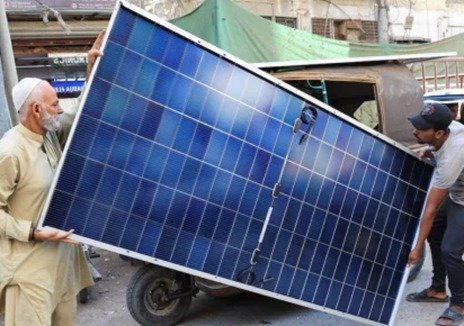
Islamabad,: Pakistan’s rapid adoption of solar energy has created a unique opportunity to develop a domestic clean-energy industry, but experts say the country must adopt long-term industrial policies inspired by China’s renewable energy model to unlock its full economic potential.
According to experts speaking to Wealth Pakistan, Pakistan has imported more than 50 gigawatts (GW) of solar panels over the past five years, with an estimated 38GW already installed. Solar power now contributes around 28% of the country’s electricity generation, compared with nearly 10% just two years ago.
While the consumer-led solar boom has helped reduce dependence on imported fossil fuels and eased pressure on the national electricity grid, experts believe Pakistan must now focus on developing local manufacturing, energy storage, grid modernisation, and financing mechanisms to support long-term industrial growth.
Muhammad Sheraz Amir, Associate for Energy and Climate at Renewable First, said China’s success stemmed from comprehensive policies that simultaneously encouraged manufacturing, deployment, and technological innovation through its Five-Year Plans, New Energy Vehicle (NEV) mandate, and Energy Storage Policy.
He noted that Pakistan has already demonstrated strong market demand for solar energy but now requires a consistent industrial strategy to localise the production and assembly of solar panels, inverters, batteries, and other renewable energy components.
Meanwhile, Arfa Ijaz, Research Assistant at the Sustainable Development Policy Institute (SDPI), said China’s vertically integrated solar manufacturing industry has enabled the country to account for more than 75% of global solar photovoltaic manufacturing capacity.
She highlighted that China added a record 315GW of new solar capacity in 2025, raising its cumulative installed solar capacity to approximately 1,200GW, while renewable electricity generation surpassed thermal power generation for the first time.
Ijaz said China’s achievements were supported by continuous investment in transmission infrastructure, energy storage, and electric vehicle charging networks, creating a cycle in which policy certainty encouraged manufacturing investment, reduced production costs, and accelerated renewable energy deployment.
However, she cautioned that China’s experience also demonstrates the importance of balanced market planning. Excess manufacturing capacity resulted in falling solar prices and significant financial losses for major manufacturers, underscoring the need to align industrial expansion with market demand.
Experts concluded that Pakistan can transform its booming solar market into a driver of industrial development by investing in domestic manufacturing, supporting infrastructure, and stable long-term renewable energy policies.
Also Read :Barasti Club Summer Camp 2026 Concludes with Certificate Distribution Ceremony