
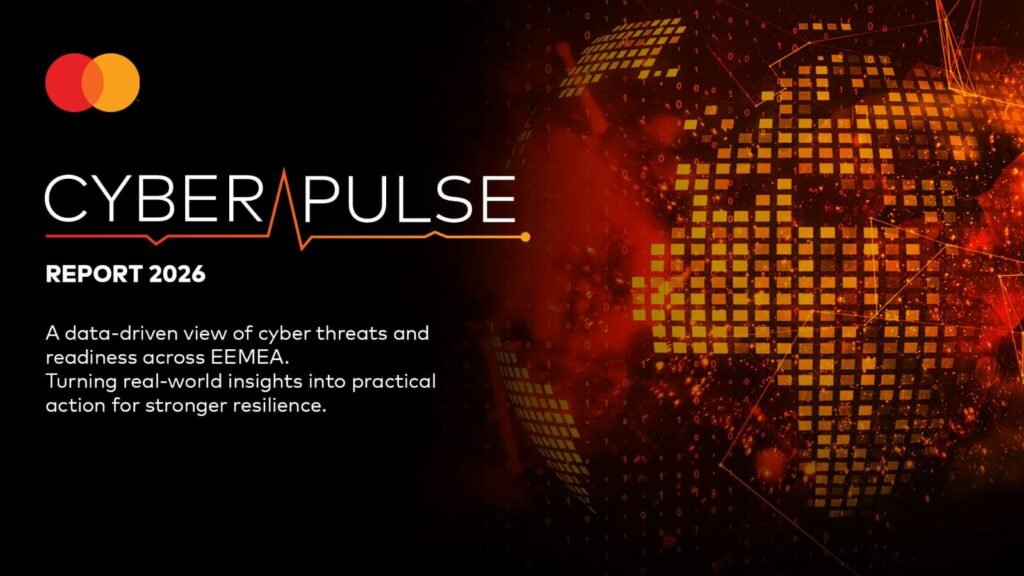
ISLAMABAD, June 10: Mastercard has released its first Cyber Pulse report, highlighting a rise in cybercrime across Eastern Europe, the Middle East and Africa (EEMEA) during early 2026 and underscoring the growing importance of cyber resilience for businesses, governments and the broader digital economy.
The report combines regional threat intelligence from Mastercard’s Cyber Insights platform, cyber health assessments from RiskRecon and threat intelligence from Recorded Future, which was acquired by Mastercard in December 2024. It provides an overview of cyber threats affecting organizations across the region and examines their implications for operational continuity, economic stability and digital trust.
According to the report, cybercrime activity increased following a period of geopolitical instability, with financially motivated and disruptive attacks accounting for 71% of observed cybercrime across the EEMEA region.
Rising financial impact of cyber threats
Mastercard cited findings from the IBM Cost of a Data Breach Report 2025, which showed that the average cost of a data breach in the Middle East reached nearly $7.29 million per incident. The figure is approximately 64% higher than the global average, reflecting the growing financial impact of cybersecurity incidents on organizations.
The report notes that cyber risk has evolved into a strategic business concern, requiring attention at both executive and board levels as organizations become increasingly dependent on digital infrastructure.
Focus on cyber resilience
According to Mastercard, the Cyber Pulse report is designed to help organizations better understand emerging threat patterns and strengthen their preparedness against cyber incidents.
The report emphasizes the need for businesses to move beyond basic awareness and adopt sustained cybersecurity strategies that improve resilience, protect critical assets and reduce operational disruption.
Mastercard said the findings highlight the importance of integrating cybersecurity into broader business continuity and risk management frameworks.
Building trust in the digital economy
Commenting on the report, Selin Bahadirli, Executive Vice President, Services, EEMEA at Mastercard, said cyber resilience has become closely linked to business resilience and operational stability.
She noted that organizations require a proactive approach to cybersecurity supported by continuous monitoring, threat intelligence and effective risk management practices.
Mastercard stated that it remains focused on providing businesses and institutions with tools, intelligence and expertise to strengthen digital security and support confidence in the evolving digital economy.
The report concludes that strengthening cyber resilience will be essential for maintaining economic continuity, safeguarding digital assets and sustaining trust in digital services as cyber threats continue to evolve across the region.
Also Read: Kaspersky detects over 92,000 cyber attacks disguised as AI services in 2026